Tuesday, April 26, 2011

My infatuation with Three Days of the Condor is forever (dot dot dot).

Film critic Juliette Small invites her daughter, Erica, and Erica's friend Katherine to join her for an advance screening of a new Robert Redford movie in chapter 14 of Forever..., Judy Blume's controversial 1975 novel about young love, which I'm reading for a grad-school research paper on young-adult fiction.

After the picture Mrs. Small asked me, personally, what I thought of it.

"Well ..." I told her, "I just love Robert Redford."

"Don't we all ..." Mrs. Small said, "but I mean about the story."

"Oh, the story ... I liked it ..."

"But ..."

"I don't think it could happen that way in real life ..."

"Exactly!" she said. "But you wanted it to, didn't you ... you were hoping it would turn out just that way."

"Yes," I told her.

"You see ... that's the whole point."

"It's going to be a smash," Erica said.

"In spite of my review, you mean?"

"In spite of anybody's review."

"I agree with you, completely," Mrs. Small said.

In 1975 Robert Redford starred in two films, The Great Waldo Pepper and Three Days of the Condor. The former was scripted by William Goldman and directed by George Roy Hill, who had previously collaborated with Redford on 1969's Butch Cassidy and the Sundance Kid, while the latter was helmed by Sydney Pollack, who, prior to Condor, had already directed the California native in three films, including the western Jeremiah Johnson (1972) and the romantic drama The Way We Were (1973), costarring Barbra Streisand.

The Great Waldo Pepper is a period piece in which Redford plays a 1920s stunt pilot, but Three Days of the Condor is a contemporary thriller that asks audiences to believe that a guy as handsome as the Sundance Kid is employed by the CIA as a bookworm rather than a dashing James Bond clone. As Katherine says, "I don't think it could happen that way in real life." But you want it to.

Waldo was released in March of '75; Condor came out in September. When Katherine, the protagonist of Forever..., takes a train from Westfield, New Jersey, into New York City with Erica and her mom to see "a preview of a new Robert Redford picture," it's either late March or early April in the book's narrative. Yes, I'm fully aware of the possibility that Blume isn't talking about any Redford movie in particular—for one thing, I don't know when exactly Forever... was published in '75 (spring, summer, etc.), or if she even had a particular year in mind besides "right now, whenever that is" when she wrote the book, or if copyright issues prevented her from using the title of an actual Redford movie—but a boy can still dream, even when he's no longer a young adult.

Saturday, April 9, 2011

another comic strip about piracy (not the "arr, matey" kind)

In Garry Trudeau's Doonesbury this week talk-radio host Mark Slackmeyer asked pop star Jimmy Thudpucker for his thoughts on musicians who perform private concerts for dictators, à la Beyoncé performing at a 2009 New Year's Eve party thrown by Moammar Gadhafi's son Hannibal in St. Barts.


Is it wrong? Should fans be offended? Will I post a new comic strip each month about the music industry's financial woes, gradually exposing myself as someone who can't comprehend economic issues unless they're illustrated—literally—with cartoon characters and joke-filled word bubbles? (Answers: Maybe, screw 'em, and God willing if one of The Lockhorns suddenly has a bone to pick with the iTunes Store come Mother's Day.)

Friday, March 25, 2011

Rock Bio #3: The Smiths

Part of a series of brief artist biographies I wrote for Rhino.com in the spring of 2010 ...

When Morrissey (vocals) and Johnny Marr (guitar) started writing songs together in 1982, they picked the Smiths for their new band's moniker, partly as a reaction to extravagant group names like Orchestral Manoeuvres in the Dark. But though the Smiths' name was ordinary, their impact on British pop music—which up to that point in the '80s had been drenched in synthesizers—was not, lighting a path for the Stone Roses, Oasis, Blur, and many other bands.

Morrissey and Marr filled out their lineup with Mike Joyce on drums and Andy Rourke on bass, and after six months of club gigs the Smiths signed with London's Rough Trade Records in 1983. Their first single, "Hand in Glove," failed to ignite the interest of radio programmers, but the follow-up, "This Charming Man," cracked the top 30 on the UK singles chart. Despite his often heartsick lyrics (evinced by song titles like "Please, Please, Please Let Me Get What I Want" and "Heaven Knows I'm Miserable Now"), which continue to speak to many a lonely, tortured adolescent on both sides of the pond, Morrissey was an invigorating, hip-gyrating presence in concert, not to mention an eccentric one—the frontman was known for wearing a hearing aid onstage and putting gladioli in his back pocket.

The Smiths' self-titled first album was released in February 1984 on a wave of tremendous buzz. It was also met with controversy when British tabloids interpreted "Reel Around the Fountain" and "The Hand That Rocks the Cradle" as endorsements of pedophilia, an allegation Morrissey vehemently denied.

Meat Is Murder followed a year later, with the Smiths producing the album themselves, gaining confidence and moving beyond jangly guitar pop to embrace rockabilly ("Rusholme Ruffians") and even a bit of funk ("Barbarism Begins at Home"). It was their first number-one album in the UK.

After their third LP, The Queen Is Dead, was completed at the end of '85, Rourke was fired, allegedly because his heroin use was affecting his performance. He was replaced with Craig Gannon, but just a few weeks later Rourke was rehired, with Gannon moving to rhythm guitar (he wasn't "the fifth Smith" for long—by the end of 1986 he'd left the band). Queen was released in June of '86, delayed by six months because of a legal dispute between the band and Rough Trade, and since the label appeared incapable of pushing the band's singles up the charts in either the U.S. or the UK, Morrissey and Marr decided it was time to move on.

Bucking their "independent" reputation, the Smiths signed with major label EMI in 1987, but by the time Strangeways Here We Come, their fourth album and Rough Trade swan song, was released that fall, the band was no more. Marr quit after the album was finished, frustrated by Morrissey's immovable obsession with 1960s pop melodies, and though the rest of the band tried to continue as a trio, it didn't last long.

Morrissey went on to a successful solo career, and Marr formed Electronic with New Order's Bernard Sumner. A reunion isn't likely: in 1996 Joyce sued Morrissey and Marr for recording and performance royalties and won. But never say never. As the Smiths' frontman once sang, "There is a light that never goes out...."

Friday, March 11, 2011

Please and Liquor

Thanks to my friend and fellow improviser Michael, who's currently traveling and performing in and around the Gulf of Mexico, I've learned what Please has been up to lately.


Thoughtful as always, Please. Michael also informed me that our mutual friend (and enemy) Liquor has gone into business.

Thursday, March 3, 2011

"Obviously, my dream of making millions through poetry is dust."

My dad sent this Tom the Dancing Bug strip to me the other day, reminding me that I'd originally sent it to him in August 2000 after it appeared in print and online. Tom creator Ruben Bolling is wickedly funny and smart, and he gave good e-mail when I wrote him as a fan later that year.


Now that I'm studying library science this strip is even funnier, although the record industry's fate now seems much more dire than it did a decade ago, when Napster was the only music-pirating bug that needed to be squashed. And these days e-publishing, aided by ambiguous forces of good and/or evil such as Amazon.com, threatens to wipe out the traditional publishing industry, taking down bookstore chains like Borders in the process.

Everything's cheaper now, but we're all paying the price.

Friday, February 25, 2011

Rock Bio #2: Stone Temple Pilots

Part of a series of brief artist biographies I wrote for Rhino.com in the spring of 2010 ...

After more than two decades together, Stone Temple Pilots have proven themselves to be one of the most resilient bands in rock 'n' roll. Initially dismissed by critics as Pearl Jam and Alice in Chains wannabes, the San Diego quartet were a hit with listeners from the start, and despite various breakups, side projects, and internal squabbles over the years, STP continue to record and tour, proving they've still got fuel to burn.

The band's origins date back to 1986, when Scott Weiland (vocals) and Robert DeLeo (bass) met at a Black Flag concert in Long Beach, California. Quickly realizing they were dating the same girl, they moved into her apartment once she left town, and decided to form a band. With DeLeo's brother Dean on guitar and Eric Kretz on drums, the band named themselves Mighty Joe Young and slowly built a following in San Diego's clubs. They kept their distance from the L.A. music scene and its corporate influence, but by 1992 Atlantic Records had come calling, and that fall the group released their debut album, Core, under their new name, Stone Temple Pilots.

Core was an immediate success, and the tracks "Sex Type Thing," "Plush," and "Creep" became staples on MTV and alternative radio stations. Though STP's sound was accused of being derivative of grunge, it was closer in spirit to '70s stadium rockers like Led Zeppelin and Kiss, tethering hard-rock riffs to concise melodies. The band's winning streak continued with 1994's Purple, which spawned the hits "Vasoline," "Interstate Love Song," and "Big Empty."

In the spring of '95 Weiland was arrested for possession of cocaine and heroin and ordered to enter rehab for his drug addiction. Upon completion of his treatment program he joined the rest of STP for the recording of their third album, Tiny Music ... Songs From the Vatican Gift Shop, which debuted at #4 on the Billboard 200 in March of '96. It didn't reach the same commercial heights as its predecessors, though, partly because Weiland relapsed that spring and had to return to rehab, forcing the band to cancel its summer tour.

At that point Stone Temple Pilots went on hiatus. The DeLeo brothers and Kretz formed Talk Show with singer Dave Coutts and recorded a one-off, self-titled album (1997), and Weiland worked on his first solo LP, 12 Bar Blues (1998), in between arrests and trips back to rehab. STP reunited to record No. 4 in 1999, after which Weiland spent five months in jail for violating his probation.

To the surprise of many, the band soldiered on, following up No. 4 and its hit single, "Sour Girl," with Shangri-La Dee Da in the summer of 2001. But after Weiland and Dean DeLeo almost came to blows onstage in the fall of '02, it looked like Stone Temple Pilots had finally crashed and burned. Weiland then joined Slash in the hard-rock supergroup Velvet Revolver, while the DeLeo brothers formed Army of Anyone with Filter lead singer Richard Patrick.

In 2007 Weiland reconciled with his former bandmates, and after quitting Velvet Revolver because his new bandmates reportedly nixed the idea of him doing reunion concerts with the old ones, he joined STP for a 65-date tour in the summer of '08. Their chemistry reestablished, the band entered the studio a year later, with their self-titled sixth album set for release in May 2010.

Tuesday, February 8, 2011

"What's hard is knowing that KeeKee may be six or seven now but that in three or four years she'll be thirty."

Last week in my Literature and Resources for Young Adults class we were assigned Christopher Paul Curtis's Bucking the Sarge (2004, Random House), which is narrated by a 15-year-old named Luther T. Farrell who works for his mom, "the Sarge," and is forced to grow up fast. Below are two excerpts I particularly liked.

"There's always something desperate and fake when you have to deal with someone who's about to get evicted. They'll say anything to try and get another rent-free week or two. That makes it easy not to listen to what they have to say, 'cause you know there's a pretty good chance they're lying. It's nothing to make your heart hard to that. Even if you feel bad for them odds are they're not doing nothing but playing you, and who wants to get played?

"People will throw their babies in your face or have their sick, dying mommas cough on you or they'll tell you the check's in the mail or that the Department of Social Services computer is down or that they've got the inside word on what next Thursday's number is going to be or  any of a million other stupid excuses as to why they haven't paid the rent in three months. It gets real easy to let those excuses slide right by you 'cause it's real obvious that they are what Ms. Warren calls rhetoric, or speech designed to influence.

"What's hard is a stupid little picture drawn by a little mostly-As student who's got a dope fiend momma. What's hard is knowing that that girl was gonna be living in a busted-up Impala until her momma drags her into some other hole to live. What's hard is wondering, and I know some philosopher somewhere has wondered this and probably figured it out to the day, how much longer that little girl has before she's beaten down so bad that being room C's Citizen of the Month doesn't mean a thing. What's hard is knowing that KeeKee may be six or seven now but that in three or four years she'll be thirty." —pg. 61-62

"Once you get some years on you and a little experience under your belt it turns out that those things you have great expectations about are just as tired and played out as anything else in your life. I don't know why so many of the fools I go to school with can't wait to get older, it seems like with age fewer and fewer things are exciting. And it seems like the more excited you are about something, the more time you spend dreaming and wondering and fantasizing what it's going to be like, the more disappointing it turns out to be.

"Which has got me seriously worried about sex." —pg. 68

Wednesday, February 2, 2011

a Wayne Shorter-free weather report

On the morning of February 1, just a few hours before Chicago was hit by its biggest blizzard since 1999, SmoothChicago.com sent me an e-mail with this subject heading: "Weather Advisory - Chicago & Vicinity."

"Here in the Midwest, we know how to deal with the snow," the e-mail said. "The BIG STORY is that very soon, things will be heating up in Chicago."

Needless to say, this fake severe-weather warning was no help earlier today when I found myself wading through 18-inch-tall snowdrifts in shorts and flip-flops. I probably should've read the next paragraph of the e-mail before heading outside:

"The SmoothChicago.com Weather Center has issued a HEAT ADVISORY for Saturday February 12th at the DuSable Museum in Chicago. It is going to be HOT."

February 12? Way to bury the lede, SmoothChicago.com.

Sunday, January 30, 2011

In case you still think punk never went mainstream ...

I've now heard the Ramones' 1978 song "I Wanna Be Sedated" twice while shopping for groceries. Usually you're being sedated in supermarkets with soft rock (which is fine by me, of course), but now the Ramones do the trick just as well, apparently.

Friday, January 28, 2011

Rock Bio #1: Pantera

Last spring I was hired by Rhino Records to write a series of brief artist biographies for its website. Without a doubt it was the best freelance job I've ever had, but some of the bios weren't used, so in the spirit of not letting good research go to waste, I now present each one in its unedited entirety, starting with Pantera.*

Check back next month for a new entry, and in the meantime visit Rhino.com for the best collection of music on this planet or any other! (Admittedly, I'm trying to stay on the label's good side, but since I've been buying their CDs since the early '90s and still own a Rhino catalog I sent away for in January of '97, I hope it's obvious that I'm not just blowing smoke.)

* After I turned in the first three entries I was asked to not mention death, drugs, or depositions if at all possible in subsequent write-ups, so "unedited" became a relative term.

Though Pantera's first four albums found them emulating the glam-metal stylings of their heroes, Kiss and Van Halen, by 1990 they'd reinvented themselves as the kings of groove metal on their major-label debut, Cowboys From Hell. When Far Beyond Driven debuted at the top of Billboard's album chart four years later, their status as the biggest band in heavy metal was all but confirmed.

Formed in Arlington, Texas, in the early '80s by brothers Darrell and Vincent Abbott, better known as "Diamond" Darrell (guitar) and Vinnie Paul (drums), Pantera was rounded out by singer Terry Glaze and bassist Rex Brown for the band's first three albums, the independently released Metal Magic (1983), Projects in the Jungle (1984), and I Am the Night (1985). Once Glaze quit, it paved the way for singer Phil Anselmo to join in '87 and Pantera's classic lineup to jell over the next decade.

After Anselmo's initiation into the group on 1988's Power Metal, the boys ditched the spandex and the Aqua Net and stopped trying to beat Mötley Crüe at their own game. Signing with Atco Records in '89, Pantera released Cowboys From Hell the following year and never looked back. (In fact they've disowned their first four discs, all of which are out of print.)

The band's punishing new sound, stripped down to allow for maximum aural assault, featured militant riffs and bluesy solos from Darrell's guitar, a percussion style that earned Vinnie Paul the nickname "the Brick Wall," and guttural growls and barks that made some listeners question Anselmo's mental health. Vulgar Display of Power, their 1992 follow-up, went even further, providing proof of the art of noise on tracks like "Mouth for War" and "Walk."

By the time Far Beyond Driven debuted at number one in 1994, Darrell had changed his nickname from "Diamond" to "Dimebag," signaling that Pantera was by the metalheads, for the metalheads, even if they were now making platinum records.

After Driven the band explored side projects, with Darrell appearing on Anthrax's Stomp 442 (1995) and Anselmo forming the metal supergroup Down. Pantera reconvened for 1996's The Great Southern Trendkill, which showed off a more subdued side of the band on songs like "Suicide Note Pt. I," but because of tensions between Anselmo and the Abbott brothers, the singer recorded his vocals in one studio while the rest of the band laid down their tracks in another.

Official Live: 101 Proof followed in '97 once Atco realized a new studio album wasn't forthcoming. Indeed, it wasn't until two years later that Pantera put aside the side projects—Eibon and Viking Crown for Anselmo, the David Allan Coe collaboration Rebel Meets Rebel for the Abbotts and Brown—long enough to record Reinventing the Steel (2000), which turned out to be their final album. Realizing the communication breakdown between Anselmo and themselves was beyond repair, Darrell and Vinnie Paul announced Pantera's breakup in 2003.

Any hopes of a reunion were crushed a year later when the Abbott brothers' new band, Damageplan, performed in Columbus, Ohio, on December 8, 2004. Shortly after the band began playing, a disturbed fan named Nathan Gale jumped onstage and shot Darrell at close range, killing him and three others before being fatally shot by a police officer.

Monday, January 17, 2011

children's literature and its "recognition that there is much in daily life beyond our reach"

David L. Ulin wrote a terrific article recently for the Los Angeles Times's books blog about George Selden's The Cricket in Times Square (1960), which I've never read:

My favorite books for kids are those that start out naturalistically and then go quietly, gently off the rails. "Charlotte's Web" is a perfect example: E.B. White's descriptions of New England farm life are so precise, so deftly rendered, that it seems entirely believable when the animals start talking and Charlotte begins to spell out words in her web.

This, of course, is one of the wonders of children's literature, its sense of the world as mysterious, even magical, its recognition that there is much in daily life beyond our reach. At its best, childhood is like that also, although more often, it can be a landscape of arbitrary rules and inexplicable adult tension, in which too much happens (literally and figuratively) above our heads.

Tuesday, January 11, 2011

a streetwise little focker

When I was in North Carolina for Christmas, my parents and I went to see Little Fockers, partly because nothing else was playing at the local one-screen theater that day. The movie's set in Chicago, and there's a scene in which Robert De Niro's character is stalking his son-in-law, played by Ben Stiller, on the el, but before he gets on the train he sticks a magazine between the doors to keep them from closing.

I was pretty sure the magazine was an issue of StreetWise, probably from the fall of 2009, when Little Fockers was being filmed at the Sheridan el stop in Chicago's Wrigleyville neighborhood. I worked as a volunteer proofreader for StreetWise from March 2009 to June of last year, so I let Ben Cook, the magazine's production manager, know about the "product placement" in the movie. He replied:

I’m glad you caught that! About a year ago the prop guy for that movie came and got a bunch of issues from us, but we kind of figured that it wouldn’t be in the movie, or if it was it would be under 30 other magazines in the background behind an extra’s big head ... something like that. Now I have to see the movie that I never would have seen otherwise, just so I can see Robert De Niro holding something you and I worked on. How weird and amazing!


Friday, December 17, 2010

authors and other fools

Before his recording career took off in 1976 with The Art of Tea (one of my favorite albums), jazz-pop singer-songwriter Michael Franks composed scores for the films Cry for Me, Billy ('72), Zandy's Bride ('74), and the Roger Corman-produced cult classic Cockfighter ('74). It wasn't until 1982, however, that he lent his voice to a movie theme song: "Coming Home to You," from the Al Pacino vehicle Author! Author!

The song's music was written by Dave Grusin, with lyrics by Alan and Marilyn Bergman, the husband-and-wife team who penned the lyrics for "The Way We Were" ('73) and "The Windmills of Your Mind" (from The Thomas Crown Affair, '68), both of which won the Academy Award for Best Original Song. (Grusin and the Bergmans had previously collaborated on the theme songs for Maude and Good Times, among other TV series.) The Bergmans also wrote the lyrics for the following 1982 Best Original Song nominees: "It Might Be You" (music by Grusin once again), from Sydney Pollack's Tootsie; "How Do You Keep the Music Playing?" (Michel Legrand, music), from Norman Jewison's Best Friends; and "If We Were in Love" (John Williams, music), from Yes, Giorgio, starring Luciano Pavarotti.

Three nominations for three different songs. They had good odds, but the Bergmans ended up losing to "Up Where We Belong"—music by Jack Nitzsche and Buffy Sainte-Marie, lyrics by Will Jennings—from the Richard Gere-Debra Winger drama An Officer and a Gentleman. (The fifth nominee was Rocky III's "Eye of the Tiger," written by Survivor's Jim Peterik and Frankie Sullivan III.)

"Coming Home to You" obviously wasn't on the Oscar short list that year. That's because it's not a good song. In fact it's often cringeworthy.


In 2007 a blogger at Cinefile Video wrote, "Upon listening to this song, you get the distinct impression that Mr. Franks had never uttered a note in his life before stepping in front of the mic to record it, for it is just a wretched, wretched performance."

It's certainly not his best, but he's a hired hand in this scenario working in a strictly pop vein, and having exclusively sung his own lyrics up to that point in his career, he may have felt off balance trying to breathe life into the Bergmans' words, which aren't their best, either: "Whenever there are days / It feels as though the world / Is coming to an end / We close the door behind us / Where it's always milk and cookies / And a friend." But the biggest crime here is committed by Grusin, who unabashedly lifts the keyboard riff from the Doobie Brothers' "What a Fool Believes" (1978). (He also steals from his arrangement for "It Might Be You," or maybe it's the other way around—Author! Author! was released six months before Tootsie.)

Grusin wasn't the only one ripping off Michael McDonald and Kenny Loggins's Grammy-winning composition in those days. In 1980 Robbie Dupree somehow avoided a lawsuit with "Steal Away"—is it because he secretly is Loggins?—while the keyboard riff was put to more subtle use in the Pointer Sisters' "He's So Shy" later that year (the same can't be said for Tom Monroe's 1981 cover of Petula Clark's "Downtown").

Dave Grusin and the Bergmans
Maybe Grusin was simply burned out after scoring both On Golden Pond and Absence of Malice as well as portions of Reds in 1981. In addition to scoring Tootsie and Author! Author! (he was brought in after the film's original composer, Johnny Mandel, was fired) in '82, Grusin composed the theme song for TV's St. Elsewhere and released a jazz album titled Out of the Shadows. You could say his plate was full at the start of the Reagan years, so he can be forgiven for stealing from the Michael McDonald playbook.

That's what this fool believes, anyway.

Tuesday, December 7, 2010

Movie titles are fair game.

Fair Game, the fact-based thriller that opened last month, is based on Valerie Plame's 2007 memoir Fair Game: My Life as a Spy, My Betrayal by the White House. Directed by Doug Liman (The Bourne Identity, Mr. & Mrs. Smith), the film stars Naomi Watts as Plame and Sean Penn as her husband, diplomat Joseph Wilson.

This Fair Game is not to be confused with 1995's Fair Game, an action movie starring William Baldwin and Cindy Crawford that's based on the assumption that supermodels can act. Actually, Fair Game is adapted from the novel of the same name by Paula Gosling, but it was first adapted for the big screen nine years earlier as Cobra, starring Sylvester Stallone as supercop Marion "Cobra" Cobretti and his then-wife, Brigitte Nielsen, as a government witness he must protect from the bad guys. Say what you will about Nielsen as an actress, but in Cobra she does a great job pretending she isn't half a foot taller than her husband.

Nineteen eighty-six also saw the release of an Australian action film titled Fair Game, but its protagonist, according to Wikipedia, is "a young woman ... who runs a wildlife sanctuary in the Outback [and] is menaced by three kangaroo hunters who have entered the sanctuary looking for new game." (Remember, the late Steve Irwin was a crocodile hunter, so he wasn't a suspect in this case.) In the documentary Not Quite Hollywood: The Wild, Untold Story of Ozploitation! (2008), an entertaining, affectionate look at Australian B-movies of the '70s and '80s, movie buff Quentin Tarantino discusses a scene in which the heroine is stripped to her waist and forced to be a hood ornament on the hunters' truck. "If you like outrageous cinema," the director of Inglourious Basterds says, "you live and breathe to wait for those weird moments that happen every once in a while in genre cinema, where it's like you can't believe you're seeing what you're seeing."

The heroine of Fair Game is played by Cassandra Delaney, not Naomi Watts, whose family moved to Australia when she was 14, but since I need a good complete-circle ending for this blog entry, let's just say it was her. As Watts's latest film makes clear, the truth is fair game, right?

Friday, November 19, 2010

CBS has canceled Medium.

After having its seventh-season episode order cut from 22 episodes to 13 last month, Medium was officially canceled this week by CBS, with its final episode set to air in January. The supernatural drama, which stars Patricia Arquette as a psychic who helps the Phoenix DA's office solve crimes, spent its first five seasons on NBC before being rescued from cancellation by CBS. Now its luck has finally run out.

This is a golden opportunity, however, for Medium creator and executive producer Glenn Gordon Caron, who previously created the network series Now and Again (CBS, 1999-2000) and Moonlighting (ABC, 1985-1989), which was my favorite show when I was growing up. He was also the brains behind "When I Grow Up" (a.k.a. "Fling"), a series that never aired despite six episodes having been completed by the time Fox pulled the plug in 2001; a pseudo-update of Moonlighting, it featured Amy Sedaris, one of the funniest people on the planet, playing the Ms. DiPesto receptionist role, and was reportedly axed because Caron wouldn't take input from network brass. Now, with the cancellation of his latest—and longest-running—network series, Caron finally has a chance to create a series for HBO. (C'mon, guys, schedule a meeting already!)

One of the main reasons I loved Moonlighting when I was growing up was because it didn't follow the rules of other shows. The main characters, private detectives Maddie Hayes (Cybill Shepherd) and David Addison (Bruce Willis), occasionally talked to the camera and acknowledged they were characters on a TV show; overlapping dialogue was common; and comedy, drama, and romance were often combined in the same episode in equal measures. In its third season the episode "Big Man on Mulberry Street" showcased quietly dramatic moments for Shepherd and Willis that surrounded a stylish dance number choreographed by Singin' in the Rain codirector Stanley Donen; one week later "Atomic Shakespeare" featured iambic pentameter and a full-dress parody of The Taming of the Shrew.

For a while anything was possible on Moonlighting. It was wildly creative and had an energy no other show could match. No wonder it burned out so quickly.

Though Caron and company were supposed to complete 22 episodes of Moonlighting each season after the first, the most they ever delivered was 18 in the second season. Even the show's abbreviated first season ended up one episode short of ABC's six-episode order. Caron did complete 22 episodes of Now and Again for CBS more than a decade later, but rumor has it he went overbudget on the last few episodes of the show's one and only season in order to finish them on time. Since the show's ratings had steadily decreased throughout the season, the network pulled the plug; Now and Again ended on a cliffhanger that was never resolved.

I never read of any production delays on Medium, but I'm sure Caron would jump at the chance to produce just 13 or 10 or even 8 episodes per season, which is standard at HBO. Before he created The Sopranos for HBO, David Chase had written for network shows like The Rockford Files and Northern Exposure. Before The Wire and Treme, David Simon worked on NBC's Homicide: Life on the Street. And before Six Feet Under, Alan Ball spent time writing for the Cybill Shepherd sitcom Cybill; he once said that the former Moonlighting star's diva-like behavior frustrated him so much that he decided the best way to deal with it was to channel his anger into a script titled American Beauty, which eventually won him the Best Original Screenplay Oscar in 2000.

It's my guess that Caron would similarly thrive at a cable network that prides itself on letting inventive writer-producers do what they do best.

Monday, November 15, 2010

The beginning of broadcasting?

On November 15, 1926, the National Broadcasting Company, otherwise known as NBC, began broadcasting as a radio network with a four-hour "extravaganza" featuring Will Rogers and the New York Symphony Orchestra. Conan O'Brien's grandfather was hired to host the event, but after 45 minutes NBC replaced him with Jay Leno's great-grandfather, setting up a vicious cycle for generations to come.

Sunday, October 31, 2010

"I'm not a violent convict, but I've played one on TV, and now I'd like to sell you various types of insurance."

This has already been noted on another blog, but I do find it interesting that two of the stars of HBO's tough-as-nails prison series Oz (1997-2003) are now hawking insurance on TV. Dean Winters and J.K. Simmons have appeared in other TV series and movies since Oz went off the air seven years ago, of course, and they've both excelled in comic roles—Winters as Dennis, Liz Lemon's walking disaster of an ex-boyfriend on 30 Rock, and Simmons as J. Jonah Jameson in the three Spider-Man movies—but it's hard to shake the image of them as violent criminals. Nevertheless, two major insurance companies separately decided, "Here's a face potential insurance buyers can trust."

Winters, who played Irish-American gang member Ryan O'Reilly on Oz, currently stars in commercials for Allstate auto insurance as "Mr. Mayhem":


And Simmons, who portrayed white supremacist Vernon Schillinger, headlines ads for Farmers Insurance as a professor named Nathaniel Burke.

This curious casting reminds me of commercials in which actors known for playing gangsters reprise their roles, albeit in a more cuddly fashion suitable for TV advertising. Winters and Simmons obviously aren't playing off their Oz personas in their Allstate and Farmers ads, but does this mean Adewale Akinnuoye-Agbaje, a.k.a. Oz's Simon Adebisi, will soon be selling State Farm insurance with a wink and a smile (and a tiny hat, of course)?

Sunday, October 10, 2010

I like your style, CyborgQX38.

(You're not too shabby either, Lester Bangs.)

Creem magazine, September 1975

Friday, September 24, 2010

My face is an open book.

Here's a little more than two years' worth (March 2008-April 2010) of shameless filler gathered from you-know-where. Be advised that prescription drugs and various types of vanity, some of which can be alleviated through the use of said drugs, are recurring themes/punchlines.

1. Robert Cass is bragging about himself silently.

2. Robert Cass is drinking wine out of a sippy cup. To life!

3. Robert Cass is eating his words. They're SCRUMDILLYUMPTIOUS.

4. Robert Cass is asking you how you're doing just so you'll ask him in return how he's doing just so he can tell you how great he's doing!

5. Robert Cass thinks Australia needs to make up its mind—country or continent? You can't have it both ways, Oz.

6. Robert Cass wishes he lived in Darfur so he could meet the stars of the Ocean's Eleven movies.

7. Robert Cass should probably finish cleaning up all that blood.

8. Robert Cass is thrilled to be expressing dull private thoughts in such an exciting public fashion!

9. Robert Cass has been stretching the "three-second rule" of food handling to seven seconds or more for quite some time now.

10. Robert Cass has started throwing his Twix wrappers in his coworker's trash can so the janitor won't think he's the one with all the cavities.

11. Robert Cass have a dream that one day nouns and verbs will no longer disagree with each other.

12. Robert Cass is overrated as an underdog.

13. Robert Cass is happy because he just learned how to scan a photo-booth picture from almost two years ago! (Yes, two years ago he was smiling in anticipation of this very moment. Do not question Robert's logic or his smiles.)
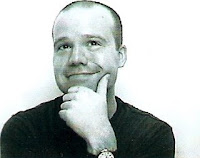
13a. Robert Cass is smug because the knowledge of scanning pictures has made him feel powerful. Like a fool, he doesn't realize he's at the mercy of technology, which holds the true power. Also, he's a robot who's been programmed to think he's human. (Didn't see that plot twist coming, did you?)

14. Robert Cass has enough unearned confidence to power a small country.

15. Robert Cass is spinning in his grave!

16. Robert Cass thinks his girlfriend's suicide note would've benefited from a second draft, which he plans to tell her once she comes out of the coma.

17. Robert Cass is an asshole.

18. Robert Cass is feelin' alright alright alright now that Matthew McConaughey Jr. has been born.

19. Robert Cass lights up your life.

20. Robert Cass has read the writing on the wall and wonders if 12 different variations on "penis" were really necessary.

21. Robert Cass is painfully aware that his best days as a drug mule are behind him.

22. Robert Cass is learning the hard way that not every woman he kidnaps will automatically fall in love with him.

23. Robert Cass can't believe you're wearing that but is too good a friend to tell you.

24. Robert Cass has banged a gong but has yet to get it on.

25. Robert Cass regrets sacrificing his one phone call at the county lock-up for this status update.

26. Robert Cass thinks "gunplay" is a funny little oxymoron.

27. Robert Cass enjoys the bingeing much more than the purging.

28. Robert Cass smells pretty.

29. Robert Cass knows he'd make a great deadbeat dad if some single mom with low self-esteem would just give him a chance.

30. Robert Cass wants Michael Phelps to thank him for not watching the Olympics and therefore not jinxing him. You too, Chicago Cubs.

31. Robert Cass was hoping Swing Vote would be more like CBS's Swingtown. Aside from Kevin Costner and Kelsey Grammer's steamy love scene, it was not.

32. Robert Cass had condor for dinner three days last week. It was his own special way of paying tribute to movie-star environmentalist Robert Redford.

33. Robert Cass is more Robert Carradine than Robert Redford. Life is an endless series of trade-offs.

34. Robert Cass loves black people, but he expresses it in ways that make every race uncomfortable.

35. Robert Cass doesn't need your pity. But he doesn't want to see it go to waste, either, so hand it over.

36. Robert Cass wishes he had the power to disable all cell phones just so he could watch everyone under 35 completely lose their shit.

37. Robert Cass has never been one of those "reluctant" sex symbols.

38. Robert Cass has been informed by the FAA that the bags under his eyes are now heavy enough to qualify as carry-ons.

39. Robert Cass likes when people celebrate his birthday early. It makes him feel even more like Jesus.

40. Robert Cass became a fan of himself the day he was born. Alright alright alright ...

41. Robert Cass is on a subliminable trip to nowhere!

42. Robert Cass wonders if the H in "Jesus H. Christ" is short for "Hussein." See you at the polls, evangelical swing voters!

43. Robert Cass has nothing to hide from media jackals and ill-informed bloggers like ... well, like himself.

44. Robert Cass is shaving with one hand and typing with the— OH MY GOD, MY BEAUTIFUL FACE!!!!

45. Robert Cass hopes you enjoy his impression of every single stockbroker photo from the past two weeks.

46. Robert Cass don't want to end up a cartoon in a cartoon graveyard.

47. Robert Cass tunes in to The Hills for the ennui, but he stays for the malaise.

48. Robert Cass just realized that describing himself as "the quiet loner type" in personal ads may be scaring off potential customers.

49. Robert Cass doesn't drown his sorrows, he waterboards them.

50. Robert Cass calls himself a "game changer" whenever he flips over a Scrabble board in disgust, while his opponents call him a 12-letter synonym for "incest participant."

51. Robert Cass is not the man who will fight for your honor.

52. Robert Cass thinks that if everyone votes for Obama and listens to TV on the Radio, racism will end. (Robert's recent lobotomy was a success.)

53. Robert Cass didn't realize why everyone was so excited this morning until he opened the newspaper and saw that it's Matthew McConaughey's birthday!

54. Robert Cass did it! He helped elect America's first black president. In his own small way, Robert is a hero. America loves Robert!

55. Robert Cass was so happy when ACORN registered his precious cat to vote, only to be disappointed when that vote was wasted on Bob Barr. No, Mr. Snickerbottoms! Bad kitty!

56. Robert Cass is alone with his thoughts. Quick, somebody call or text him so he can end this existential nightmare!

57. Robert Cass is Employee of the Millennium! The mug he stole from work says so.

58. Robert Cass is surprised how many black people are avoiding his spontaneous hugs on the street. It's almost as if November 4 never happened, and that's just sad.

59. Robert Cass enjoys long walks on the beach, especially if Jesus is there to do the heavy lifting.

60. Robert Cass thinks Eraserhead might not be the best choice for treasury secretary. America can't just erase its financial problems. What if there's a pencil shortage?

61. Robert Cass runs a think tank inside the 42nd Precinct drunk tank every Friday night.

62. Robert Cass is a bottomless refill of nonjudgmental love.

63. Robert Cass is celebrating his legal victory over corporate fat cats: the judge ruled that sex with a Coca-Cola vending machine is not vandalism!

64. Robert Cass loves Johnny Hates Jazz. But they've never acknowledged his love. Does that mean they hate him?

65. Robert Cass should've known better than to trust a governor with that much hair.

66. Robert Cass is ashamed of Rod Blagojevich, another in a long line of corrupt Republicans. So what if he's a Democrat? Robert is sticking to his talking points.

67. Robert Cass loves the fact that Facebook status updates are a voluntary invasion of privacy. You're always one step ahead, Department of Homeland Security.

68. Robert Cass is celebrating America's rich heritage this Christmas by becoming an Indian giver.

69. Robert Cass is the most critically acclaimed critic of himself.

70. Robert Cass is doing something incredibly mundane. Before Facebook there was no way to mass-distribute that kind of information. Thank you, technology.

71. Robert Cass loves telling fans of The Wire that T.J. Hooker covered the exact same ground 25 years ago.

72. Robert Cass is going to search far and wide for gainful employment. In particular, he's going to keep an open mind about Pacific Rim jobs.

73. Robert Cass was in a dark place the last few weeks, but now that his electric bill's been paid, he's feeling much better. He thanks you for your concern and your Paxil.

74. Robert Cass has cut himself shaving so many times in the past month that he's developed a reputation as a shark tease.

75. Robert Cass can't wait for Inauguration Day, when he gets another chance to pat himself on the back. You're still welcome, America!

76. Robert Cass wishes the reverse psychology he used in yesterday's impromptu hostage negotiation hadn't backfired so tragically, but as they say, live and learn.

77. Robert Cass was hoping the kids he's sponsored through Christian Children's Fund would be rich soccer stars by now. Ersatz absentee papa needs a loan.

78. Robert Cass is seeing Frost/Nixon today. He has $1,000 riding on Nixon winning at the buzzer. Robert hopes God and Ron Howard are listening right now.

79. Robert Cass is bold. And when he's angry, he's downright italicized.

80. Robert Cass is licking his wounds, despite his doctor's recommendation that he actually bandage them.

81. Robert Cass couldn't have picked a worse time to debut his new Death by Peanut Butter cookbook.

82. Robert Cass is a grown-ass man. But by identifying himself as such, he loses respect from all the grown-ass men who know that actions speak louder than status updates.

83. Robert Cass doesn't like private jokes. Except for that one Spencer told about you last week. That was hilarious, Spence! High five!

84. Robert Cass has been told he's the new Hemingway, "minus the talent and any trace of masculinity."


85. Robert Cass is more than just a gorgeous head of hair.

86. Robert Cass is a tall drink of water served in a Dixie cup.

87. Robert Cass has hit a snag. Now he's backing up over it. Now he's hitting it again. Now he's speeding away before anybody sees him.

88. Robert Cass pretends he's somewhere else when stuck in one-sided conversations with self-absorbed thespians. Acting really is all about make-believe.

89. Robert Cass has lost his looks! Oh, wait, there they are—it was hard to see them at first under all that back hair.

90. Robert Cass was crying on the inside until he noticed that crying on the outside gets a more immediate response.

91. Robert Cass believes that at the end of the day people will still be using that worn-out phrase.

92. Robert Cass has got to be somebody's baby, he's so fine.

93. Robert Cass thinks intelligence is sexy, especially when it has nice legs.

94. Robert Cass has the vapors!

95. Robert Cass makes sure his presence is always felt, like a pimple inside your nose.

96. Robert Cass was unable to convince the jury that he ran that international prostitution ring for charity.

97. Robert Cass is requesting that everyone limit their status updates to five words or less in accordance with the new global attitude toward reading.

98. Robert Cass is congratulating himself on yet another insignificant accomplishment!

99. Robert Cass always says a funny quip like "Let's take a trip back in time!" before stepping on a loud stranger's cell phone. Then he usually says something like "Please don't" before being punched by the stranger's girlfriend.

100. Robert Cass wonders if Zoloft can be prescribed to an economy.

101. Robert Cass should probably be paying attention to his lawyer, who's giving some sort of speech to the people sitting in the box-shaped thing.

102. Robert Cass thought your kid would be cuter.

103. Robert Cass is overrated as an underdog. (In honor of Earth Day, Robert is recycling an old status update.)

104. Robert Cass is digging your scene.

105. Robert Cass is confronted with the limits of his intelligence every time he tries to put the toaster "trap door" back on its hinges.

106. Robert Cass was surprised when he found out his date for 17 Again isn't 17. If that movie was rated R, he would've been her "adult guardian," and Robert just isn't ready for that kind of commitment yet.

107. Robert Cass insists that recipients of his mixes listen to them from start to finish, not in "a la carte" fashion on a "shuffle" setting. Robert is apparently unaware that it's no longer 1996.

108. Robert Cass is afraid his 22-month-old niece's attention span is longer than his own.

109. Robert Cass wants you to give him cash for ABBA Gold. (Thanks to a typing error while using Amazon.com, Robert now owns 1,111 copies of this album.)

110. Robert Cass is a man of mystery meat.

111.
Robert Cass is happy to be on the love train.

112. Robert Cass wishes he had a job, because then he'd have plenty of time to take important Facebook quizzes just like all of his working friends.

113. Robert Cass is turning a phrase (into a verbal catastrophe).

114. Robert Cass is a tastemaker. A badtastemaker, but everybody has to start somewhere.

115. Robert Cass is taking the rest of the decade off.

116. Robert Cass just found a missing tortilla chip in his chest hair. Robert is having a great day!

117. Robert Cass forgives you for not forgiving him, but the odds of him blowing up your pool again are, like, ten to one, so ease up already.

118. Robert Cass is going to crash a bunch of gay and interracial weddings this summer just to prove how sensitive he is.

119. Robert Cass isn't crazy about his close resemblance to a spider monkey after he gets out of the shower.

120. Robert Cass is tired of not being treated like a sex object.

121. Robert Cass wants to pinpoint the moment when "How are you?" became "I'm just saying hello. Please do not answer as if you were asked a question."

122. Robert Cass feels much more "mama say mama-sah muh-mah-koo-sah" than "de do do do, de da da da" right now, but that could change.

123. Robert Cass is taking an ego trip from the safety of his own home.

124. Robert Cass needs a laugh track that can produce at least five seconds of thunderous applause whenever he enters a room. Maybe Norman Lear has one he can borrow.

125. Robert Cass would love to be a private investigator as long as he could solve every crime in 60 minutes and only be shot in the shoulder once per season.

126. Robert Cass was unsure about President Obama's birthplace until he hired a Hawaiian P.I. to investigate. But now he has a nagging suspicion that the P.I. himself wasn't born in Hawaii. Anti-birthers, a new conspiracy is afoot ...

127. Robert Cass wonders how many anti-birthers are also pro-lifers.

128. Robert Cass probably wouldn't mind living next to a serial killer since they're generally known to be quiet tenants.

129. Robert Cass is an old-fashioned guy who prefers face-to-face narcissism over all other kinds.

130. Robert Cass is not a better man for having stolen the identity and wardrobe of a woman, but it's too late to return all these great pantsuits now.

131. Robert Cass is holding out for that teenage feeling.

132. Robert Cass is watching 1995's Last of the Dogmen on AMC, a modern-day Western starring Tom Berenger and narrated by Wilford Brimley. Robert's testosterone levels are dangerously high, and his mustache is growing at a freakishly rapid rate. Someone call for help!

133. Robert Cass is going out of his way to get out of his way.

134. Robert Cass thinks no one should die if they don't feel like it, and no one should go broke as long as Scientologists are willing to pay top dollar to harvest their eggs inside our brains. If you agree, send Robert a blank check.

135. Robert Cass defends Rep. Joe Wilson's right to express simple noun-verb agreement in response to complex issues.

136. Robert Cass is just a man with a tear-duct infection and a fetish for greasepaint.

137. Robert Cass wishes Kanye West would devote more time to noteworthy causes, like interrupting the Nobel Peace Prize ceremony next month. ("Mahatma Gandhi made some of the best peace of all time!")

138. Robert Cass is turning a blind eye to blind guys who say his hygiene makes them wish their sense of smell wasn't so heightened.

139. Robert Cass listed his birthday on Facebook as September 25, but it's actually September 35. He apologizes for the error and hopes you'll return with brand-new birthday wishes in ten days.

140. Robert Cass woke up on the wrong side of the bed on the wrong side of the tracks. But he was in the right time zone for once, so things are lookin' up!

141. Robert Cass is so excited that Chicago's been selected to host the 2016 Summer Olympic Games! (Robert is from the future. Did he fail to mention that?)

142. Robert Cass is confused. If Chicago wasn't selected to host the 2016 Summer Olympics, does that mean he's a time traveler from ... an alternate reality?! Or does it mean he should cut back on the Ambien? (Robert would prefer the former, not the latter.)

143. Robert Cass wonders if David Letterman presented a "Top Ten Employees I've Slept With" list at Thursday's grand-jury hearing.

144. Robert Cass is high on you! So if he eats all your Doritos or passes out in your bathtub or steals one of your credit cards, please take it as a compliment.

145. Robert Cass congratulates President Obama on winning Rookie of the Year in both the National and American leagues. That must've been one heck of a first pitch at the All-Star Game!

146. Robert Cass has trouble taking compliments from himself. (They always sound so insincere.)

147. Robert Cass is I was not a English major.

148. Robert Cass has miles to go before he sleeps. Robert is pretentious in a high school poetry kind of way.

149. Robert Cass has turned a corner in his life, wiping out seven innocent bystanders in the process.

150. Robert Cass is America's (self-proclaimed) sweetheart!

151. Robert Cass is fuhgeddinaboutit.

152. Robert Cass misses certain things from his childhood, including summer vacation, trips to his grandparents' house, and drivers using their turn signals.

153. Robert Cass dreamed he had a ménage à trois with Bruce Springsteen and The Wire: The Complete Series box set. He wasn't impressed, but he knows plenty of white male liberals who would be.

154. Robert Cass feels bad for all those gorillas that are exploited year in and year out as car-wash mascots.

155. Robert Cass is happy that Rush Limbaugh received such good treatment from those secretly Kenyan doctors in Hawaii.

156. Robert Cass just wants to be stalked with the same amount of enthusiasm, showmanship, and (of course) ALL-ENCOMPASSING OBSESSION that he selflessly puts forth EVERY SECOND OF EVERY DAY when he's stalking you. Is that too much to ask? You get what you give, people.

157. Robert Cass saw Avatar and learned that we should take care of the environment ... on other planets. But Robert lives on this planet, and it's not his fault the ground isn't a "designated" trash receptacle.

158. Robert Cass comes with cleaning instructions identical to those of his sneakers: "Just brush dirt off and treat surface with leather impregnation spray."

159. Robert Cass disappoints himself so you don't have to!

160. Robert Cass is tradin' in his Chevy for a Cadillac-ac-ac-ac-ac-ac.

161. Robert Cass can't stop asking "Who dat?" Specifically, "Who dat revivin' dat minstrel-show slang for the sake of a sports chant?" By the way, Robert has finally made some headway on his dissertation, which is now titled "Jar Jar Binks, Intergalactic Civil Rights Pioneer."

162. Robert Cass is like a greeting card covered in glitter: charming on the surface, but ultimately a huge mess.

163. Robert Cass has finally completed his exhaustive photo retrospective, "Bobby and His Middle Finger: Same Pose, Different Party, 1995-2009." Look for it soon at the Art Institute of Chicago. (Did you know that in some languages "at" means "on the sidewalk in front of"? It's a fact!)

164. Robert Cass takes comfort in knowing that he's still half a foot taller than Chuck Norris.

165. Robert Cass asks that you keep him in your thoughts and prayers, not the trunk of your car.

166. Robert Cass thinks those hatemongers in D.C. last weekend should be thrilled—insurance companies can no longer deny coverage because of the pre-existing condition known as "asshole."

167. Robert Cass is annoyed by loud, public cell-phone arguments, particularly the ones that aren't in English and therefore make it impossible for him to eavesdrop.

168. Robert Cass believes the size of a store is inversely proportional to the amount of guilt one feels for wasting hours inside said store without ever buying anything.

Monday, September 6, 2010

Jerry Lewis on the fleeting nature of funny

The Chicago Tribune published an article today about Jerry Lewis, the 84-year-old comedian-filmmaker-humanitarian who's been hosting the Muscular Dystrophy Association Telethon every Labor Day weekend since 1966.

Alternating between trash-talking and tenderness, sweetness and snark, conversation about Lewis' future endeavors compelled the star to consider what had brought him here—and the fleeting nature of comedy.

"Funny is fragile. It's elusive," Lewis said. "It's elusive to everyone because you're never going to get a handle on what's funny. And people don't stay funny. As we get older, we lose a spark.

"But I can make somebody laugh when I open my eyes. It's still there when I shut them," he continued.

Yes to funny being fragile, no to Lewis still being able to make people laugh whether he's awake or comatose. (Double no to any comedian who claims he's still funny in his mid-80s right after he says funny is fragile.)

Personally, I've never found his shtick funny. I do admire him for his fund-raising efforts on behalf of those with muscular dystrophy, but just like reporter Chris Lee, I'm curious about something ...


How did Lewis become interested in the disease in the first place?

"That's never been answered by me and never will be!" Lewis snapped, suddenly bristling with indignation. "The important thing is not why, but that I do."

Sunday, August 8, 2010

playing with infinity

I've now been home from the University of Illinois at Urbana-Champaign for a week. I was there July 21-31 for a "boot camp" semester in which an entire course in the school's Library and Information Science master's program was covered in ten days. Students were told well in advance to have all of the assigned readings completed before arriving on campus. Did the majority of us listen? Of course not.

But it was a great ten days, especially since we got to meet our fellow "distance learning" students before returning to our home cities, where we'll take classes online this fall.

Ten of us went on a tour of the UIUC library's Oak Street facility, where books are stacked 40 feet high and stored at temperatures of 50 degrees Fahrenheit. The first title I saw in those stacks was Playing With Infinity, a book about mathematical concepts by Rozsa Peter.

photo credit: Mallory Caise

Monday, August 2, 2010

Before Columbine, there was "RoboCop 2."

In the summer of 1990 RoboCop 2, directed by late-career sequel specialist Irvin Kershner (The Empire Strikes Back, Never Say Never Again), failed to improve upon either the box-office fortunes or critical success of its Paul Verhoeven-helmed predecessor.

But it still managed to be extremely violent.


One of its villains is a machine-gun-wielding, cop-strangling, curse-word-spewing preteen named Hob, who's pictured on this Topps trading card I found in a drawer at work a few years ago.


As you can see, the kid meets a bad end, but after a rash of school shootings in the mid- to late '90s—and especially after the Columbine High School massacre on April 20, 1999—I can't imagine any summer action film, even if it's rated R and squarely in the realm of futuristic sci-fi, including a character like Hob. That's somewhat unfortunate from a creative standpoint, but as far as self-censoring goes (did Topps really need to put a dead kid on a piece of cardboard that's meant to sell bubble gum?), it's not a huge loss.

Sunday, August 1, 2010

Lisa Simpson's (imaginary) wedding day

"Lisa's Wedding," a sixth-season episode of The Simpsons, aired March 19, 1995. Li'l Lisa was told her fortune at a Renaissance fair and saw a vision of herself getting married at a future date. Thanks to the magic of animation—and the fact that The Simpsons is apparently immune to cancellation—Lisa remains eight years old. Nevertheless, the future is now.

Friday, July 16, 2010

libraries

"It was my habit to go very slowly up the low, broad steps to the palace entrance, pleasing my eyes with the majestic lines of the building, and lingering to read again the carved inscriptions: Public Library—Built by the People—Free to All. Did I not say it was my palace? Mine, because I was a citizen; mine, though I was born an alien ... My palace—mine! ... All these eager children, all these fine browed women, all these scholars going home to write learned books—I and they had this glorious thing in common, this noble treasure house of learning. It was wonderful to say, This is mine; it was thrilling to say, This is ours."

—Mary Antin, from her autobiography The Promised Land (1913), describing her visits to the Boston Public Library as a child, after her family emigrated from Russia

Monday, July 12, 2010

belated World Cup fever courtesy of the Commodores

Lionel Richie has been more popular abroad than in the United States for years now. He's got a huge Iraqi fan base, and my first hint of his fame in other countries came in 1996, after some friends returned from a summer trip to Europe and reported that they'd heard his 1983 hit "All Night Long" wherever they went.
Soccer's also more popular abroad than it is in the U.S., so how come this 1981 video for "Lady (You Bring Me Up)" by the Commodores, Richie's old band, wasn't resuscitated during all that endless World Cup coverage? It's my favorite of all the Commodores' songs—in fact it's one of the Songs That Will Still Blow Me Away Years From Now™—and it ended up being Richie's next-to-last hit with the group before he embarked on his smash solo career. But as Popblerd's Mike Heyliger said earlier today in an e-mail about the music video, "I bet the surviving Commodores wish they could burn it."