Not the pinball game that will blow you away—just "the pinball." That's some industry shorthand I'd never heard before.
I came across this advertisement recently while writing about Wesley Snipes's legal troubles and career (and southern fast-food chains) over at Popdose.com. I didn't grow up playing a lot of pinball—early-'80s video games like Pac-Man and Frogger and the Atari home versions of those games were what excited me, so I would've figured that pinball games had peaked in popularity by the end of the '70s. Not so, according to a 2005 article in the Chicago Reader that focused on Chicago pinball manufacturers Stern Pinball and Williams Electronics, the manufacturer of the Demolition Man pinball ... game:
Sales of pinball machines peaked around 1992, when more than 100,000 were manufactured; among them was Bally's Addams Family game, the best-selling machine ever. But consumers were shifting to home video and computer games, and mall arcades were closing. One after another the remaining manufacturers folded. By 1996 only Williams Electronics—which had absorbed Bally and another legendary company, Midway—and Data East were left.
In 1999 Stern bought Data East's pinball division and renamed it Stern Pinball. A few months later Williams Electronics unveiled a new game that melded video games and traditional pinball, projecting video images onto the playing field. The company marketed it as the "future of pinball." But the machines were expensive to produce, and it was soon clear that a hybrid wasn't going to save pinball. Williams built only two games—Attack From Mars and Star Wars: Episode I—and that fall it decided to get out of pinball and focus on more lucrative slot machines. "I am the last man standing," says Stern.
Sunday, February 24, 2008
Friday, February 15, 2008
Dying is easy, comedy is hard. (Why do you think everyone dies?)
The Writers Guild of America's strike ended on Tuesday after more than three months. The previous strike, back in 1988, lasted five months. When that strike was in its final weeks, three Saturday Night Live writers were in Chicago performing a sketch-comedy revue called Happy Happy Good Show at the Victory Gardens Studio Theater. Below is a review of the show by Tom Valeo, from the July 15, 1988, issue of the Chicago Reader:
But I have a feeling that because O'Brien, Odenkirk, and Smigel were already SNL writers when they did this show, the audience was less inclined to give them the benefit of the doubt. If in fact the audience wasn't laughing, that is—some critics like to project their own opinion onto everyone around them. I know I find a lot of things funny that don't make me laugh out loud, but the goal for any comedian is to get laughs to come out of an audience member's mouth, not stick the thought "That was funny" in his or her brain without converting the thought into a laugh. (Don't deny that analyzing comedy in this fashion is always good for a chuckle or two.)
Comedy nerds will recognize the big names in Valeo's review, but they might not know that Dave Reynolds cowrote Finding Nemo (2003) and The Emperor's New Groove (2000) and has "additional material" credits on other Disney and Pixar movies like A Bug's Life (1998), Tarzan (1999), and Chicken Little (2005). And Rose Abdoo costarred in the short-lived CBS comedy Johnny Bago in the summer of '93. Robert Zemeckis directed the pilot episode, which had the same inventive comic energy of the films he cowrote with Bob Gale (I Wanna Hold Your Hand, Used Cars, Back to the Future), before he started saying "But seriously, you guys ..." with films like Contact (1997) and Cast Away (2000). But that's another topic for another day, of course.
If any television executives see Happy Happy Good Show, they may decide to let the writers' strike go on forever.The reason I posted that review is because I've written and performed sketch comedy myself in Chicago. It's not easy, and I doubt it's any easier in any other city. But Valeo's review proves that even the best sketch writers struggle—O'Brien made a comment on a Saturday Night Live retrospective last year that no matter how rich or famous you become in comedy, you still feel miserable when one of your ideas bombs—and you're not going to be able to please everyone all the time.
Created with the help of three striking Saturday Night Live writers—Conan O'Brien, Robert Smigel, and Bob Odenkirk—this comedy revue is remarkably unfunny. Almost nothing works. Almost everything is either facile or outlandish—or both.
One prolonged skit, for example, involves two southern crackers who sit outside a gas station making fun of all the big-city types who drive in expecting big-city services. One man wants to pay for his gas with a credit card; a woman needs a part for her Saab. The joke is that these two men are sitting in front of a gas station that has been transformed into a minimart capable of supplying anything—even the kosher pickled herring requested by an Orthodox Jew. That's not a bad premise for a satirical sketch, but the way the sketch is executed here is decidedly unfunny.
But if you want really unfunny stuff, try this: a lawyer described as having a "sharp legal mind" turns out to have a head shaped like a wedge.
After several skits like this, I began to suspect I was witnessing a pioneering experiment in comic minimalism—no jokes, no wit, no surprises. The audience certainly greeted the material with the respectful silence usually reserved for baffling artistic innovations. Maybe we were merely failing to respond to some major advance in the history of humor.
Alas, I'm afraid we were merely failing to respond. Our reaction was reflected in the face of Dave Reynolds, who, in a series of sketches, plays a director auditioning performers who are amazingly untalented. One is a ventriloquist, played by Smigel, whose routine consists of mumbled small talk with his dummy. "Sure is hot out." "Yeah, it's hot." Another is a teacher, played by Debby Jennings, whose twitches, nervous chatter, and momentary trances ("The children say I've gone to Jupiter when I do that") are perfectly mimicked by a student, played by Rose Abdoo. As he beholds these performances, Reynolds's face reveals astonishment, combined with intense politeness, as though he doesn't want the auditioners to know how pointless their stuff is. His expression could be applied just as well to Happy Happy Good Show.
Actually, the performers themselves are pretty skillful. They're just stuck with unfunny material. (Of course, they created the material, but that's another matter.) In one skit, Hugh Callaly, a veteran of the long-running revue All You Can Eat and the Temple of Dooom, does a fine impersonation of Clint Eastwood playing Dirty Harry. The setup just isn't very clever: As Detective Stone, Callaly pushes his way into a restaurant and tries to spoil the dinner of a mobster suspected of murder by showing him photographs of the mutilated victim. When that fails, the detective brings in a decomposing leper for the mobster to stare at. It's an outlandish premise, to be sure, but unfunny.
In one of the audition segments, Bob Odenkirk and Conan O'Brien are wonderfully manic as "bithespians" who team up to give a single performance—O'Brien does the visual aspect, while Odenkirk provides the vocals. Jennings has a great face for a comedian, and Rose Abdoo actually is a wonderful mimic, just like the student she plays. She does a "completely gratuitous" impersonation of Audrey Meadows playing Alice Kramden in The Honeymooners, and she's terrific.
Happy Happy Good Show is a vivid demonstration of how elusive comedy can be. Some of the skits, when described, sound potentially funny. The Dirty Harry segment, for example, has promise, and Callaly returns later as a eunuch who shows up in an office one day intent on protecting "the women of the harem." Such setups invite improvisation, but two skits in the show ridicule that very technique. In one, the Impets, "the world's only improvisational puppets," perform improv games that bring to mind the ImprovOlympic, developed in Chicago by Charna Halpern and Del Close. (The host is a puppet called Delkie who, like Close, has a chronic smoker's cough.) Ironically, the spoof works best when it resembles the ImprovOlympic the most.
The other skit is a savage put-down of Second City, in which O'Brien portrays a performer soliciting the audience's help in developing a character known as Spoon Man, who talks like a pirate and holds a spoon over one eye. He chooses the most prosaic answers imaginable to the questions posed by the audience: "Where did you get your spoon?" "At the Spoon Connection." In between questions he says things like "This is really helping me build my character." When he's finished, he removes the spoon, drops out of character, and thanks the audience sincerely for their help. "I'm going to go backstage now and write some of this down," he says.
Now, Second City is certainly ripe for satire. The revues have lapsed into a predictable formula, and the use of improvisation has become self-conscious and stale. But the bitterness of O'Brien's spoof undercuts the humor, and makes the skit look like the expression of a personal grudge.
Even worse, the skit is unintentional self-satire. The prosaic answers that Spoon Man gives to the questions are as obvious and unfunny as much of the material in Happy Happy Good Show. The revue, like Spoon Man's character, needs a lot more work before it can become even remotely humorous.
But I have a feeling that because O'Brien, Odenkirk, and Smigel were already SNL writers when they did this show, the audience was less inclined to give them the benefit of the doubt. If in fact the audience wasn't laughing, that is—some critics like to project their own opinion onto everyone around them. I know I find a lot of things funny that don't make me laugh out loud, but the goal for any comedian is to get laughs to come out of an audience member's mouth, not stick the thought "That was funny" in his or her brain without converting the thought into a laugh. (Don't deny that analyzing comedy in this fashion is always good for a chuckle or two.)
Comedy nerds will recognize the big names in Valeo's review, but they might not know that Dave Reynolds cowrote Finding Nemo (2003) and The Emperor's New Groove (2000) and has "additional material" credits on other Disney and Pixar movies like A Bug's Life (1998), Tarzan (1999), and Chicken Little (2005). And Rose Abdoo costarred in the short-lived CBS comedy Johnny Bago in the summer of '93. Robert Zemeckis directed the pilot episode, which had the same inventive comic energy of the films he cowrote with Bob Gale (I Wanna Hold Your Hand, Used Cars, Back to the Future), before he started saying "But seriously, you guys ..." with films like Contact (1997) and Cast Away (2000). But that's another topic for another day, of course.
Wednesday, February 13, 2008
corporate gossip
Rupert Murdoch is totally making the moves on Yahoo! right now.See, Yahoo! has been telling anyone who'll listen that its current boy toy, Microsoft, isn't the corporation Yahoo! thought it was. Microsoft said it would make the world Yahoo!'s oyster, but Yahoo! wants some pearls with that oyster, you know what I'm sayin'?
Microsoft was all "What am I, made of money?" and Yahoo! was like "Yeah" and Microsoft was all "Corporate behemoths have feelings too, baby" and Yahoo! was like "Uh-huh, well, my feelings are hurt because you won't provide for me." Then Yahoo! made a sexual joke using the words "micro" and "soft," and that's when Microsoft walked away from the dinner/negotiating table.
Then Rupert Murdoch showed up and Yahoo! was like "Ooh, I like your accent," and Rupert acted like he plays rugby and wrestles alligators in the outback every weekend, but girl, you know that ain't true. Now Microsoft's jealous and Rupert's trying to add one more notch on his billion-dollar bedpost and Yahoo!'s starting to get a reputation as a slut. I'm not saying it's fair, but people will talk.
Sunday, February 10, 2008
This panda was just hibernating.
In case any of my 2.4 readers care, Mulberry Panda 96 isn't going to become one of those blogs that used to have new stuff to read every week for a few months but now looks like it'll only be updated on the 12th of never. I started a bunch of drafts last fall that I never finished, but now I'm finally in the process of finishing them as a way of productively procrastinating instead of writing my weekly piece for Popdose, which is always late.
Here are three completed posts that I started writing prior to January:
9/18: Blythe Danner should've married David Gates.
9/25: slow news day
11/21: "Escape from Cleveland"
12/10: These Carpenters never performed any miracles.
I apologize in advance to anyone who was hoping for a reference to Bread in the 9/25 and 11/21 posts. If you can think of a way to sneak one in after the buzzer, please let me know.
Here are three completed posts that I started writing prior to January:
9/18: Blythe Danner should've married David Gates.
9/25: slow news day
11/21: "Escape from Cleveland"
12/10: These Carpenters never performed any miracles.
I apologize in advance to anyone who was hoping for a reference to Bread in the 9/25 and 11/21 posts. If you can think of a way to sneak one in after the buzzer, please let me know.
Tuesday, February 5, 2008
Super Tuesday
I voted this morning, even though I probably should've checked to see how Joe Biden's been doing in the presidential race lately before I cast my vote. I've just been so busy ...
Last week I found a discarded campaign flyer in my apartment building for James Byrne, who's running for Cook County judge, eighth subcircuit. The front of the flyer is designed like a movie poster, with Byrne and Cook County commissioner Forrest Claypool standing next to each other and smiling; below them is the tagline "On Feb. 5th, Justice Soars," and underneath that is the title "Legal Eagles."
Legal Eagles, you may remember, is a 1986 romantic comedy starring Robert Redford and Debra Winger. Is Byrne trying to tell voters that he's got a thing for Forrest Claypool? If so, how can I expect him to focus on his duties as a judge when his head is somewhere in the clouds? It'd be okay if I wrote mash notes to a fellow juror while pretending to listen to testimony, but it'd be grossly irresponsible if Byrne were to write them to Claypool while doing the same.
Sorry, James, but you're not getting my vote*. I wish you the best in your pursuit of Forrest's love and affection, but not in your pursuit of justice**.

Last week I found a discarded campaign flyer in my apartment building for James Byrne, who's running for Cook County judge, eighth subcircuit. The front of the flyer is designed like a movie poster, with Byrne and Cook County commissioner Forrest Claypool standing next to each other and smiling; below them is the tagline "On Feb. 5th, Justice Soars," and underneath that is the title "Legal Eagles."
Legal Eagles, you may remember, is a 1986 romantic comedy starring Robert Redford and Debra Winger. Is Byrne trying to tell voters that he's got a thing for Forrest Claypool? If so, how can I expect him to focus on his duties as a judge when his head is somewhere in the clouds? It'd be okay if I wrote mash notes to a fellow juror while pretending to listen to testimony, but it'd be grossly irresponsible if Byrne were to write them to Claypool while doing the same.
Sorry, James, but you're not getting my vote*. I wish you the best in your pursuit of Forrest's love and affection, but not in your pursuit of justice**.

* I voted for Byrne after all. I'm a sucker for a good love story, and since Legal Eagles was a disappointment 22 years ago, I'm hoping this all-male "reimagining" will be more satisfying. I don't want James and Forrest to reimagine Legal Eagles' theme song, though, no matter what the naysayers still have to say and nay about it all these years later—Rod Stewart's "Love Touch" should remain untouched. But unloved? Oh, it's always been loved by me. (But not while touching.)
** Keith Sweat, please don't come between James and Forrest. I'm serious! Just walk away.
Monday, February 4, 2008
Mica Paris
In the summer of '89 one of my favorite songs was "My One Temptation" by Mica Paris. A jazz-inflected pop-soul number, it didn't burn up the American charts back then, but the song did make its way to Top 40 radio, at least in Georgia, where I grew up. "My One Temptation" was a breezy triumph then, and remains so today.
I didn't know much about Paris at the time, and MTV wasn't playing the video for "My One Temptation," as far as I can remember, but I found it on YouTube the other day. I know I've seen pictures of Paris before, but when I watched the video I couldn't help but think, "Oh, so that's what she looks like."
I wonder if there's a name for that phenomenon—if it can even be called a phenomenon. Maybe it's that I was seeing Mica Paris in motion for the first time, whereas before I'd only seen still photos.
Or maybe I felt like I was seeing her for the first time because I'm in love.
That's right, Ms. Paris, it's your move now.
I didn't know much about Paris at the time, and MTV wasn't playing the video for "My One Temptation," as far as I can remember, but I found it on YouTube the other day. I know I've seen pictures of Paris before, but when I watched the video I couldn't help but think, "Oh, so that's what she looks like."
I wonder if there's a name for that phenomenon—if it can even be called a phenomenon. Maybe it's that I was seeing Mica Paris in motion for the first time, whereas before I'd only seen still photos.
Or maybe I felt like I was seeing her for the first time because I'm in love.
That's right, Ms. Paris, it's your move now.
Thursday, January 31, 2008
Sweat in January
R&B singer Keith Sweat put out a Christmas album back in November called A Christmas of Love. Sweat-y love. Jason Hare and Jeff Giles wrote about it in December, and as silly as a smooth-groove ballad called "Be Your Santa Claus" might sound in theory (translation: Sweat wants to come into your home late at night, taste your milk and pink cookies, and then leave before you wake up) , the execution of it works much better than it has any right to.
On the back of the album, which showed up in the "Free CDs" bin at work earlier this month, is Sweat's Web site address: TheSweatHotel.com. I haven't visited yet, and I doubt I can reserve a room that overlooks the Pool of Sweat, but I am curious as to why the new jack swinger didn't go with "The Sweat Lodge" for his Web site's name. Sounds more natural, right? And he'd probably sell a bunch more CDs in Indian casinos if he made the switch.
Right now my apartment is something of a sweat lodge. Heat is included in the rent, which is a good thing since I live in Chicago and it can get very cold in the winter and heat is expensive, but it's a bad thing when there's no way to turn down the heat. My building has many elderly residents, and it's been less than ten years since people under 60 have been allowed to move in. The management seems to feel that what's good enough for my 96-year-old neighbor is good enough for 32-year-old me, so if I don't like it being 76 degrees or higher 24 hours a day, that's my problem.
Recently I called the management office to (1) complain about the heat again since my winter blanket is complaining that I don't love it anymore, and (2) tell them that a bad smell was coming from the 96-year-old neighbor's apartment and was now drifting into my bathroom in addition to the hallway. My neighbor doesn't come out of her apartment that often, and she doesn't have any regular visitors, and I couldn't remember if I'd heard her TV from the hallway in the past week, so I started to wonder if she'd died. The next morning I heard the building manager and the head of maintenance knock on my neighbor's door. I'm glad to know she's alive. I wasn't glad to hear that their first question was "Are you too cold?"
Too cold?! Even a Kalahari bushman would be asking you to turn the heat down in this place. I called you because I thought my neighbor's corpse was cold, not her apartment, for Christ's sake! (In the management's defense, I certainly wouldn't want to knock on a 96-year-old's door and ask, "Are you still alive? Okay, just checking. Thanks!")
I pray every night that it'll continue to be windy and below 20 in Chicago just so the temperature in my apartment will remain steady around 70 degrees. Please don't let it warm up enough so that it'll snow, Mother Nature, and don't let the temperature rise above 40. It's not that I can't open my windows in the dead of winter. It's that I'm fundamentally opposed to such a thing.
But I expect obstacles like this in January, which is why I'm glad it's almost over. You can read more (of the same) about the cold shoulder I give to the coldest month over at Popdose.com, the new Web site I'm editing with the aforementioned Jason Hare and Jeff Giles. They edit much more than I do, but I hope to maintain this blog, write and edit for Popdose, look for a new job, continue performing improv and sketch comedy, grow a foot taller, and make a fashionably late entrance into the presidential race as a crazy Ross Perot-type independent. Wish me luck!
On the back of the album, which showed up in the "Free CDs" bin at work earlier this month, is Sweat's Web site address: TheSweatHotel.com. I haven't visited yet, and I doubt I can reserve a room that overlooks the Pool of Sweat, but I am curious as to why the new jack swinger didn't go with "The Sweat Lodge" for his Web site's name. Sounds more natural, right? And he'd probably sell a bunch more CDs in Indian casinos if he made the switch.
Right now my apartment is something of a sweat lodge. Heat is included in the rent, which is a good thing since I live in Chicago and it can get very cold in the winter and heat is expensive, but it's a bad thing when there's no way to turn down the heat. My building has many elderly residents, and it's been less than ten years since people under 60 have been allowed to move in. The management seems to feel that what's good enough for my 96-year-old neighbor is good enough for 32-year-old me, so if I don't like it being 76 degrees or higher 24 hours a day, that's my problem.Recently I called the management office to (1) complain about the heat again since my winter blanket is complaining that I don't love it anymore, and (2) tell them that a bad smell was coming from the 96-year-old neighbor's apartment and was now drifting into my bathroom in addition to the hallway. My neighbor doesn't come out of her apartment that often, and she doesn't have any regular visitors, and I couldn't remember if I'd heard her TV from the hallway in the past week, so I started to wonder if she'd died. The next morning I heard the building manager and the head of maintenance knock on my neighbor's door. I'm glad to know she's alive. I wasn't glad to hear that their first question was "Are you too cold?"
Too cold?! Even a Kalahari bushman would be asking you to turn the heat down in this place. I called you because I thought my neighbor's corpse was cold, not her apartment, for Christ's sake! (In the management's defense, I certainly wouldn't want to knock on a 96-year-old's door and ask, "Are you still alive? Okay, just checking. Thanks!")
I pray every night that it'll continue to be windy and below 20 in Chicago just so the temperature in my apartment will remain steady around 70 degrees. Please don't let it warm up enough so that it'll snow, Mother Nature, and don't let the temperature rise above 40. It's not that I can't open my windows in the dead of winter. It's that I'm fundamentally opposed to such a thing.
But I expect obstacles like this in January, which is why I'm glad it's almost over. You can read more (of the same) about the cold shoulder I give to the coldest month over at Popdose.com, the new Web site I'm editing with the aforementioned Jason Hare and Jeff Giles. They edit much more than I do, but I hope to maintain this blog, write and edit for Popdose, look for a new job, continue performing improv and sketch comedy, grow a foot taller, and make a fashionably late entrance into the presidential race as a crazy Ross Perot-type independent. Wish me luck!
Friday, January 11, 2008
songs that double back
I love the piped-in music that's played in grocery stores and drug stores. I often get to hear songs I haven't heard on the radio in years, and since I don't have any objections to soft rock, the lighter sounds that are typically played in these stores don't make me want to shoplift out of spite. The other day I heard "Doubleback," ZZ Top's big single featured in 1990's Back to the Future Part III. "The Power of Love" it was not, but just as Huey Lewis made a cameo in the first Back to the Future in '85, the ZZ Top triumvirate showed up in Part III to play Old West musicians who had spinning-guitar straps all the way back in 1885.When I heard "Doubleback" the other day at the grocery store, it wasn't the first time I'd heard it in that setting; the first time was last month. And last spring I walked into the grocery store and heard the opening boi-oi-oing strains of Bread's "If," then walked in exactly one week later and heard it once again from the very beginning.
I don't think this is a case of the Jewel-Osco supermarket chain having too short of a playlist. I think it means I go to the grocery store more frequently than I realized. (I don't own a car, so it's a lot easier on my arms if I go three or four times a week rather than one. I HAVE WEAK ARMS, OKAY?) I also think Jewel-Osco wants me to buy more bread.
Saturday, December 15, 2007
I'm dreaming of a blurry Christmas.
Monday, December 10, 2007
These Carpenters never performed any miracles.
I'm listening to the Carpenters' second album, Close to You (1970), right now, which I checked out from the library. (By the by, why isn't the RIAA taking on libraries in court? They're music-pirating enablers. But only if you can get your computer to actually recognize and load their scratched CDs, of course.) You know what? The Carpenters are no Bread.
Bread has songs like "Baby I'm-a Want You," "Make It With You," and "Sweet Surrender" that make me nostalgic for a time I never knew: the early '70s. And Beatlesque songs like "Daughter" make me realize how smart and reliable David Gates, James Griffin, and company were as musical craftsmen, while tracks like "Fancy Dancer" show that Bread could eliminate the soft from soft rock on occasion and deliver on that front as well. It's not their fault the heavier numbers didn't make it onto the radio. They were studio musicians, songwriters for hire, and producers before they came together to form Bread in the late '60s, and their experience and earned confidence come through in their music. You're in good hands with Bread.
Just as the Carpenters are no Bread, Chicago is no Bread, either, although Chicago would probably be offended by that statement, because I bet they think they rock much harder than they actually do. "Hard Habit to Break" almost rocks at one point, but that's because Bill Champlin sounds like he's popping a few capillaries when he sings "I'm addicted to you, baby!!!!" From what I've heard, most of the guys in Chicago were addicted to something that resembles baby powder. But not Peter Cetera. He was too mellow and blond for that. But if he was surrounded by cokeheads on endless tours throughout the late '60s, all of the '70s, and the early '80s, can you blame him for finally leaving after 18 years to pursue "The Glory of Love" and the glory of a paycheck that didn't have to be split a dozen ways? Children generally leave home at 18. Cetera had earned the right to grow up, move away, and pursue an adult (contemporary) education.
The Carpenters didn't do themselves any favors on Close to You covering songs like "Help!" and "Baby It's You" in the most Muzak-y way possible. The songs on the 1994 tribute album If I Were a Carpenter, which my ex-girlfriend had in college, are ten times better than any song on Close to You, especially Matthew Sweet's cover of "Let Me Be the One." Actually, I do like "(They Long to Be) Close to You," but that's partly because singing the waaaaaah-ah-ah-ah-aaaaahs in the song with a complete lack of subtlety is too much fun to pass up.
I'm not going to make an anorexia joke here, but I do think it's safe to say that both Karen and Richard Carpenter would've been wise to add Bread to their musical diet.
Bread has songs like "Baby I'm-a Want You," "Make It With You," and "Sweet Surrender" that make me nostalgic for a time I never knew: the early '70s. And Beatlesque songs like "Daughter" make me realize how smart and reliable David Gates, James Griffin, and company were as musical craftsmen, while tracks like "Fancy Dancer" show that Bread could eliminate the soft from soft rock on occasion and deliver on that front as well. It's not their fault the heavier numbers didn't make it onto the radio. They were studio musicians, songwriters for hire, and producers before they came together to form Bread in the late '60s, and their experience and earned confidence come through in their music. You're in good hands with Bread.
Just as the Carpenters are no Bread, Chicago is no Bread, either, although Chicago would probably be offended by that statement, because I bet they think they rock much harder than they actually do. "Hard Habit to Break" almost rocks at one point, but that's because Bill Champlin sounds like he's popping a few capillaries when he sings "I'm addicted to you, baby!!!!" From what I've heard, most of the guys in Chicago were addicted to something that resembles baby powder. But not Peter Cetera. He was too mellow and blond for that. But if he was surrounded by cokeheads on endless tours throughout the late '60s, all of the '70s, and the early '80s, can you blame him for finally leaving after 18 years to pursue "The Glory of Love" and the glory of a paycheck that didn't have to be split a dozen ways? Children generally leave home at 18. Cetera had earned the right to grow up, move away, and pursue an adult (contemporary) education.
The Carpenters didn't do themselves any favors on Close to You covering songs like "Help!" and "Baby It's You" in the most Muzak-y way possible. The songs on the 1994 tribute album If I Were a Carpenter, which my ex-girlfriend had in college, are ten times better than any song on Close to You, especially Matthew Sweet's cover of "Let Me Be the One." Actually, I do like "(They Long to Be) Close to You," but that's partly because singing the waaaaaah-ah-ah-ah-aaaaahs in the song with a complete lack of subtlety is too much fun to pass up.I'm not going to make an anorexia joke here, but I do think it's safe to say that both Karen and Richard Carpenter would've been wise to add Bread to their musical diet.
Friday, December 7, 2007
why my favorite TV show died
A radio station in Charleston, South Carolina, claimed that Moonlighting, my favorite show when I was younger, never recovered after the writers' strike that delayed the beginning of the 1988 fall season. Or so my friend Beau told me, as his wife, Kristen, had told him. But those Charleston DJs were only half right. Here's what I wrote to Beau and Kristen ...Moonlighting was hurt by a lot of things. As one person who worked on the show said, the show's slow demise came about because "Cybill Shepherd got pregnant and Bruce Willis got rich." Shepherd got pregnant in early '87, during the show's third season, although her pregnancy wasn't worked into the show until that fall, during the fourth season. Glenn Gordon Caron, the show's creator, said he couldn't see any way around the pregnancy—avoiding the issue would've prevented Shepherd from being shot below chest level, and that would've made scenes with her very static and confined to desks or tables.
Long story short, the first part of the fourth season involved Maddie in Chicago staying with her parents while trying to figure out whether she should go back to David and the detective agency and let him know she was pregnant (the audience, not to mention David, didn't know if it was his baby or third-season guest star Mark Harmon's). Because Maddie was in Chicago, David solved cases with Herbert Viola, a.k.a. "Booger" from Revenge of the Nerds. Not as much fun as Maddie and David solving crimes together, but by that point they'd "done it," which took all of the sexual tension away. It's a slippery slope once the romantic leads on a TV show get together, of course, and unlike Cheers, Moonlighting didn't have a bunch of supporting characters to fall back on in case viewers got sick of the main characters bickering back and forth. All you had were Herbert and Ms. DiPesto, who were funny in small doses, yet they ended up having two episodes to themselves during the fourth season while Shepherd and Willis were indisposed. Two whole episodes—and only 14 were produced that season.The fourth season was cut short due to the writers' strike, but during the previous season Moonlighting had only produced 15 episodes, and the one before that produced just 18. It was supposed to deliver 22 episodes a season just like any other show, but it never did, partly due to Glenn Gordon Caron being such a perfectionist and delivering script rewrites at the last minute. (I've read that production on his current show, NBC's Medium, is somewhat disorganized, but he's managed to produce 22 episodes per season so far, as he did for the one and only season of his 1999-2000 CBS series, Now and Again.)
I do like Ms. DiPesto and Herbert Viola more now that I'm older. But when I was in grade school I just wanted to see Maddie and David flirt and watch Bruce Willis be cool and funny. He hasn't been all that funny since Moonlighting, and he wasn't even that funny during the last two seasons. He looked a bit bored, to be honest.
By the way, I lied when I said "long story short." Willis was in those early fourth-season episodes much more than Shepherd, and he was reportedly angry that he had to carry the show while shooting Die Hard at the same time. By the tail end of the season Maddie had returned to Los Angeles, but she got married to a stranger on a train on her way back from Chicago, which made almost every fan groan (the grade-school ones anyway). She called it off the day of the "official" wedding, realizing she still loved David, and then the season ended one episode later, with the quickie annulment of Maddie's quickie marriage and a comment on the writers' strike in the last segment. Like other Moonlighting episodes, this one had ended up a few minutes short, so an extra scene was filmed with Maddie and David talking to the audience about how the writers were on strike and they didn't know how to fill the extra time. They ended up making Herbert dance to "Wooly Bully."
When the show returned in December of '88 along with other network shows, Maddie had a miscarriage, which made more fans groan, but at least that concluded the show's soap-opera aspects for the most part. Then it was back to Maddie and David solving crimes together, which I was happy to see when I was in seventh grade, but once I got older I realized it was ridiculous—as Willis said in an interview after the show ended, there was no way those two would've continued to work together after having gone through such a long, stormy affair.
Moonlighting was put on hiatus by ABC in February of '89 because its ratings had fallen so far (those ratings probably wouldn't look so bad today, though, compared to what a normal low-ranking network show generates in 2007); it returned two months later, but on Sundays at 8 instead of Tuesdays at 9. The fifth season consisted of 13 episodes, and the last six were cranked out quickly in order to get Moonlighting up to the bare minimum needed for syndication on a cable network—Lifetime showed it in the early '90s, and Bravo aired it earlier this decade, but it never reached regular syndication like, say, Magnum, P.I. or NYPD Blue, which produced more episodes per season over longer runs.So yeah, the writers' strike didn't help Moonlighting get its momentum back, but it was already in serious trouble before that.
Wednesday, November 28, 2007
This is only a test dream.
Don't drink a Diet Dr Pepper and eat some chocolate at 10:30 on a Sunday night thinking you'll be up for the next few hours doing some work only to decide an hour and a half later that you want to go to bed because then you'll find that it's hard to get to sleep right away and you'll have dreams about a "71% chance of severe flooding" and this nagging fear that while you're out of town for the weekend your basement apartment will fill up with water.
(Breathe.)
I woke up Monday morning and remembered that I live on the fifth floor of my building, not in a basement apartment. I see you've gotten the better of me once again, Mr. Subconscious. Well played.
But here's something interesting in terms of my anxiety dreams—recently I had one in which it was opening night of a play and I didn't know my lines yet. How could I? I had been cast earlier that day. I have this kind of anxiety dream pretty often, probably because I perform at least once a week in Chicago doing improv and sketch comedy; in every dream I buy the circumstances hook, line, and sinker. Never do I catch myself during the dream and say to myself, "Robert, there's no way anyone would cast you in a play the afternoon before the show opens." Besides, Mr. Subconscious would probably reply, "Exotic dancers get 'cast' the day of their first show all the time, stupid." He's right, you know. I've seen Showgirls. I know the drill.
The plays I do in my dreams are always community theater productions, which is an important point, because just like recurring high school "test dreams," why should any of our various anxiety dreams ever advance past adolescence? I know nothing about psychology beyond the Psychology 101 class I took at UGA in the fall of '95, but scientifically speaking, is adolescence the time of greatest continual anxiety in a person's life? Everything else is certainly heightened during those years.
I'm drifting away from what I wanted to say, but I am talking about dreams, so drifting seems appropriate. Here's the interesting thing about this recent anxiety dream of mine where I didn't know my lines—I wasn't anxious. For some reason I decided in the dream that since I hadn't had any time to learn the lines and since there was nothing I could do about it, I might as well just improvise and see what happens. Listen and react, which is what acting's all about anyway. And don't worry about what you can't control.
So that's what I did in the dream, and although the other actors knew I was screwing up and the audience could tell something wasn't quite right, I got through it. (Come to think of it, all of the actors were in the audience. And the audience was tiny. Wait, were the actors the entire audience? Wow, just like at the improv shows I do every Sunday night!) The dream didn't end with me panicking before I woke up.
Was the dream a sign that I've finally gained some real confidence onstage and that I should now be totally fearless when improvising (no, there are no lines to memorize beforehand when you do improv shows, but you can still end up speechless and afraid onstage in front of a room of strangers, and that doesn't feel any better than forgetting your lines), or was it a confirmation of the confidence already achieved? Is there a difference? And was the dream really about performing, or was it about gaining confidence in every aspect of life? And are all these questions turning this post into a test dream? Please don't be anxious. You didn't have time to study, so there's no need to worry about what you can't control. Especially not something as uncontrollable as a dream.
(Breathe.)
I woke up Monday morning and remembered that I live on the fifth floor of my building, not in a basement apartment. I see you've gotten the better of me once again, Mr. Subconscious. Well played.
But here's something interesting in terms of my anxiety dreams—recently I had one in which it was opening night of a play and I didn't know my lines yet. How could I? I had been cast earlier that day. I have this kind of anxiety dream pretty often, probably because I perform at least once a week in Chicago doing improv and sketch comedy; in every dream I buy the circumstances hook, line, and sinker. Never do I catch myself during the dream and say to myself, "Robert, there's no way anyone would cast you in a play the afternoon before the show opens." Besides, Mr. Subconscious would probably reply, "Exotic dancers get 'cast' the day of their first show all the time, stupid." He's right, you know. I've seen Showgirls. I know the drill.
The plays I do in my dreams are always community theater productions, which is an important point, because just like recurring high school "test dreams," why should any of our various anxiety dreams ever advance past adolescence? I know nothing about psychology beyond the Psychology 101 class I took at UGA in the fall of '95, but scientifically speaking, is adolescence the time of greatest continual anxiety in a person's life? Everything else is certainly heightened during those years.
I'm drifting away from what I wanted to say, but I am talking about dreams, so drifting seems appropriate. Here's the interesting thing about this recent anxiety dream of mine where I didn't know my lines—I wasn't anxious. For some reason I decided in the dream that since I hadn't had any time to learn the lines and since there was nothing I could do about it, I might as well just improvise and see what happens. Listen and react, which is what acting's all about anyway. And don't worry about what you can't control.
So that's what I did in the dream, and although the other actors knew I was screwing up and the audience could tell something wasn't quite right, I got through it. (Come to think of it, all of the actors were in the audience. And the audience was tiny. Wait, were the actors the entire audience? Wow, just like at the improv shows I do every Sunday night!) The dream didn't end with me panicking before I woke up.
Was the dream a sign that I've finally gained some real confidence onstage and that I should now be totally fearless when improvising (no, there are no lines to memorize beforehand when you do improv shows, but you can still end up speechless and afraid onstage in front of a room of strangers, and that doesn't feel any better than forgetting your lines), or was it a confirmation of the confidence already achieved? Is there a difference? And was the dream really about performing, or was it about gaining confidence in every aspect of life? And are all these questions turning this post into a test dream? Please don't be anxious. You didn't have time to study, so there's no need to worry about what you can't control. Especially not something as uncontrollable as a dream.
Wednesday, November 21, 2007
"Escape from Cleveland"
That was the subject heading of a spam e-mail I received at work. "U.S. embassy bomb attack 'foiled'" was another one. Both were decoys—inside each e-mail was an ad for Cialis, the anti-impotency pill. However, it would be nice to think that in some far-off land an embassy attack really was foiled because a lonely security guard, valiantly fighting loneliness with a local prostitute, just happened to glance over at a security monitor and notice a suspicious package by the front gate—without Cialis, he would've been dozing off at his desk once again.
So thank you, erection pill. You're a true patriot.
I didn't know until I looked at one of those trick-but-no-treat e-mails (try explaining to your suspicious, snickering coworkers that you were merely trying to stay abreast of the news) that Cialis offers a chewable brand of its pill called Cialis Soft. Isn't that name counterintuitive? If you want to be hard, you need to swallow a hard pill. No exceptions.
Alright, enough foreplay.
Recently I saw John Carpenter's Escape from New York (1981) for the first time. When the sequel, Escape from L.A., came out in 1996, I saw it in the theater because I was reviewing movies that summer for the University of Georgia's radio station, WUOG. I saw a lot of movies in the theater that summer, but I realized at that point that I could never become a professional movie critic, because I liked almost everything I saw.
I didn't know until I looked at one of those trick-but-no-treat e-mails (try explaining to your suspicious, snickering coworkers that you were merely trying to stay abreast of the news) that Cialis offers a chewable brand of its pill called Cialis Soft. Isn't that name counterintuitive? If you want to be hard, you need to swallow a hard pill. No exceptions.
Alright, enough foreplay.Recently I saw John Carpenter's Escape from New York (1981) for the first time. When the sequel, Escape from L.A., came out in 1996, I saw it in the theater because I was reviewing movies that summer for the University of Georgia's radio station, WUOG. I saw a lot of movies in the theater that summer, but I realized at that point that I could never become a professional movie critic, because I liked almost everything I saw.
Of course, that crisis of conscience hasn't prevented certain critics from earning a living and getting their names on plenty of print ads under quotes like "Fred Claus takes its place among the all-time holiday classics!" But those critics are essentially PR flacks/hacks whose expenses at press junkets are paid by the studios in the hopes that the hacks will thank the studios by writing nice things about their bad movies.
But I digress. The reason I liked almost every movie I saw in the summer of '96 had to do with the fact that I wasn't paying to see the ones I was reviewing. Ignorant people who'll never learn how to behave in public could talk all they wanted, because for once they weren't doing it on my dime!
A friend suggested two years ago that I dedicate this blog to reviewing audiences at movies rather than the movies themselves, because she enjoyed hearing my rants about the Lowest Common Denominator showing up an hour into a screening and acting like they'd just walked into their living room. But the only thing that kind of blog would do is expand the hole in my soul; it wouldn't be the best way to process my ultimately fruitless rage. My movie-audience rants are meant to be funny, but the underlying anger doesn't have as much resonance as, say, a rant about poverty. Then again, who cares about poverty? Not me. Movies cost too much for poor people to see them, so they're not on my radar.
Besides, one of the reasons I get mad at people talking during movies is because I paid to get in just like they did, and when they're talking, they're wasting my money. I know they don't care that they're wasting their own money. And I know I'll never be able to convince them to stay home and flush $20 down the toilet while they flap their gums on the phone, though they'd probably find it to be an equally satisfying experience. But if I didn't have to pay to see movies, I bet I'd be able to block out the surrounding noise a lot better and be much happier in the long run. A happy movie critic isn't necessarily a good critic, however.
I watched Escape from New York on DVD. In my living room. It's possible that the lack of surrounding noise from the aforementioned LCDs helped me notice a giant continuity error in the film, but I bet I would've noticed it even in a noisy theater.
See, near the beginning of the film, the antihero protagonist, Snake Plissken (Kurt Russell, sounding silly doing a Clint Eastwood impression, but it's hard not to like Russell, so I let it pass), is given 23 hours to find the president of the United States, who's played by Donald Pleasence. The British actor sounds just as British as ever, but Escape is set in a futuristic 1997, where Manhattan has been turned into an island prison, and Americans can presumably elect a foreigner as their commander-in-chief just as long as he's notably creepy the way Pleasence is in most of his roles.
There's also the nice irony of America being so overburdened by crime by 1988, as the film's prologue states, that the federal government would turn Manhattan into a huge prison—reminiscent of my home state's roots as a prison colony for English debtors—and then hand over control of the country to an Englishman 200 years after the American Revolution.
But I digress again. Air Force One has been hijacked and flown into a skyscraper in Manhattan—no, not the World Trade Center, 9/11 conspiracy theorists—but the president was ejected in an escape pod before the plane crashed. Now he's been kidnapped by prisoners, and Plissken, a decorated military officer turned bank robber who's about to be sent to New York for life, is given a chance to win his freedom by rescuing the president. The catch is that if he doesn't get the president to safety in 23 hours, he'll be killed by some sort of microscopic, timer-activated explosive that's been injected into his bloodstream. Hell, with that kind of motivation I'd never miss a deadline, either.
So, when Plissken is told he has 23 hours to find the president, we see the timer on his government-issued watch counting down from 22:57:37. We next see him getting in his government-issued jet glider, presumably a few minutes after we last saw him. But now he's being told that he has 21 hours left to find the president.
Wait ... what happened to the last two hours?
Was a really long scene deleted? Did Plissken take a nap? Lord knows I love to procrastinate, so I'm not trying to pass judgment on you, sir, but this is no time to take a nap!
Then we see the clock in the Ellis Island command center, which is counting down from 20:17:43. That's closer to 20 hours than 21. What the hell was Snake doing for the last two and a half hours?!
If you're going to introduce a ticking clock in a story, you have to stick with it. For the sake of suspense you can delay the inevitable here and there as the clock gets closer to zero, but why shave off two hours right at the beginning without any explanation? Otherwise the first two episodes of every season of 24 should feature Jack Bauer checking his e-mail and drinking coffee at CTU headquarters.
You'd think this sort of continuity mistake could've been fixed in postproduction by rerecording a line or two of dialogue and inserting a new shot of the countdown clock, but it wasn't. Has anyone out there heard John Carpenter explain the reason for this error, possibly on an older DVD or laserdisc that contains a commentary track?
Carpenter's Assault on Precinct 13 (1976), Halloween (1978), and The Fog (1980) have all been remade in this decade, and a remake of Escape from New York is currently in development. (After Escape, Carpenter and Russell made 1982's The Thing, a remake of 1951's The Thing from Another World.) The remake obviously won't be set in 1997, but since it will presumably have a higher budget than the original, somebody should take the time to make sure the script makes better use of its time.
But I digress. The reason I liked almost every movie I saw in the summer of '96 had to do with the fact that I wasn't paying to see the ones I was reviewing. Ignorant people who'll never learn how to behave in public could talk all they wanted, because for once they weren't doing it on my dime!
A friend suggested two years ago that I dedicate this blog to reviewing audiences at movies rather than the movies themselves, because she enjoyed hearing my rants about the Lowest Common Denominator showing up an hour into a screening and acting like they'd just walked into their living room. But the only thing that kind of blog would do is expand the hole in my soul; it wouldn't be the best way to process my ultimately fruitless rage. My movie-audience rants are meant to be funny, but the underlying anger doesn't have as much resonance as, say, a rant about poverty. Then again, who cares about poverty? Not me. Movies cost too much for poor people to see them, so they're not on my radar.
Besides, one of the reasons I get mad at people talking during movies is because I paid to get in just like they did, and when they're talking, they're wasting my money. I know they don't care that they're wasting their own money. And I know I'll never be able to convince them to stay home and flush $20 down the toilet while they flap their gums on the phone, though they'd probably find it to be an equally satisfying experience. But if I didn't have to pay to see movies, I bet I'd be able to block out the surrounding noise a lot better and be much happier in the long run. A happy movie critic isn't necessarily a good critic, however.
I watched Escape from New York on DVD. In my living room. It's possible that the lack of surrounding noise from the aforementioned LCDs helped me notice a giant continuity error in the film, but I bet I would've noticed it even in a noisy theater.
See, near the beginning of the film, the antihero protagonist, Snake Plissken (Kurt Russell, sounding silly doing a Clint Eastwood impression, but it's hard not to like Russell, so I let it pass), is given 23 hours to find the president of the United States, who's played by Donald Pleasence. The British actor sounds just as British as ever, but Escape is set in a futuristic 1997, where Manhattan has been turned into an island prison, and Americans can presumably elect a foreigner as their commander-in-chief just as long as he's notably creepy the way Pleasence is in most of his roles.There's also the nice irony of America being so overburdened by crime by 1988, as the film's prologue states, that the federal government would turn Manhattan into a huge prison—reminiscent of my home state's roots as a prison colony for English debtors—and then hand over control of the country to an Englishman 200 years after the American Revolution.
But I digress again. Air Force One has been hijacked and flown into a skyscraper in Manhattan—no, not the World Trade Center, 9/11 conspiracy theorists—but the president was ejected in an escape pod before the plane crashed. Now he's been kidnapped by prisoners, and Plissken, a decorated military officer turned bank robber who's about to be sent to New York for life, is given a chance to win his freedom by rescuing the president. The catch is that if he doesn't get the president to safety in 23 hours, he'll be killed by some sort of microscopic, timer-activated explosive that's been injected into his bloodstream. Hell, with that kind of motivation I'd never miss a deadline, either.
So, when Plissken is told he has 23 hours to find the president, we see the timer on his government-issued watch counting down from 22:57:37. We next see him getting in his government-issued jet glider, presumably a few minutes after we last saw him. But now he's being told that he has 21 hours left to find the president.
Wait ... what happened to the last two hours?
Was a really long scene deleted? Did Plissken take a nap? Lord knows I love to procrastinate, so I'm not trying to pass judgment on you, sir, but this is no time to take a nap!
Then we see the clock in the Ellis Island command center, which is counting down from 20:17:43. That's closer to 20 hours than 21. What the hell was Snake doing for the last two and a half hours?!If you're going to introduce a ticking clock in a story, you have to stick with it. For the sake of suspense you can delay the inevitable here and there as the clock gets closer to zero, but why shave off two hours right at the beginning without any explanation? Otherwise the first two episodes of every season of 24 should feature Jack Bauer checking his e-mail and drinking coffee at CTU headquarters.
You'd think this sort of continuity mistake could've been fixed in postproduction by rerecording a line or two of dialogue and inserting a new shot of the countdown clock, but it wasn't. Has anyone out there heard John Carpenter explain the reason for this error, possibly on an older DVD or laserdisc that contains a commentary track?
Carpenter's Assault on Precinct 13 (1976), Halloween (1978), and The Fog (1980) have all been remade in this decade, and a remake of Escape from New York is currently in development. (After Escape, Carpenter and Russell made 1982's The Thing, a remake of 1951's The Thing from Another World.) The remake obviously won't be set in 1997, but since it will presumably have a higher budget than the original, somebody should take the time to make sure the script makes better use of its time.
Thursday, November 15, 2007
Stephen Thomas Erlewine sums up the Goo Goo Dolls in 348 words.
I really like Stephen Thomas Erlewine's album reviews at allmusic.com, even if he praises so many new albums that I sometimes end up with the feeling that he's secretly in cahoots with the major labels. Then again, there's nothing wrong with being positive and looking on the bright side of things as much as you can, and if I wanted to stick with my conspiracy theory I'd be forced to concede that Erlewine's just as much in cahoots with indie labels as he is with the majors.
Below is his not-so-positive review of the Goo Goo Dolls' Greatest Hits, Volume One: The Singles (Warner Bros.). I like a few of the band's songs, especially "Name," but Erlewine hits the nail right on the head.
Hard to believe it, but at one point all the Goo Goo Dolls ever wanted to be was the Replacements—nothing more than a ragged band playing kickass rock & roll along with the occasional heartbroken ballad. Of course, they were never as chaotic as the 'Mats; they were good guys where Paul Westerberg and company were ornery, unpredictable artists, prone to self-sabotage, legendarily throwing away their potential breakthrough gig on Saturday Night Live.
That wasn't the Goo Goo Dolls. They never met an opportunity they didn't turn down, slowly morphing from baby Replacements to the cheerful corporate rockers showcased on this 2007 compilation, Greatest Hits, Vol. 1: The Singles. This 14-track collection ignores the entire first act of the band's history, picking up the tale with 1995's A Boy Named Goo, which not so coincidentally is where the band abandoned its 'Mats aspiration and started being the alt-rock band that played by the rules (even then, Boy's breakthrough hit, "Name," is re-recorded here, the better to make it fit with the placid pop of their later years). Where all their peers shunned power ballads, the Goo Goo Dolls embraced them, slowly turning into a group that specialized in soaring ballads and anthems with no discernible roots: this was merely modern rock that existed in the moment, usually moments that occurred in offices, malls, waiting rooms, and Michael Bay's Transformers.
Surely there was an audience for this, as the group ruled the adult Top 40 charts throughout the 2000s without ever having a single that truly made waves in the pop charts, the way "Name," "Iris," and "Slide" did in the late '90s. It wasn't for lack of trying, though: the Dolls kept refining and smoothing that blueprint out, so each progressive year turned more anonymous. But they were reliable, and they satisfied fans, many of whom would probably never have even known the name Westerberg, not even as the name of the high school in Heathers. For those fans, this Greatest Hits will satisfy, as it has all those hits that sound the same, and nothing else. —Stephen Thomas Erlewine
Friday, November 9, 2007
Railroad Rod!
Recently we received some PR at work about a popular singer and his favorite hobby.

I also liked this little portion of the Model Railroader PR:
It turns out that Terje Fjelde, my friend from the Norwegian part of the blogosphere, has also been allowed exclusive access to Rod Stewart's toy train set, and he's not even a professional journalist—he's just Norwegian. Way to go, Terje! And thanks for sending along the photo below. It looks like Rod didn't like it when you touched his miniatures. Did you tell him it was merely a love touch?
Rod Stewart and model trains
The famed singer raises the curtain on his 23- x 124-foot model railroad layout for Model Railroader magazine.
WAUKESHA, WI — Hall of fame rock-n-roller Rod Stewart unwinds after a concert by kitbashing and scratchbuilding. These terms may sound like code words that explain the mysterious antics of a world-famous celebrity, but instead they describe techniques for one of the world's most popular hobbies: model railroading.
The acclaimed songwriter of hits like "Reason to Believe" and "Maggie May" contacted Model Railroader magazine to talk about his other achievement, "Grand Street & Three Rivers Railroad."
Stewart offered Model Railroader magazine exclusive access to his 1,500-square-foot model-train layout that takes up the third floor of his Beverly Hills home. The visit to his home and interview with Stewart resulted in a cover story, "Rod Stewart's Three Rivers City," for the December 2007 issue of Model Railroader, the world's best-selling magazine dedicated to the hobby. The December 2007 issue hits newsstands November 6.
"I'm proud to be a railway modeler," Stewart said. "It means more to me to be on the cover of Model Railroader than to be on the cover of a music magazine."

I also liked this little portion of the Model Railroader PR:
More famous model railroadersOhhhhh, so they're all toy train enthusiasts. See, I knew that DiMaggio and Sinatra are both dead, so that's one thing those guys have in common. And I knew that Rod Stewart can be animated when he's performing, but that doesn't make him an animated character like The Simpsons' Rev. Lovejoy. And just as the First Church of Springfield's pastor isn't real, neither is that rumor from the '70s about Stewart's stomach being pumped and semen being part of the inventory. But you're telling me that all of these celebrities, whether living, dead, or entirely fictional, are toy train enthusiasts, Model Railroader? I never would've guessed!
What do Rod Stewart, Rev. Lovejoy, Joe DiMaggio, and Frank Sinatra have in common? They're all toy train enthusiasts. Find out other members of the top 10 celebrity model railroaders as compiled by the editors of Model Railroader.
It turns out that Terje Fjelde, my friend from the Norwegian part of the blogosphere, has also been allowed exclusive access to Rod Stewart's toy train set, and he's not even a professional journalist—he's just Norwegian. Way to go, Terje! And thanks for sending along the photo below. It looks like Rod didn't like it when you touched his miniatures. Did you tell him it was merely a love touch?
Monday, October 29, 2007
You're a mean one, Billy Bob.
Last September Billy Bob Thornton starred in School for Scoundrels, in which he played a prickish teacher of some sort. This September he starred in Mr. Woodcock, in which he played a prickish teacher of some sort. (The title is a clue, see.) At first glance—and I'm not ruling out that glance being an overtired or even tipsy one—it was easy to think that the ads for Mr. Woodcock were actually ads for a deluxe-edition School for Scoundrels DVD. A three-hour director's cut of the film, maybe? Nope, different movies, yet Thornton has been gravitating to comedies where he plays mean bastards for a while now. The first was 2003's Bad Santa. The 2005 remake of The Bad News Bears (which lost its "The" for the remake) was number two, and School for Scoundrels and Mr. Woodcock round out the unofficial tetralogy (fancy word alert!). Bad Santa was somewhat of a sleeper hit, grossing $60 million, but the other three films didn't stay in theaters very long. Then again, the days of Star Wars playing at your local four-screen theater for almost an entire year are long gone. Today even a $300 million hit like Transformers is out on video just three months after it opens in theaters.
I haven't seen any of Thornton's bastard movies, so I can't say how effective he is as a bastard, but if he plays one again I hope he promotes the movie by going to people's houses, drinking all their hard liquor, smashing their priceless family heirlooms, molesting their pets, and, worst of all, leaving the toilet seat up. He won't vacate the premises until you promise to go see his new bastard movie. While you're at the theater he'll stay in your house and try on your underwear, draw mustaches on all your family photos, download copyrighted music onto your computer, spill beverages on your books and CDs, molest your pets again for old times' sake, and, worst of all, thumb through your magazines. That's just plain mean!
Did you know Thornton has put out four albums since 2001? The latest is Beautiful Door, which came out in July. If you don't buy it, Billy Bob may bust down the beautiful front door of your tastefully furnished home and make you buy it. Don't piss him off. You wouldn't like him when he's bastard-ish.(One more thing about School for Scoundrels: when it came out last year, the TV ads featured Ben Stiller, who appeared to have a small part in the film, but his name wasn't anywhere to be seen in the print ads. Why feature him prominently in the TV ad campaign but not the print one? I'm guessing it's because MGM, the distributor, and the Weinstein Company, who produced the film, needed all the help they could get luring people into theaters after weak focus-group screenings, and if that meant exploiting Stiller's popularity for an extended cameo that he probably did as a favor to the film's director, Starsky & Hutch's Todd Phillips, then so be it.)
Tuesday, October 23, 2007
Have you heard Bill Withers's new ringle?
Yep, I said "ringle." Earlier today I received an e-mail from Amazon.com ...
As someone who has purchased or rated music by Bill Withers, you might like to know that Ain't No Sunshine [Ringle] will be released on November 6, 2007.
What's a Ringle? A Ringle is a CD with 2-3 tracks that also includes a ringtone of a hit track delivered directly to your cell phone. A Ringle may also include additional bonus content such as mobile wallpaper and alternate downloadable content for your computer if you have a phone which is not compatible with Ringles.
This is the first I've heard of ringles. What I'm curious about is whether or not you can buy the whole package—the songs "Ain't No Sunshine," "Harlem," and "Sweet Wanomi," all of which are worth having, plus the "Ain't No Sunshine" ringtone—on iTunes, therefore bypassing the CD. I wouldn't go that route, but "the kids" most likely would since they (presumably) have no sentimental attachment to CDs and probably won't care if CDs become obsolete, just as I didn't care when vinyl became obsolete in the late '80s, which is when I started to buy music. Then again, "the kids" probably aren't dying to have Bill Withers's 1971 classic coming out of their cell phones anyway. Not unless someone like Lil Wayne samples it.
I bought albums solely on cassette from 1987 to 1990, but the only tapes I mourn are the blank ones I used—and which I still own and listen to, although not as often as I'd like—not the flimsy ones produced by record labels that often became unwound or warped within what seemed like the first dozen plays. (I do remember listening to some of my cassettes every day after school for months at a time, so maybe I'm to blame for the shortened life span of cassettes like Simply Red's Picture Book and George Benson's Breezin'.)
I still have some of my album cassettes from the '80s and '90s, but I'm afraid to play most of them these days for fear it might be the last time. And my cassette singles, or "cassingles," are ticking time bombs as far as I'm concerned. Those really did begin to warp after just a few listens.
Many vinyl enthusiasts miss the days of LPs like Sgt. Pepper's Lonely Hearts Club Band, which gave buyers plenty to look at on the cover. CDs are certainly smaller than LPs, but at least you're still seeing cover art in a square shape. Cassettes offered a square image shoved into a rectangular space a dozen times smaller, and even then the cover art sometimes only occupied two-thirds of the cover—I bought four of Steely Dan's albums on cassette back in '88, and each one had Steely Dan's name and the album's name printed below the cover art on a blue background, which was somewhat helpful considering that the writing on the cover art was almost too small to read sometimes. Cassettes were also worse than LPs and CDs because you were often given zero liner notes, especially with older albums like Steely Dan's.
Wait, I'm supposed to be talking about ringles. But my phone doesn't even play ringtones, so I've already lost interest. However, I am interested in hearing "Sweet Wanomi" again. I'm going to go home right now and listen to it, on a blank tape from last year.
As someone who has purchased or rated music by Bill Withers, you might like to know that Ain't No Sunshine [Ringle] will be released on November 6, 2007.What's a Ringle? A Ringle is a CD with 2-3 tracks that also includes a ringtone of a hit track delivered directly to your cell phone. A Ringle may also include additional bonus content such as mobile wallpaper and alternate downloadable content for your computer if you have a phone which is not compatible with Ringles.
This is the first I've heard of ringles. What I'm curious about is whether or not you can buy the whole package—the songs "Ain't No Sunshine," "Harlem," and "Sweet Wanomi," all of which are worth having, plus the "Ain't No Sunshine" ringtone—on iTunes, therefore bypassing the CD. I wouldn't go that route, but "the kids" most likely would since they (presumably) have no sentimental attachment to CDs and probably won't care if CDs become obsolete, just as I didn't care when vinyl became obsolete in the late '80s, which is when I started to buy music. Then again, "the kids" probably aren't dying to have Bill Withers's 1971 classic coming out of their cell phones anyway. Not unless someone like Lil Wayne samples it.
I bought albums solely on cassette from 1987 to 1990, but the only tapes I mourn are the blank ones I used—and which I still own and listen to, although not as often as I'd like—not the flimsy ones produced by record labels that often became unwound or warped within what seemed like the first dozen plays. (I do remember listening to some of my cassettes every day after school for months at a time, so maybe I'm to blame for the shortened life span of cassettes like Simply Red's Picture Book and George Benson's Breezin'.)
I still have some of my album cassettes from the '80s and '90s, but I'm afraid to play most of them these days for fear it might be the last time. And my cassette singles, or "cassingles," are ticking time bombs as far as I'm concerned. Those really did begin to warp after just a few listens.
Many vinyl enthusiasts miss the days of LPs like Sgt. Pepper's Lonely Hearts Club Band, which gave buyers plenty to look at on the cover. CDs are certainly smaller than LPs, but at least you're still seeing cover art in a square shape. Cassettes offered a square image shoved into a rectangular space a dozen times smaller, and even then the cover art sometimes only occupied two-thirds of the cover—I bought four of Steely Dan's albums on cassette back in '88, and each one had Steely Dan's name and the album's name printed below the cover art on a blue background, which was somewhat helpful considering that the writing on the cover art was almost too small to read sometimes. Cassettes were also worse than LPs and CDs because you were often given zero liner notes, especially with older albums like Steely Dan's.
Wait, I'm supposed to be talking about ringles. But my phone doesn't even play ringtones, so I've already lost interest. However, I am interested in hearing "Sweet Wanomi" again. I'm going to go home right now and listen to it, on a blank tape from last year.
Sunday, October 21, 2007
no mo'
Momentum is not my friend. Or maybe it's the other way around. Yeah, it probably is the other way around—just when momentum gets going, I abandon it. Sorry about that, mo'. When I go out of town for a weekend, I get behind on everything for about two weeks, not just the three days I'm away from home.
I haven't really posted anything new here since September 16. That was over a month ago. And writing about Chris Tucker and his Rush Hour paychecks after mid-August, or writing about summer movies after Labor Day, seems a little pathetic at this point, but I will finish those posts ... at some point. The people who mostly put up YouTube clips and a sentence or two on their blogs are smart—they get in and get out quickly, and within a few hours everyone knows what they think about Britney Spears's legal troubles. I'm proud of my long-windedness, but it doesn't help when trying to keep this blog updated on a regular basis.
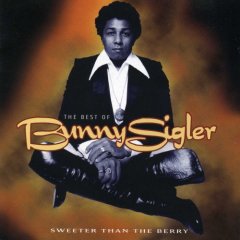
I did see something exciting yesterday afternoon, though. I was watching a Magnum, P.I. rerun on Me TV at 1:00 (more on Magnum later, but I always say "more later," don't I?) when, during a commercial, I flipped around and came across a rerun of Soul Train on WGN. There on the screen was none other than Bunny Sigler, who I wrote about at Jefitoblog back in June. Now, what's interesting here is that I rarely turn to WGN when channel surfing, so it was pure luck that I caught Sigler on Soul Train performing "That's How Long I'll Be Loving You" and, later in the show, "Things Are Gonna Get Better." (Both songs are included on the 1996 compilation The Best of Bunny Sigler: Sweeter Than the Berry, which you can read more about below.)
I'm not going to lie and say that Sigler's performances were not to be missed. Just like on American Bandstand, performers on Soul Train lip-synched their songs, but were the songs always cut off around the two-minute mark? Both of Sigler's numbers were faded out, as were those of the Staple Singers, who were the other guests on Soul Train's June 8, 1974, show. Roebuck "Pops" Staples introduced each of his singing daughters by name and by star sign, in case you wanted to keep score at home.
Host Don Cornelius allowed the Soul Train dancers to ask the Staple Singers some questions; one dancer named Bobby Washington charmingly stumbled his way through a question for Mavis Staples about whether she enjoyed singing lead on so many of the group's songs. Her response was, essentially, "Yes, it feels good." But haven't we all asked a question that ended up being longer than the answer, and wasn't the answer usually coming from a member of the opposite sex? Yes, but for most of us the question wasn't asked on national television and then re-run 33 years later for our children (and possibly grandchildren) to see.
And now, as decreed by Mr. Cornelius, NO MORE QUESTIONS! It's time for the Staple Singers to pretend like they're singing and for the dancers to actually dance, but self-consciously so, since they're on camera. (Hi, mom!)
In the mid- to late '90s, before VH1 became the carnival sideshow that it is today, it aired reruns of The Midnight Special and American Bandstand, because at the time '70s nostalgia was very big. I still have some Midnight Special performances on tape from those days, and John Travolta's performance of his 1976 single "Let Her In" on Bandstand is burned into my memory. (Was it considered attractive in the mid-'70s for men to have potbellies? If not, then no one told Travolta.) But where were the Soul Train reruns? VH1 dropped the ball, so pick it up, BET! But so far, no such luck.
That's where you come in, Me TV. Soul Train started in Chicago in 1970 before moving to Los Angeles the following year, just as American Bandstand moved to L.A. in 1964 after 12 years in Philadelphia. Guess what station Soul Train was on in Chicago before becoming syndicated? WCIU, the same channel that now operates Me TV.
It was meant to be, Me. Besides, you're already showing Sanford and Son, Good Times, and The Cosby Show in your prime-time lineup. It wouldn't hurt to add another show aimed at black audiences to the mix.
Below is a write-up of Bunny Sigler's 1996 Sony/Legacy compilation, which originally appeared on Jefitoblog as part of its "Cutouts Gone Wild!" series on June 28, 2007.
Bunny Sigler, The Best of Bunny Sigler: Sweeter Than the Berry (1996)
Memphis and Detroit have nothing to be ashamed about, but for me, the most exciting soul music came out of Philadelphia in the 1970s, particularly the strings-laden, socially conscious kind produced by Kenny Gamble and Leon Huff at Philadelphia International Records, home to artists like the O'Jays, Harold Melvin and the Blue Notes, Billy Paul, and Bunny Sigler. (Here's where you say, "Bunny who?" Here's where I repeat his name.)
Sigler never scored huge crossover hits like those other artists did, but as Epic/Legacy's retrospective of his years at PIR proves, it wasn't for a lack of trying. He did have a #22 pop hit in 1967 with "Let the Good Times Roll/Feel So Good" on the Cameo Parkway label, but by '68 the label had expired. Unfortunately, Sigler's contract hadn't, and until it did, he wasn't allowed to record for anyone else. Frustrated by this sudden halt in his career, he started hanging out at the offices of Gamble and Huff, who were friends of his, and chose to vent his frustration by practicing karate moves in the hallways, which scared visitors. In order to get Sigler out of the halls and away from clients, Gamble and Huff moved him into a room with a staff writer and put him to work.
As a writer at PIR, Sigler penned O'Jays classics like "When the World's at Peace" (with Gamble and Phil Hurtt) and "You Got Your Hooks in Me," and on Sweeter Than the Berry he covers the group's big hit "Love Train," emphasizing its gospel foundation over seven minutes of impassioned vocals. (No slouch when it comes to singing, Sigler was nicknamed "Mr. Emotion" in his early years.)
Sweeter Than the Berry also features the tender "Regina," which must've sounded mighty fine coming out of AM radios in 1972, and the upbeat love songs "Keep Smilin'" and "Things Are Gonna Get Better." But my favorite tracks may be the most lighthearted ones: the 1975 Christmas jam "Jingle Bells [Part I]"; "I Lied," in which Sigler makes screeching-tire noises over the sound of screeching tires; and the infectiously fun and funky "Shake Your Booty." I defy you to remain seated starting around the two-minute mark of this song as Sigler begins counting off numbers and his backing band, Instant Funk, matches him with horn blasts for every digit. High-pitched background chatter from Sigler's "nieces and nephews" is also thrown into the mix, and there's a false ending, which is followed by "Uncle Bunny" finally calling it quits, which is then followed by another minute of music. It's hard to keep a great song down.
If it sounds like I'm making Sigler out to be the Ray Stevens of Philly soul, that's not my intention. Instead he's the guy at the party gently telling friends like Gamble and Huff to lighten up, have a drink, dance a little. For every "For the Love of Money" or "Am I Black Enough for You?," Billy Paul's brilliant but commercially disastrous follow-up to the #1 "Me and Mrs. Jones" (Gamble pushed for it to be a single, much to Paul's dismay), Philadelphia International needed a song like "Shake Your Booty" in its catalog to remind everyone that, well, things are gonna get better. And until they do, it can't hurt to laugh.
I haven't really posted anything new here since September 16. That was over a month ago. And writing about Chris Tucker and his Rush Hour paychecks after mid-August, or writing about summer movies after Labor Day, seems a little pathetic at this point, but I will finish those posts ... at some point. The people who mostly put up YouTube clips and a sentence or two on their blogs are smart—they get in and get out quickly, and within a few hours everyone knows what they think about Britney Spears's legal troubles. I'm proud of my long-windedness, but it doesn't help when trying to keep this blog updated on a regular basis.
I did see something exciting yesterday afternoon, though. I was watching a Magnum, P.I. rerun on Me TV at 1:00 (more on Magnum later, but I always say "more later," don't I?) when, during a commercial, I flipped around and came across a rerun of Soul Train on WGN. There on the screen was none other than Bunny Sigler, who I wrote about at Jefitoblog back in June. Now, what's interesting here is that I rarely turn to WGN when channel surfing, so it was pure luck that I caught Sigler on Soul Train performing "That's How Long I'll Be Loving You" and, later in the show, "Things Are Gonna Get Better." (Both songs are included on the 1996 compilation The Best of Bunny Sigler: Sweeter Than the Berry, which you can read more about below.)
I'm not going to lie and say that Sigler's performances were not to be missed. Just like on American Bandstand, performers on Soul Train lip-synched their songs, but were the songs always cut off around the two-minute mark? Both of Sigler's numbers were faded out, as were those of the Staple Singers, who were the other guests on Soul Train's June 8, 1974, show. Roebuck "Pops" Staples introduced each of his singing daughters by name and by star sign, in case you wanted to keep score at home.
Host Don Cornelius allowed the Soul Train dancers to ask the Staple Singers some questions; one dancer named Bobby Washington charmingly stumbled his way through a question for Mavis Staples about whether she enjoyed singing lead on so many of the group's songs. Her response was, essentially, "Yes, it feels good." But haven't we all asked a question that ended up being longer than the answer, and wasn't the answer usually coming from a member of the opposite sex? Yes, but for most of us the question wasn't asked on national television and then re-run 33 years later for our children (and possibly grandchildren) to see.
And now, as decreed by Mr. Cornelius, NO MORE QUESTIONS! It's time for the Staple Singers to pretend like they're singing and for the dancers to actually dance, but self-consciously so, since they're on camera. (Hi, mom!)
In the mid- to late '90s, before VH1 became the carnival sideshow that it is today, it aired reruns of The Midnight Special and American Bandstand, because at the time '70s nostalgia was very big. I still have some Midnight Special performances on tape from those days, and John Travolta's performance of his 1976 single "Let Her In" on Bandstand is burned into my memory. (Was it considered attractive in the mid-'70s for men to have potbellies? If not, then no one told Travolta.) But where were the Soul Train reruns? VH1 dropped the ball, so pick it up, BET! But so far, no such luck.
That's where you come in, Me TV. Soul Train started in Chicago in 1970 before moving to Los Angeles the following year, just as American Bandstand moved to L.A. in 1964 after 12 years in Philadelphia. Guess what station Soul Train was on in Chicago before becoming syndicated? WCIU, the same channel that now operates Me TV.
It was meant to be, Me. Besides, you're already showing Sanford and Son, Good Times, and The Cosby Show in your prime-time lineup. It wouldn't hurt to add another show aimed at black audiences to the mix.
Below is a write-up of Bunny Sigler's 1996 Sony/Legacy compilation, which originally appeared on Jefitoblog as part of its "Cutouts Gone Wild!" series on June 28, 2007.
Bunny Sigler, The Best of Bunny Sigler: Sweeter Than the Berry (1996)Memphis and Detroit have nothing to be ashamed about, but for me, the most exciting soul music came out of Philadelphia in the 1970s, particularly the strings-laden, socially conscious kind produced by Kenny Gamble and Leon Huff at Philadelphia International Records, home to artists like the O'Jays, Harold Melvin and the Blue Notes, Billy Paul, and Bunny Sigler. (Here's where you say, "Bunny who?" Here's where I repeat his name.)
Sigler never scored huge crossover hits like those other artists did, but as Epic/Legacy's retrospective of his years at PIR proves, it wasn't for a lack of trying. He did have a #22 pop hit in 1967 with "Let the Good Times Roll/Feel So Good" on the Cameo Parkway label, but by '68 the label had expired. Unfortunately, Sigler's contract hadn't, and until it did, he wasn't allowed to record for anyone else. Frustrated by this sudden halt in his career, he started hanging out at the offices of Gamble and Huff, who were friends of his, and chose to vent his frustration by practicing karate moves in the hallways, which scared visitors. In order to get Sigler out of the halls and away from clients, Gamble and Huff moved him into a room with a staff writer and put him to work.
As a writer at PIR, Sigler penned O'Jays classics like "When the World's at Peace" (with Gamble and Phil Hurtt) and "You Got Your Hooks in Me," and on Sweeter Than the Berry he covers the group's big hit "Love Train," emphasizing its gospel foundation over seven minutes of impassioned vocals. (No slouch when it comes to singing, Sigler was nicknamed "Mr. Emotion" in his early years.)
Sweeter Than the Berry also features the tender "Regina," which must've sounded mighty fine coming out of AM radios in 1972, and the upbeat love songs "Keep Smilin'" and "Things Are Gonna Get Better." But my favorite tracks may be the most lighthearted ones: the 1975 Christmas jam "Jingle Bells [Part I]"; "I Lied," in which Sigler makes screeching-tire noises over the sound of screeching tires; and the infectiously fun and funky "Shake Your Booty." I defy you to remain seated starting around the two-minute mark of this song as Sigler begins counting off numbers and his backing band, Instant Funk, matches him with horn blasts for every digit. High-pitched background chatter from Sigler's "nieces and nephews" is also thrown into the mix, and there's a false ending, which is followed by "Uncle Bunny" finally calling it quits, which is then followed by another minute of music. It's hard to keep a great song down.
If it sounds like I'm making Sigler out to be the Ray Stevens of Philly soul, that's not my intention. Instead he's the guy at the party gently telling friends like Gamble and Huff to lighten up, have a drink, dance a little. For every "For the Love of Money" or "Am I Black Enough for You?," Billy Paul's brilliant but commercially disastrous follow-up to the #1 "Me and Mrs. Jones" (Gamble pushed for it to be a single, much to Paul's dismay), Philadelphia International needed a song like "Shake Your Booty" in its catalog to remind everyone that, well, things are gonna get better. And until they do, it can't hurt to laugh.
Subscribe to:
Posts (Atom)