Saturday, June 27, 2009

Michael Jackson

Last night my girlfriend and I walked past a man on his cell phone who said, "I heard he was dead but they hadn't confirmed it yet. After the autopsy they'll confirm it." He was talking about Michael Jackson, but there wasn't any hint of sarcasm in his voice. There wasn't any hint of craziness in his voice, either, so what exactly did he mean?

One of my favorite man-on-the-street quotes so far about Jackson's death was in an Associated Press story on Thursday, the day he died. "It's like when Kennedy was assassinated. I will always remember being in Times Square when Michael Jackson died," the 36-year-old New Yorker said. One thing this man can't remember, of course, is where he was when President Kennedy died—because he wasn't born yet! Jackson himself was barely five years old in November of '63.

The self-appointed King of Pop's 1979 album Off the Wall is one of my favorites, but his untimely death shouldn't be compared to the assassination of a president. Elvis's death, maybe, but not Kennedy's.

Of course, Kennedy was a democratically elected president. Elvis and Michael, on the other hand—they were kings.

Thursday, June 25, 2009

Life is a verb, in case y'all didn't know.

On Monday, at the National Conference on Volunteers and Service in San Francisco, guest speaker Matthew McConaughey discussed his mantra, which sprang from a line of dialogue in one of his first movies, Richard Linklater's Dazed and Confused (1993).

"For me, it was a few words that became a sort of a personal mission statement: 'j.k. livin,'" he said. "Where the J is for 'just,' the K is for 'keep,' and there's no G on 'livin,' because life is a verb."

Actually, there's no G because that's the first letter in "good," an adjective that can't be applied to most of the performances McConaughey gives these days. And if he wants to talk about volunteering and giving back, he needs to give me back the 85 minutes I spent watching his performance in Surfer, Dude last December.

In fact, I'd like to propose community-service punishment for movie stars who waste our time on bad performances. Granted, I got to see Surfer, Dude for free because I reviewed it for Popdose, but surely Cameron Diaz should have to pick up trash off the side of the road for 88 hours to make up for the 88 grueling minutes of The Sweetest Thing (2002). But since McConaughey continues to entertain me with the things he says off-camera, I'd only make him complete 42 hours of service, which he could earn by enlightening underprivileged youths about life and how it's not a noun.

Saturday, June 20, 2009

Reach out and touch someone.

I was in a sketch show five years ago with a girl named Laura, who said a female friend of hers had sent her the following image in an e-mail. She wondered if this friend expected something more than a long phone conversation the next time she was having a really bad day.


If you're worried about scaring off your same-sex friends with offers of lingerie-clad loyalty, why not try this image instead?


If your friend replies, "I don't think I could fit in a sink with you," you'll know you're on the same wavelength. But if the friend adds "Because you're so fat," you can go ahead and think about what you're going to do with the $20 you were originally going to spend on his or her birthday present.

Tuesday, June 16, 2009

Letterman vs. Palin

Alaska governor Sarah Palin has accepted David Letterman's apology for a joke he made on Late Show last week about the New York Yankees' Alex Rodriguez having sex with her 14-year-old daughter, Willow, during the seventh-inning stretch.

However, the joke was about Palin's 18-year-old daughter, Bristol, whose pregnancy was revealed last summer soon after her mother was announced as Senator John McCain's running mate on the Republican presidential ticket. And the joke was about unplanned pregnancy, not rape, as Todd Palin, the governor's husband, suggested. However, it was Willow, not Bristol, who was at the Yankees game Letterman was referring to. And the joke was funny, not "perverted," as Governor Palin said, though it's not difficult at all to understand her reaction or her husband's. (Letterman became a parent himself in 2003.)

Maybe that's why Palin still sounded angry when she accepted the apology "on behalf of all
young women, like my daughters, who hope men who 'joke' about public displays of sexual exploitation of girls will soon evolve," according to the Associated Press. I'm pretty sure all of Letterman's monologue jokes are written by Late Show's writers and he just picks the ones he wants to use, but we'll probably never know who originated the offending zinger. As for Rodriguez, he issued the following statement: "She swore she was 19! But seriously, folks, whatever distracts you from my steroid use is fine by me."

Palin acknowledged that Letterman has the right to make jokes about whomever he chooses, but that it's a two-way street and "we have the right to express our reaction." She added, "This is all thanks to our U.S. military men and women putting their lives on the line for us to secure American's right to free speech. In this case, may that right be used to promote equality and respect."

When told about the joke that started the controversy in the first place, the U.S. military responded, "Hey, that's funny! But we didn't know we were risking our lives for the right to make a mountain out of a molehill—unless there's oil in that mountain, of course."

Monday, June 15, 2009

African reality

When I asked my friend Paulina, the U.N. employee and recent Kenyan transplant, if she knew why Hollywood tends to invent African countries instead of using real ones in its movies and TV shows, she said, "Real Africa is too African. It's like putting imitation chicken flavor cubes in chicken soup."

Did Paulina just call Hollywood chicken? Yes, she did. And she'd better hope La La Land emissaries Brad Pitt and Angelina Jolie don't swing by Kenya the next time they're in Africa to buy an orphan, or she'll be in for the best-looking verbal smackdown of her life.

Saturday, June 13, 2009

African fiction

This week's Soundtrack Saturday post at Popdose centers on the 1988 film Coming to America, in which Eddie Murphy plays a prince who lives in the fictional African country of Zamunda.

On the seventh season of 24, which ended last month, some of the bad guys were from the fictional African country of Sangala.

If one were to create a fictional map of "the dark continent," would Zamunda and Sangala be anywhere near Matobo, the fictional African country in Sydney Pollack’s The Interpreter? (Ivory Coast native Isaach de BankolĂ© played the prime minister of Sangala this year on 24. His name? Ule Matobo.) Wikipedia has an entire page devoted to fake African nations, which makes me wonder if the continent's biggest import is intellectual-property lawyers.

My friend Paulina recently moved to Kenya for a contract position with the United Nations. Apparently it's a real country, but the name could use a rewrite. How about Kinjanja? Or even Kwanzaaland? I'm looking forward to your second draft, Paulina.

Speaking of the Democratic Republic of Kareemabduljabbar, the Associated Press reported on April 30 that thousands of Kenyan women had stopped having sex in order to protest the bickering of their country's male leaders. "We have seen that sex is the answer" when it comes to avoiding civil war in Kenya,
said Rukia Subow. It's hard to disagree with that assessment, ladies, but a man's gun, literal or otherwise, is inevitably going to go off, with or without your help.

Sunday, May 31, 2009

If only the recession was a mass hallucination ...

Last fall, financial experts retroactively proclaimed December 2007 to be the official beginning of the recession that's, well, still receding. But guess who predicted the financial crash right as it was starting? Weirdo musicians, of course!


In the December '07 issue of Spin magazine, David Marchese profiled psych-pop band MGMT. "Last winter," he wrote, "MGMT began to think the world might end. So Andrew Vanwyngarden and Ben Goldwasser did what any reasonable neo-hippie music majors would do: They decamped to a desolate sliver of Brooklyn and concocted some seriously freaky songs. 'Something’s about to go down,' explains Goldwasser.... 'Things are going to change in a way nobody will be able to fix.' Vanwyngarden concurs. 'The apocalypse is in the zeitgeist,' he says.... 'But it doesn’t have to be about death and destruction; it could be the shattering of a mass hallucination ... where the human race realizes its true potential!'"

Monday, May 18, 2009

Sam Worthington has a terrific agent.

Who's Sam Worthington, you ask? Exactly. I'm pretty sure I've never heard of him before, but his name’s above the title, right next to Christian Bale's, on posters and billboards for Terminator: Salvation. I haven't seen a single TV ad yet that links his name to a face, but make no mistake—Sam Worthington's agent is the best agent in the whole wide world, and later this year the Australian actor will appear in Avatar, James Cameron's first feature film since Titanic 12 years ago. (Cameron also directed the first two Terminator films.)

Most publications are spelling the new Terminator movie's name without a colon before the word "salvation," but I refuse. Call me a punctuation maverick if you want (seriously—I need some sort of notoriety), but without that colon in the middle I start getting my hopes up about a sci-fi epic that centers on deadly cyborgs attending church. That movie sounds like a ton of fun, but despite the contrast of religion and science that's implicit in Terminator: Salvation's name, I doubt any robots will be baptized, unless you count "by fire."

Tuesday, May 12, 2009

handsome people being funny, funny people being serious

In the April 24-26 edition of USA Weekend, actor Seth Rogen (Knocked Up, Pineapple Express, Monsters Vs. Aliens) was asked, "If you were the opposite sex but had the same gifts and qualities, how would things be different?" He replied, "I would've had a much more difficult time being an unconventional-looking woman. I think being an unconventional-looking man is fine. Most of my favorite comedians have been weird-looking: Bill Murray, John Candy, Buster Keaton. It's almost embraced in the male world. People don't want their comedy from a real handsome guy."

In the May 1-3 edition of USA Weekend, actor Eric Bana (Hulk, Munich, Star Trek) was interviewed. He started out as a stand-up and sketch comedian in Australia in the '90s before making the leap to dramatic roles with the 2000 film Chopper. Bana is not an unconventional-looking man. He is a handsome man. And up until Funny People, which comes out July 31, he hadn't been cast in any comedies.

Bana uses his native Australian accent in Funny People, which has him competing with Adam Sandler for the affections of Leslie Mann, because handsome men are funny men's enemies. Sandler stars in the film as a famous actor and former stand-up comedian who's dying of a rare blood disorder.

Sandler himself is a famous actor who, like Bana, started out as a stand-up and sketch comedian. But Sandler is not a conventionally handsome man. Which is why he mostly makes comedies. But, like all clowns who cry on the inside, he wants to be taken seriously, so he continues to make dramas like Reign Over Me (2007) and comedy-dramas such as Spanglish (2004) even though his juvenile-comedy fans tend to skip those films in theaters. You can't blame him for wanting to stretch and not do the same movie again and again, but he won't know until August if his fans find Funny People to be too much drama, not enough comedy. Same for Judd Apatow, the film's writer-director, who's also trying to stretch.
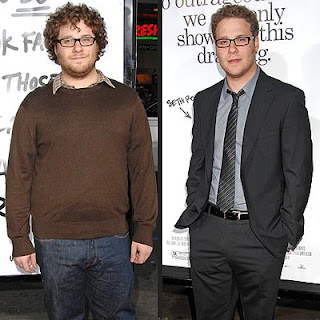
In Funny People Bana and Sandler costar with Rogen, also a former stand-up, who recently slimmed down for his role in a remake of the 1960s TV series The Green Hornet. Rogen's character is supposed to be vain, hence the weight loss, but some fans and critics see it as a betrayal of the actor's everyman "schlub" persona. Slimming down is a healthy move for anyone who's overweight, but in the world of comedy, unfortunately, it can be viewed as a highly conventional move.

You can't kill a good series. Not the first time, anyway.

It was announced last week that NBC's fall lineup will include a one-hour series based on the 1989 Ron Howard film Parenthood, which centered on the extended Buckman family and its many problems. Some of those problems were comical, while others weren't—the film is fondly remembered by fans like myself for mixing comedy and drama with ease, leading to quietly devastating moments like the one in which Jason Robards, as the Buckman patriarch, lets his biracial grandson "Cool" know that his gambling-addict father, played by Tom Hulce, isn't coming back for him.

Steve Martin headed up the film's large cast, which also included Mary Steenburgen, Dianne Wiest, Rick Moranis, and a young Joaquin Phoenix, back when he was being billed as "Leaf Phoenix." The new series is headed up by Peter Krause, the star of previous series like Sports Night, Six Feet Under, and Dirty Sexy Money, but the Buckmans are now the Bravermans, and Gil (Martin) is now Adam (Krause).

Parenthood has already been converted into a TV show once before, though it met with little success: debuting in August 1990, also on NBC, the half-hour version was canceled after 12 episodes. Ed Begley Jr. played Gil Buckman, and a 15-year-old Leonardo DiCaprio played Phoenix's part. (NBC also debuted a small-screen version of Ferris Bueller's Day Off that fall, costarring Jennifer Aniston. It too was quickly canceled.)

Remakes of movies are common—and expected by audiences—and TV-series adaptations of hit movies aren't uncommon either (M*A*S*H and Clueless, for example, though Buffy the Vampire Slayer as a series was much more popular than the film it was based on). But when a series that was canceled after a handful of episodes is brought back years later by its creator, albeit with a new cast playing the original characters, that's not so common.

A recent example is Cupid, which aired on ABC during the 1998-'99 season and was canceled after 14 episodes. It starred Jeremy Piven (Entourage) as a man convinced he's the god of love, and Paula Marshall (Gary Unmarried) as his therapist. The series' short life was profiled in David Wild's 1999 book The Showrunners.

In March the new version of Cupid debuted, also on ABC, with Bobby Cannavale (Will & Grace) and Sarah Paulson (Studio 60 on the Sunset Strip) playing the leads created 11 years earlier by executive producer Rob Thomas (Veronica Mars). The new Cupid airs its sixth episode tonight, but it's not expected to be renewed for next season due to low ratings, so the series' second coming will most likely end next week with episode number seven.

Cupid's revival reminded me that back in 2000 the David Frankel-created series Grapevine was dusted off and given a new cast on CBS, which originally ran it as a summer replacement series in the summer of '92; in fact I still have one of those episodes on tape. Grapevine 1.0 was fun, breezy summer entertainment, with Frankel, a New Yorker, channeling Woody Allen's wit but setting his stories about modern romance in Miami rather than the Big Apple. Three main characters would talk to an offscreen interviewer in each episode about their various friends' love lives, with the narration setting up scenes of the friends—Paula Marshall guest-starred in one episode—flirting, dating, going to bed with each other, cheating on each other, etc. (Frankel must really like Miami: his feature-film directorial debut was 1995's Miami Rhapsody, and he filmed parts of his most recent film, last December's Marley & Me, in the area.)

It's probably for the best that Grapevine only lasted six episodes in '92; its half-sitcom, half-anthology hybrid format had its charms, but it may have grown tiresome over an entire 22-episode season, with viewers wondering "Who are these people, and why are they so eager to gossip about their friends' love lives in front of a camera?" But in the spring of 2000 Grapevine was revived, possibly because Frankel missed Miami, or maybe because CBS wanted a show like Friends that featured lots of good-looking twenty- and thirtysomethings cracking jokes and hooking up. (In this version Steven Eckholdt played the character of David, whereas eight years prior he played Thumper, David's younger brother. Only on TV will you ever meet a man named Thumper—twice.) I remember seeing only one episode of Grapevine 2.0, but the original version's charms were gone. The second coming lasted only five episodes.

Parenthood, Cupid, and Grapevine are rare examples of TV writer-producers getting another chance to rework an old idea that either didn't live up to its full potential the first time around, was the victim of a bad time slot—Cupid 1.0 aired on Saturday nights—or didn't have the right casting. The temptation to revisit a good idea that could've become a great show must be strong, even if 19 years have passed, as is the case with Parenthood. But are there even more regrets for the shows' creators the second time around if the idea still doesn't court favor with the public? Grapevine is long gone and Cupid is almost gone. Time will tell if Parenthood's "do-over" on TV gets a similar reaction, but it's doubtful any of them will receive a green light for another go-round based on their creators' pitch to the networks that "the third time's the charm."

Sunday, May 10, 2009

running bravely from momentum-killing minutiae

I love facts and figures, but they often get in the way of the point I'm trying to make when I'm writing. (Their fault, not mine, of course. Hmm ... these parentheticals tend to get in the way too, don't they?) Here are the "deleted scenes" from my recent Popdose post about gay marriage and the 1986 action-comedy Running Scared.


(1) Chicago's James R. Thompson Center, formerly the State of Illinois Center, the site of Running Scared's climactic shoot-out, is located one block down from the Cook County Building, where the climax of The Blues Brothers was shot 30 years ago.

(2) Running Scared's narrative is supposed to take place in November and December, so fake snow is sprayed on trees, cars, and street surfaces in some scenes. But because filming began in mid-September, a week before summer was officially over, green leaves are still visible on some of those trees, which generally isn't the case in Chicago by the end of the calendar year.

(3) The screenplay is credited to Gary DeVore and Jimmy Huston, with DeVore receiving an additional "story by" credit. Because DeVore did uncredited rewrite work on Timecop, Sudden Death (both starred "the Muscles from Brussels," Jean-Claude Van Damme), and The Relic, three of Peter Hyams's films from the '90s, I'm going to guess he's the one who worked with the director to rewrite Huston's original script, instead of the other way around. The rules the Writers Guild of America uses to determine final screen credit, and whose name goes where, are complicated, to say the least. DeVore died in a car accident in 1997, but because of the mysterious nature of the accident, his body wasn't found until more than a year later. Entertainment Weekly described the action-film screenwriter as having "a bit of a cowboy streak."

(4) I had completely forgotten about the Rod Temperton Beat Wagon's existence as a "band"—it performs "Never Too Late to Start," which is played over the closing credits—until I watched Running Scared again. When I was 16 I wrote and recorded a novelty song called "Mr. Sporangiophore" with a friend, and I convinced him to call our "band" the Jonathan Vance Beat Wagon for the sake of our one-off project. Temperton must've been racing to complete all the songs in time for the film's final edit when an assistant asked him, "Who do you want the song Tommy Funderburk sings to be credited to?" As an ambulance wailed in the distance, he responded, "Uh ... the Rod Temperton Meat Wagon. No, wait—Beat Wagon. Yeah, that sounds more musical."

Temperton had a good quote about songwriting in the Yorkshire Post three years ago: "You have to please yourself first. Once you feel the hairs stand up on the back of your hand—you can go for the world. Writing a song is the biggest moment of all. Yesterday it didn't exist. Today it does."

(5) After watching the film again, I wondered if a sequel was ever commissioned. Well, for one thing, Running Scared made $38 million in the summer of '86, which wasn't boffo B.O. even then. (The number-one film that summer was Top Gun, which grossed $176 million, or $340 million when adjusted for today's ticket prices.) But Lethal Weapon made $65 million at theaters the following spring and then became a huge hit on video and cable, paving the way for Lethal Weapon 2 to rake in $147 million in the summer of '89.

Was Running Scared a hit on video? I can't find any figures, but IMDB and Wikipedia claim that a sequel was developed, with Hines and Crystal chasing criminals in Paris. Gay Paree? Oui. (Wikipedia states: "Around the time of the original home video release of Running Scared … MGM announced that there definitely was a sequel forthcoming for the following year, taking the characters to Europe. A promotional photo showed Hines and Crystal in front of the Eiffel Tower.") "Still Running" never came to fruition, though, supposedly because its stars didn't like the scripts they read that placed Ray and Danny in the City of Lights. Coincidentally, Rush Hour 3, the 2007 installment of Chris Tucker and Jackie Chan's buddy-cop franchise, was set in Paris; previous installments took place in Los Angeles and Hong Kong.

(6) Hyams has been the director of photography on every movie he's helmed since 1984's 2010. The only other mainstream director I can think of who's taken a similar route is Steven Soderbergh, who's doubled as DP on every film he's directed since 2000's Traffic, though he uses the pseudonym "Peter Andrews" instead of his own name.

(7) This has nothing to do with Running Scared, but I don't care since I'm already indulging in random thoughts: The Paper, a newspaper movie I wrote about at Popdose back in November, was cowritten by David Koepp, who's also penned blockbusters like Jurassic Park,
Mission: Impossible, Spider-Man, Indiana Jones and the Kingdom of the Crystal Skull, and the upcoming Angels & Demons. But he's also directed four of his own scripts over the past 13 years, including 1996's The Trigger Effect, which didn't hold up when I saw it a second time a few years ago, but the opening sequence is still an impressive distillation of the negative energy that can course through a movie theater on any given night.

None of the films Koepp's directed have been hits, including last fall's supernatural comedy Ghost Town, but he is skilled as a director, at least based on the two films of his that I've seen; he's clearly learned some tricks from collaborators like Steven Spielberg and Brian De Palma. He had the misfortune of following The Sixth Sense (1999) a month after it debuted with his own supernatural thriller, Stir of Echoes; I remember it as being pretty suspenseful in its own right, but it didn't stand a chance once M. Night Shyamalan's film became a surprise hit that inspired repeat viewings. I didn't see Secret Window (2004), which starred Johnny Depp and was based on a Stephen King novella, but it was another supernatural thriller. Koepp has proven that he's intrigued by the great beyond. If he can just put ghosts or angels together with dinosaurs, a masked superhero, and an archaeologist who are on a dangerous mission, he might be able to come up with a blockbuster directing project of his own.

Wednesday, April 22, 2009

paper play

I've been beaten to the punch by a real journalist. That's how it should be, of course.

I didn't realize until a couple weeks ago that The Soloist, the based-on-a-true-story drama about a schizophrenic, homeless musical prodigy (Jamie Foxx) and the newspaper columnist (Robert Downey Jr.) who writes about him, was set to open one week after State of Play, the political thriller starring Russell Crowe as a D.C. newspaper reporter. The Soloist was originally set to be released last November; I'm not sure why it was moved from awards season to April 24, the week before X-Men Origins: Wolverine kicks off the summer season and drowns out all the remaining spring releases, though it's never a good sign when a film's release date is pushed back nearly six months. (It was advertised during the Oscar telecast in February rather than being Oscar bait awarded during the telecast.)

Two high-profile movies in two weeks starring A-list actors as newspaper reporters! And at a time when newspapers are struggling, yet for many of us they're still the most trusted source of news, and the people who bring us that news remain fascinating characters who are well suited to dramas, thrillers, comedies, and romance—whatever genre provides a good story, just as they try to provide good stories, as long as those stories don't get in the way of the truth ... Okay, sometimes we like to watch fictional reporters discard the truth for a good story, but in real life we tend to look down on the Jayson Blairs of the business.

Back to what I was saying to begin with—David Denby of The New Yorker has already published his dual review of State of Play and The Soloist, and he notes the closeness of their release dates in his opening paragraph:

Sometimes a mere coincidence in Hollywood’s haphazard release schedule crystallizes a national moment—a gathering mood, a twinge of longing. Two ambitious new movies, “The Soloist” and “State of Play,” both offer the stirring sight of a daily newspaper being reported, printed, and delivered—loaded into trucks and flung onto front lawns before dawn. And that’s not all: in “State of Play,” the deadline for an important investigative piece is repeatedly pushed back until the reporter can get the full story; in “The Soloist,” a series of newspaper articles causes a mayor to change a city’s social policies. Each movie features, at its center, the kind of scruffy urban hero whom Raymond Chandler canonized long ago (“Down these mean streets a man must go who is not himself mean”)—in this case, not a private eye but a print journalist, slovenly and sleepless, hounded by editors, comfortable only in a banged-up Saab. He may be disorganized and inadequate in his personal life, but his professional instincts are superb. He knows how the city works; there’s no door he can’t open. Are the two movies simply sentimental? No, they deal directly with the economic threat to news coverage. Both newspapers in question—the Los Angeles Times, in “The Soloist,” and a Washington daily clearly modelled on the Post, in “State of Play”—are struggling to cut costs and stay in business, a difficult situation in which a talented reporter who takes his time is both a nuisance and a blessing. However else these movies succeed or fail, they tout the daily newspaper as guardian of a city’s integrity and soul.

Denby adds near the end of the review that in State of Play "Rachel McAdams is a cocky blogger who has to learn how much work goes into actual reporting," and "Crowe has an animal quickness and sensitivity, a threatening way of penetrating what someone is up to, a feeling for weakness in friends as well as opponents. He seems every inch a great journalist; it’s not his fault that the filmmakers let the big story slip through their fingers."

Brad Pitt was originally supposed to play Cal McAffrey, the role that Crowe inherited, but the filmmakers seem to have caught a lucky break by getting Crowe at the last minute: even though he'll always look like a movie star, he's put on some weight in the last few years, adding to his already burly frame and making him look like the kind of reporter who should probably get his personal life in order and start jogging. Maybe that's one reason why Crowe took the part, i.e. "You mean I don't have to take off the weight I gained for Body of Evidence? Good, because this body of carbs is harder to slim down than I thought." Even though Crowe looks like a movie star no matter what he plays—a problem every movie star has—Pitt looks nothing like any reporter I've ever seen in person. Then again, his previous-generation cinematic doppelganger, Robert Redford, looks nothing like a reporter either, and he worked out just fine as Bob Woodward in All the President's Men (1976), one of the best newspaper movies Hollywood has produced.

Roger Ebert's review of State of Play last Friday in the Chicago Sun-Times adds a funny observation about reality in movies versus the way things work at an actual newspaper: "When Cal and his sidekick the perky blogger solve the mystery and are back in the office and it is noted 'Cameron [the fictional Washington Globe's editor] has been holding the presses four hours!'—I think her new corporate bosses will want to have a long, sad talk with her, after which she will discover if the company still offers severance packages."

Cameron is played by Helen Mirren, and Ebert notes that the Globe's new owners are "on her neck to cut costs, redesign the venerable front page, get more scoops and go for the gossip today"—hence bloggers like McAdams's character—"instead of waiting for the Pulitzer tomorrow." Ebert refuses to believe that movies like State of Play represent the last stand of newspaper movies, "because no matter what happens to newspapers, the newspaper movie is a durable genre. Shouting 'stop the presses!' is ever so much more exciting than shouting 'stop the upload!'" I agree, and it's similar to how I'll feel if I ever hear a contemporary song that contains a line like "When you texted me this morning" or "My baby, she wrote me an e-mail." It just don't sound right. (At Popdose last fall I wrote about The Paper, a newspaper movie that takes great pride in the tradition of newspaper movies with its own “Stop the presses!” moment.)

In an interview with The Decider back in February, Ebert was asked what he thought of all the "regular people" writing their own movie reviews on blogs or posting video reviews on YouTube. He replied, "Some are really gifted, some should hang it up. [But] the flaw in the theory that the Net will replace newspapers is that the Net borrows, directly or indirectly, most of its content from newspapers. Today you can cite the New York Times. Would you rather cite a blogger in East Jesus, Iowa?"

Of course not. And even though I quote directly from newspapers all the time, you can cite me if you want. I'm a blogger who's neither perky nor cocky, and I do a great job of disguising my movie-star handsomeness.

Our comedic freedom will help you gain financial freedom.

Q: What about bloggers who post YouTube videos in lieu of original content?
A: Yes, as long as they wrote the videos themselves.
Q: Cool.
A: That wasn't a question.


Friday, April 10, 2009

"No, my brother—you've got to buy your own."

I noticed the other day that the Gmail "chat" status update for Scott Malchus, a writer at Popdose (and a current employee of Cartoon Network, where I used to work), was a reference to a line of dialogue from a commercial that was popular in the '80s: "No, my brother—you've got to buy your own."


At least I assume the ad for the Hey Love soul-ballad compilation ("the classic sounds of sexy soul") was popular. I don't remember seeing it until the summer of '91, when I first saw House Party (1990), which featured the commercial in a scene where some of the adult characters are watching TV. Even then I wasn't sure if it was a real commercial or something concocted by writer-director Reginald Hudlin for a quick laugh.

Scott, it turns out, was cribbing the "No, my brother" line from Cameron Crowe's Say Anything ... (1989), and had no idea it originated in a commercial in the first place.

Speaking of origins (I'm the king of smooth segues), I recently walked past a 7-11 with a cardboard cutout of Hugh Jackman promoting X-Men Origins: Wolverine, "only in theaters" May 1. That made me laugh, seeing as how a work print of the film was leaked online March 31.

That's unfortunate for 20th Century Fox, which hasn't had a huge blockbuster in a while (Marley & Me helped a bit last Christmas), but the bad karma seems to have spread to Fox News, another division of Rupert Murdoch's News Corporation: Two days after the Wolverine work print was leaked, FoxNews.com's entertainment columnist, Roger Friedman, downloaded a copy and reviewed it for the website. Four days after that, he was fired.


Friedman wrote that Wolverine, even in its unfinished state, "exceeds expectations at every turn," and he appeared to give a thumbs-up to online piracy by saying that watching the movie on his computer a month before it hits theaters is "so much easier than going out in the rain."

But he did like the movie, so cut him some slack, Rupert. Friedman's the only one trying to turn this ship around!

On the Los Angeles Times's website, entertainment writer Geoff Boucher wrote, "The review was an audacious thing to do (or maybe just stupid) considering that 20th Century Fox, a corporate relative, had gone to the FBI to fight back against the theft and mass piracy."

Oh yeah.

And now that I think about it, what were you thinking when you reviewed a pirated copy of your sister company's tentpole summer blockbuster, Friedman? There has to be a better way to earn Brownie points around that place.

But according to StudioBriefing.net, "Michael Wolff, author of the controversial Rupert Murdoch biography The Man Who Owns the News, has suggested that ... Friedman was fired not because he reviewed a pirated workprint of X-Men Origins: Wolverine, but because he exposed how easy it was to watch it. On his blog, Wolff suggests that Friedman's case exposes how oblivious top media executives are to common behavior by young people using the Internet. 'They think of [watching pirated movies] as exceptional behavior, while everybody else knows it's trivial stuff. Actually Murdoch tends to think that almost everything that happens on the Internet involves dubious, if not outrageous, behavior,' Wolff wrote.

"On the Los Angeles Times blog, columnist Patrick Goldstein chimed in: 'Friedman took the fall for his own starry-eyed approach to piracy, but if media tycoons like Murdoch believe they can hang on to their old business model forever, they will soon be taking a much bigger fall than Friedman did.'"

I've never watched a pirated movie online, mostly because I don't like watching anything on my computer—even music videos from the '80s on YouTube—if it'd be better viewed on a bigger screen, but especially not an unfinished movie or one that's been recorded with a video camera (and a shaky hand) in a theater.

I doubt I'll end up seeing Wolverine in the theater, but even if I did have a pirated copy right now, I wouldn't share it. Instead I'd answer all requests with "No, my brother—you've got to buy your own ticket on May 1." (I'm also the king of callbacks.)

Monday, April 6, 2009

It's hard to forget what you never memorized in the first place.

In yesterday's Chicago Sun-Times there was a short Associated Press interview with John Mahoney, who played Kelsey Grammer's dad on Frasier for 11 seasons. But before that he was already known as a terrific stage and film actor, having started his acting career at Steppenwolf Theatre in Chicago in the late '70s, when he was in his late 30s.

I thought I'd read long ago that he was selling insurance before he started doing plays, but according to the All Movie Guide, "Mahoney worked at different careers including college professor and medical journal editor in Chicago. Though he had appeared on-stage in his teens, Mahoney did not again become interested in acting until he was 37 and decided to enroll in classes at the St. Nicholas Theater, a Chicago institution co-founded by playwright/screenwriter David Mamet. After performing in one of Mamet's plays, Mahoney quit his latest job. Later, at the invitation of distinguished actor and classmate John Malkovich, Mahoney joined Chicago's Steppenwolf Theater, where he appeared in about 30 productions."

I also didn't know until I read the AP interview that Mahoney was born in England. Again, according to the All Movie Guide, he "emigrated to the U.S. at age 19 in the 1950s and joined the Army. One of the first things he worked on was losing his British accent, something he succeeded at doing. Once out of the service, Mahoney earned a B.A. from Quincy College and then graduated from Western Illinois University with a master's in English." His most high-profile role outside of Frasier, at least as far as my generation is concerned, is in Cameron Crowe's directorial debut, Say Anything... (1989), where he plays Ione Skye's adoring but misguided father.

There was a quote in the AP interview, which was tied to Mahoney's role in the new season of HBO's In Treatment, that I agree with 100 percent: "You have to be respectful of your script, and I try not to change a word ... I just like to learn the lines and then see what happens with the other actors. I listen to what's being said, and then respond to how it's said. I like to surprise myself." I want to find Mr. Mahoney in nearby Oak Park and ask him if he'll shout that quote at improvisers who often treat sketch comedy as an opportunity to expand improv comedy, also known as "the laziest art form," into the area of scripted material.

Many actors have cold-sweat anxiety dreams about getting onstage and not knowing a single line of dialogue, and when you do forget a line and "go up," three seconds of silence can feel like three minutes. Improvisers, generally speaking, don't have that anxiety since every line of dialogue springs from their own minds, but you can become speechless onstage nonetheless.

With scripted material, you have to memorize your lines and repeat them over and over until they're second nature and you've forgotten them, in a sense, so that all you're doing once you get onstage is listening and reacting to the other actors. Improvising with scripted material can work if each actor knows where the script begins and ends and is comfortable expanding on it or doing away with it entirely—with the blessing of the director and writer, of course—but I've had trouble reaching and maintaining that level of trust in a sketch show. (For many improvisers the "brass ring" is Saturday Night Live, the long-running TV sketch show that involves no improvising whatsoever. Go figure.)

Of course, if the script is constantly changing (if you're also the writer of a sketch that's a work in progress until opening night of your show, then you're changing it yourself), having enough time to memorize and forget can be difficult. But what's more difficult is when the actors change the lines themselves each time they perform a scene or sketch because they never memorized the lines correctly in the first place. Sometimes I've read scenes with improviser-actors for the first time and been stunned to see that they're changing every other word in the script as they read. Do we have different scripts? Or is it arrogance? Or ignorance? Or arrogantly ignored dyslexia that needs to be retroactively diagnosed and immediately treated?

The world may be a stage, but since people who can't read tend to get left behind in the modern world, the theatre world shouldn't be forgiving of actors and improvisers who've decided to leave behind one of the most important things they learned in kindergarten. (This is a rant. I know. And I realize I could try to be more forgiving, but I believe I have a legitimate complaint, Your Honor.)

Friday, April 3, 2009

catching up

Now that I've alleviated some carpal tunnel cramping at my desk at home, I'm catching up on posting some things I wrote a while ago, or things I hadn't completed yet, or things that I "bookmarked" to write about a while ago but kept putting off, like the post about Fast & Furious from March 9, which wasn't written on March 9.

I've said too much. Now I must flee before the procrastination police arrive.

1/1: Let it be, but don't let it end.
2/6: once underfoot, now six feet under (This one isn't new, but I added a bit more to it.)
2/6: Blart No Blunder: B.O. Boffo! (Hire me, Variety.)
2/28: Black History Month is almost over. I'd better make this quick.

I'm back—I always forget my wallet, keys, and cell phone when I'm on the run. Now I'm leaving, and to accompany my exit, here's a Christopher Cross hit that was used to great comic effect in one of SCTV's most memorable sketches.

Friday, March 20, 2009

There's a riot goin' on (that nobody cares about).

Isn't this one of those situations where we should just let the herd thin itself out? Models like to be thin, after all.

The following comes from IMDB's gossip page:

New Rules In Place To Avoid Another America's Top Model Riot
20 March 2009 6:25 PM PDT


The producers of Tyra Banks' hit reality TV show America's Next Top Model have created a set of rules for wannabes — to avoid a repeat of the riot that broke out at a casting call last weekend.

Potential contestants were waiting to try out for producers in Manhattan, New York, when chaos broke out on the streets outside the Park Central New York hotel. Hundreds of people were caught up in the melee, leaving the street outside the hotel littered with shoes and clothing.

Two women and a man were arrested on charges of inciting to riot and disorderly conduct, and six people were injured. Police were forced to shut down the casting call.

To avoid a repeat when America's Next Top Model bosses stage another open call in Dallas, Texas, on Saturday, producers insist they won't see anyone who has been lining up overnight, or prior to 6 am, and only women competing for a part on the show can stand in line, unless they're under 18. Teenagers will be allowed to stand with one guardian.

Monday, March 9, 2009

Faster! Furiouser!

I just saw a TV ad for Fast & Furious, the fourth movie in the car-fetish franchise that includes the words "Fast" and "Furious" somewhere in each film's title. The lineage of this series gets confusing, so buckle up. (Driving clichés are so hard to resist.)

The Fast and the Furious was directed by Rob Cohen and was something of a surprise hit in the summer of 2001. It also turned Vin Diesel into an action star. Neither Cohen nor Diesel returned for 2 Fast 2 Furious, which was released in '03. Instead they made XXX (2002), which was also a huge hit, though neither one returned for its sequel, either—Diesel's character was declared dead at the beginning of XXX: State of the Union (2005), which starred Ice Cube as the series' new "extreme" hero.

Paul Walker, Diesel's Fast and the Furious costar, did return for 2 Fast 2 Furious, and was teamed up with Tyrese Gibson. It was the latter's second collaboration with director John Singleton, who debuted with 1991's gang drama Boyz N the Hood and at the age of 24 became the youngest recipient of a Best Director nomination in Oscar history, though films like 2 Fast 2 Furious and his 2000 remake of Shaft are more indicative of where his career has gone in this decade.

Without Diesel's star power, it seemed as if 2 Fast 2 Furious might fade quickly at the box office (I hope you appreciate how much effort it's taking to avoid phrases like "sputter out" and "crash and burn" here), but it earned $127 million in the summer of '03, only $17 million less than its predecessor. XXX: State of the Union, however, made only $26 million compared to the original's $142 million take.

In 2006 came The Fast and the Furious: Tokyo Drift, directed by Justin Lin and starring Lucas Black from Sling Blade but none of the stars from the first two films in the series—until Vin Diesel showed up at the end in a cameo. Tokyo Drift earned $62 million.

Three years later we have Fast & Furious, which was originally going to be released in June but is now set to open April 3, according to an ad I saw on TV. I wonder if Universal got a peek at the final cut and decided the movie would be better off going up against weaker competition in the spring than in the crowded summer season. Fast & Furious reunites Diesel and Walker and female costars Michelle Rodriguez and Jordana Brewster from the first film, but the director is Tokyo Drift's Lin.

I've heard Fast & Furious referred to as an "interquel," a goofy, made-up word I'm praying doesn't catch on with the public, which would mean that the film's narrative takes place between those of 2 Fast 2 Furious and Tokyo Drift. To make matters more confusing, Diesel has reportedly directed a 20-minute prequel (which itself was a goofy made-up word at one point, I suppose—but now it's the law!) to Fast & Furious starring himself, Rodriguez, and Sung Kang.

As ComingSoon.net put it last August, "The fourth movie is a sequel to the first installment, and though Diesel didn't elaborate, we assume this 20-minute prequel will tie-in some of the events from the second and third movies. Rodriguez appeared in the first movie, Sung Kang in the third, and Diesel in the first with a brief cameo in the third."

I told you it was confusing, and I read that Diesel may also be returning to the XXX franchise soon for "XXX: The Return of Xander Cage." I guess his character didn't die after all. Coincidentally, John Singleton's next film, according to IMDB, is "Luke Cage," based on the Marvel Comics character who inspired Nicolas Cage's stage name. It's set to star Tyrese Gibson as Cage (Luke, not Nicolas).

All this film-franchise zigzagging is making me drowsy, and I'd hate to fall asleep at the wheel. (See how hard it is to resist these clichés?) I'll leave you with a picture of Diesel that I found last summer around the time Babylon A.D. came out. The sci-fi action film bombed, thanks in part to its director, Matthieu Kassovitz, telling the press how bad it was before it hit theaters. In my opinion, Diesel should've cut his losses as an action star at that point and pitched himself to studios as the star of "Mr. Potato Head: The Movie." I'd buy a ticket.

Friday, March 6, 2009

They say the neon lights are insanely bright on Broadway if you're tripping on X.

On February 28 the Chicago Sun-Times reported that a billboard advertisement at the corner of Melrose and Broadway, about a half mile from where I live, had been pulled due to complaints from residents and the principal of Nettelhorst Elementary School. The offending ad, which faced the school from across the street, promoted Xanadu, the intentionally campy touring production of the 2007 Broadway hit that’s based on the unintentionally campy 1980 Olivia Newton-John movie.

The ad included a positive blurb from Vanity Fair magazine: “It’s like taking Ecstasy.” And what’s the first letter of Xanadu? No pressure, children, but having X-rated fun while doing X is way more fun than any musical could ever be!
Just ask your big brother's friend Drake. You remember Drake—he's the one who doesn't come around anymore, but the last time he did, all of your mom's jewelry suddenly vanished.


When I walked by Nettelhorst yesterday, I saw Xanadu’s replacement on the billboard: an ad for The Tale of Despereaux, with “Christmas” at the bottom of the ad. Supposedly this is the ad that was on the billboard prior to Xanadu’s, and Despereaux certainly seems more kid friendly than Xanadu, but note the last letter in the name of that movie’s title character.
The subliminal advertising for Ecstasy continues!

(Despereaux is a French mouse, by the way. The makers of The Tale of Despereaux presumably hoped to cash in on the popularity of the French rat in 2007's Ratatouille, though Despereaux only made $50 million in theaters compared to Ratatouille's $206 million and an Oscar win for Best Animated Feature. “As usual with Pixar releases, critics heaped superlatives on [Ratatouille]," noted Dean Goodman in a Reuters article from July 1, 2007. "But it was no secret that Disney faced a marketing challenge with the movie: A rat in the kitchen raises hygiene concerns for some people.” I think as long as the vermin protagonist in Ratatouille doesn't try to cook anything in moviegoers' own kitchens, there's no reason to get hysterical.)

Broadway in Chicago, the local company that’s putting on Xanadu, said in a written statement that “We currently have an outside vendor who purchases our billboard space throughout the Chicagoland area, and the producers of the show requested that general area.” The “general area” is nicknamed Boystown because of its gay population, gay bars, gay clubs, etc., and gay men are the perfect audience for campy musicals about disco, roller skating, and cute boys roller skating to disco, right?

Maybe, but the fact that there’s a meth problem in Boystown makes the ad insensitive to that demographic as well, not just kids who might be staring out the window during math class and wondering, “How do you 'take ecstasy'? Is that like when I eat one of my grandma’s oatmeal raisin cookies and she says I’m ‘swallowing happiness’? Or is it like when I heard Uncle Gary telling Uncle Ted that he loves swallowing Uncle Ted's happiness?"

Thursday, March 5, 2009

writing

"I think of it like that scene in [Indiana Jones and the Last Crusade], where he has to go across where there is no bridge, and he has to step out into nothingness—and there is a bridge you cannot see, below. It's an optical illusion. That's how I need writing to feel: finding the way by being willing to fall." —Miranda July, writer-director-actor-performance artist (Me and You and Everyone We Know), discussing the process of writing in a 2005 Hit It or Quit It interview

"Putting things off to the last second provides the necessary tension of waking up at 3 A.M. in sheer terror." —Les Charles, cocreator and executive producer of Cheers, discussing the discipline of writing in a 1987 New York Times article

"For television, you should always write as the cast is standing on the stage waiting." —Glen Charles, cocreator and executive producer of Cheers (and brother of Les), as quoted in the same article

"Better to write for yourself and have no public, than to write for the public and have no self." —Cyril Connolly