Tuesday, October 2, 2007

The Complete Idiot's Guide to Evan Dando and the Lemonheads, Part Two

Below is the second part of the Lemonheads/Evan Dando album guide I cowrote with Ken Sumka back in July for Jefitoblog. Part one can be found here.

Come On Feel the Lemonheads (1993)

Robert: Once It's a Shame About Ray and its after-the-fact single "Mrs. Robinson" took off in the fall of '92, the media noticed what a nice face Lemonheads frontman Evan Dando had, and promptly began to overexpose him as a heartthrob for teenage girls. Dando seemed happy to oblige, appearing in People magazine's "50 Most Beautiful People" issue in '93, smooching actress Adrienne Shelly on the cover of Spin, chatting it up with Regis and Kathie Lee on daytime TV, and dropping in for a cameo at the end of Ben Stiller's Reality Bites. Dando also had a tendency to say much more than he needed to in interviews, especially when it came to his recreational drug use. ("He's never been one to edit anything that went through his brain," former Lemonheads bassist Jesse Peretz told Melody Maker.)

But you know what? If Dando looked more like Paul Westerberg or Bob Mould, two of his early songwriting influences, I bet he wouldn't have received so many slings and arrows from critics and alternative-music fans, because at his best his lyrics are on par with those of Westerberg in his mid-'80s prime. It's not Dando's fault he's photogenic. But the damage was already done: by the spring of '94 a zine called Die Evan Dando, Die had been published, and once Kurt Cobain did die that April, the world at large had had enough of Boston's resident alterna-hunk and his band's "bubblegrunge" music (an unfair and inaccurate label).

But I digress. The Lemonheads' sixth LP cribs its title from Slade's 1973 hit "Cum On Feel the Noize," and was rushed onto shelves 16 months after Ray's release to capitalize on the Lemonheads' newfound popularity and Dando's teen-dream appeal. The original cover art was even replaced in order to show off his exquisitely square jaw. Come On Feel was recorded in the middle of two straight years of touring: songs like "Paid to Smile" and "You Can Take It With You" ("Found myself a breathing place / Got room to stand up straight / And if I wanna lay around I can") make it clear that the group's nonstop schedule had started to wear on Dando. And his nonstop drug intake, which was wearing on everyone around him, is alluded to in the songs "Style" ("Don't wanna get stoned / But I don't wanna not get stoned") and "Rick James Style," featuring guest vocals by the Super Freak himself.

Early versions of "Into Your Arms," "Dawn Can't Decide," and "Being Around" had already shown up as Ray B-sides, and there's a 15-minute waste of space at the end of the album called "The Jello Fund." Despite all that, Come On Feel is a worthy follow-up to Ray, with more of Dando's three-minutes-or-less pop wonders filled with big hooks, memorable melodies, warm vocals, and witty lyrics. Unfortunately, Atlantic and new fans were looking for a repeat of Ray, and Come On Feel didn't have the same impact. As for older fans, it felt like the Lemonheads had strayed a little too far from their roots. (They officially added "The" to the front of their name in '93. The nerve!)

One particular standout is "Big Gay Heart," which can be read as a pro-tolerance anthem or just a plea for romantic acceptance in general: "Why can't you look after yourself and not down on me / Do you have to try to piss me off just 'cause I'm easy to please?" The song contains pedal-steel accompaniment by "Sneaky" Pete Kleinow of the Flying Burrito Brothers, but bassist Nic Dalton, who didn't hear the completed album until it was already in stores, stated that he thought Kleinow's contribution hurt the song.

Ken: With a little judicious editing, this album could've been a satisfying sequel to Ray; instead it comes off bloated in spots. This happens sometimes when a band that's used to working within the time constraints of two sides of vinyl tries to "stretch out" on CD. "Rest Assured" and "Into Your Arms" are two gems, however, and "Being Around" has a goofy charm.


Car Button Cloth (1996)

Robert: After three years of continued drug abuse, a stint in rehab, a role as Liv Tyler's boyfriend in the film Heavy, time spent hanging out on the road with Oasis, and appearances on albums like Mike Watt's Ball-Hog or Tugboat?, Kirsty MacColl's Galore, and the Empire Records soundtrack, Dando—and the Lemonheads—returned with Car Button Cloth. Dando was the only member left from the previous lineup, making this album, in some ways, his version of Big Star's Third/Sister Lovers or the Replacements' All Shook Down: a chance to give it one more try under his band's name before going solo. Joining him in the studio were Bill Gibson on bass and Patrick Murphy (a.k.a. Murph of Dinosaur Jr.) on drums, with John Strohm rejoining the band on rhythm guitar for the tour.

Car Button Cloth, like any of the band's other non-Ray offerings up to that point, is a patchwork affair. (Dando himself has labeled most of the Lemonheads' albums as "schizophrenic.") It's still a great listen, partly thanks to well-chosen covers like Come On Feel writing partner Tom Morgan's "The Outdoor Type" and "Tenderfoot" (cowritten by Adam Young), but all those puzzle pieces behind the couch don't quite fit together. The album kicks off with two brilliant singles, "It's All True" and "If I Could Talk I'd Tell You," that might've piqued the curiosity of those aforementioned teenage girls if they were still listening (in their dorm rooms at this point), but the somewhat sinister "Break Me," "Hospital," and "Losing Your Mind" ("What a comfort to find out you're losing your mind / And you re-realize that it's not the first time")—and an electrified rendition of the murder ballad "Knoxville Girl"—demonstrate that Dando's no longer interested in being a Tiger Beat pinup.

The Lemonheads pleasantly kill some time with "6ix," a shout-out to Gwyneth Paltrow and Real People's Skip Stephenson, and "C'mon Daddy," inspired by Todd Rundgren in more ways than one. But as Dando says midway through the album, "Something's Missing" ("I ain't quiet deep inside / I ain't even on my side"), and it's not just "Purple Parallelogram," a track he wrote with Noel Gallagher that was removed from Car Button Cloth at the last second at Gallagher's insistence. Dando says he didn't mind since he regarded the track as a throwaway at best.

Car Button Cloth is still my favorite Lemonheads album. Right around the time that my Great Big Todd Rundgren Obsession of 1996 was beginning to fade, my college roommate received the new Lemonheads CD for Christmas, and I listened out of curiosity after reading an odd interview with Dando in Rolling Stone. My Great Big Obsession of 1997 had begun: after just a couple of listens I was a fan of Dando's voice and words, and I regretted my snap judgment of him as nothing but a pretty boy a few years earlier. I started winding my way backward through the Lemonheads' discography, and waited for news of their next album. It turned out I was in for a long, long wait.

Ken: I had been on board since almost day one with the Lemonheads, so Car Button Cloth was a slight disappointment for me, yet there are still some nice moments on it. "It's All True," "If I Could Talk," and "The Outdoor Type" are the representatives from this album that I still have on my iPod.


Live at the Brattle Theatre/Griffith Sunset EP (2001)

Robert: Car Button Cloth's cover includes the sentence "All of these things sank." The album followed suit—it sold nowhere near the amount that the gold-certified Ray and Come On Feel did just a few years earlier. After the Car Button Cloth tour ended in the summer of '97, Dando took a long break from writing and recording, although he did continue touring on his own, and he didn't disappear from recording studios altogether: he popped up on the 2001 Blake Babies reunion album and recorded a single with Ben Lee, Cheap Trick's Tom Petersson, and actor-musician Jason Schwartzman under the no-frills name of Dando Lee Petersson Schwartzman.

On October 18, 2000, Dando played a show at the Brattle Theatre in Boston that was recorded for a live album. The resulting LP came out in Australia a year later and was packaged with a bonus EP of country covers coproduced by Giant Sand's Howe Gelb, among others. Live at the Brattle Theatre presents a strong acoustic run through the Lemonheads' catalog, with "Half the Time" and a Hammond-free "My Drug Buddy" being two of the highlights. After five years away it was comforting to hear Dando's golden throat still in good shape, even if he wasn't hitting all of the high notes anymore. The Griffith Sunset EP gives fans heartsick interpretations of John Prine's "Sam Stone" and the Louvin Brothers' "My Baby's Gone."

Baby I'm Bored (2003)

Robert: Finally, six and a half years after Car Button Cloth, Dando returned with new songs, but this time as a solo act, and swearing that the Lemonheads were dead as a recording entity. Note the similar covers, however, of Baby I'm Bored (that's Dando's wife, Elizabeth Moses, staring into the camera lens) and Hate Your Friends. An acknowledgement of a new beginning or a sign of things to come?

Recorded in various studios between '99 and '02, Baby I'm Bored saw Dando teaming up with Car Button Cloth producer Bryce Goggin on seven tracks and multihyphenate Jon Brion on songs like "Stop My Head," "Shots Is Fired," and "It Looks Like You," all cowritten by Brion to boot. Ben Lee, who wrote the tongue-in-cheek Dando tribute "I Wish I Was Him" when he was barely out of puberty, penned two tracks on Baby I'm Bored specifically for his friend to sing, and cowrote, with Dando and Tom Morgan, the cleverly titled "The Same Thing You Thought Hard About Is the Same Part I Can Live Without."

The theme of regret shows up again and again in the lyrics ("Some of the ground you gained / Lost instead" … "Whatever part of you that's been calling the shots is fired" ... "I can't believe how far I slid / I guess I had to see" ... "All my life / I thought I needed all the things I didn't need at all"), so it's tempting to infer that Dando's carefree drug use in the '80s and '90s had finally caught up with him, as evidenced by "Why Do You Do This to Yourself?" But in an era in which celebrities set aside a three-day weekend for a visit to rehab and then bravely tell E! News that they've conquered their demons, Dando has never made any sort of mea culpa for the various substances he's abused over the years—heroin, crack, LSD, etc. (He has admitted that he became an alcoholic.) In the end it's his business, not ours, and as the late comedian Bill Hicks once said, "I had a great time doing drugs. Sorry. Never murdered anyone, never robbed anyone, never raped anyone, never beat anyone. Never lost a job, a car, a house, a wife, or kids. Laughed my ass off, and went about my day."

Baby I'm Bored was by no means a chart topper, but it did earn good reviews, and Dando sounded focused in concert (Juliana Hatfield joined him on bass for one leg of the tour). Fans crossed their fingers that he wouldn't take another six and a half years to deliver a new studio album.

Ken: Gee, Dando sure made it easy for snarky reviewers to pan this record: "You're bored? So are we, Evan." This album was a "grower" for me. After initial listenings I shelved it and didn't go back to it for months; then I revisited it and found some of its hidden charms, not the least of which is Jon Brion's production. Brion could make even Rob Thomas interesting if he tried (hmm, there's a thought), and certainly helps out here with sparse but well-chosen instrumentation. The highlights are tracks like "Waking Up," with cowriting credit and backing vocals by Royston Langdon (of Spacehog and impregnating-Liv-Tyler fame), and the excellent "It Looks Like You."


The Lemonheads (2006)

Robert: Much was made of Dando collaborating with former Descendents members Bill Stevenson (drums) and Karl Alvarez (bass) for last year's "reunion album" (but let the record and its liner notes show that Josh Lattanzi plays bass on 4 of the 11 songs). Dando said he decided to revive his former band's name after hearing about a festival in Brazil in 2004 that featured South American bands playing their favorite Lemonheads songs. He also said he got tired of pushing T-shirts with his own name on them.

Dando delves into familiar topics—regrets, narcotics—on the Lemonheads' eighth album, but there's also a new focus on mortality and getting older (Dando turned 40 back in March), as well as politics: "Let's Just Laugh" is about enduring the remainder of Bush II's presidency. The Lemonheads is arguably the group's most consistent album since It's a Shame About Ray, so I was disappointed when I learned that some of the best songs on it weren't written by Dando. Stevenson contributes "Become the Enemy" and "Steve's Boy" ("Steve's boy won't let you die / Alone in the desert with fear in your eyes / You can't break me / You can't make me go away"), and Tom Morgan's "No Backbone" is dusted off from a 1997 Smudge collection along with "Baby's Home." But Dando's "Black Gown," "Pittsburgh," and "Poughkeepsie" show that he still knows how to compose short, sharp blasts of exceptional pop-rock.

I actually didn't like The Lemonheads when I first heard an advance copy last summer, and that surprised me—Dando's melodies and vocals almost always provide instant gratification. His voice sounded tired and even a little bored on the first few spins, but then I noticed how unified the album's overall sound is, and the hooks began to sink in. (However, it's still a step down from the triumphant Baby I'm Bored.) For those who bought It's a Shame About Ray and Come On Feel the Lemonheads in the early '90s but never strayed elsewhere in the band's catalog, this self-titled effort won't make them start exploring anew, but for long-term fans it's been nice hearing Dando make noise under the Lemonheads' moniker once again. Whichever delivery system he chooses for putting out new music in the future, I'll be listening.

Ken: I too was very excited about the possibility of a Lemonheads reunion—if in name only—especially the prospect of Dando playing with former members of the Descendents (and power-poppers All). My initial impression of the record was lukewarm as well, but repeat listens certainly improved my opinion; the country-tinged murder ballad "Baby's Home" is pretty harrowing. The subsequent tour, costarring Vess Ruhtenberg and Devon Ashley, the latest Lemonheads rhythm section, further solidified those thoughts.

Tuesday, September 25, 2007

The Complete Idiot's Guide to Evan Dando and the Lemonheads, Part One

Below is the first part of the Lemonheads/Evan Dando album guide I cowrote with Ken Sumka back in July for Jefitoblog.

Evan Dando and Ben Deily, upper-middle-class teenagers from the Boston suburbs, formed the Lemonheads with classmate Jesse Peretz in 1986 during their senior year of high school. In the beginning Dando and Deily would switch off on drums for each other's songs, with Peretz on bass. They started out emulating the Replacements, Hüsker Dü, and Dinosaur Jr. and gradually added Gram Parsons and Hank Williams to their list of influences under the leadership of Dando, who took the reins in '89 and became the band's one constant member as other players drifted in and out.

You may only know the Lemonheads as camera-friendly dudes who had a hit covering "Mrs. Robinson" during the final months of George Bush Sr.'s presidency. Lucky for you—and them—there's much more to the story.

Hate Your Friends (1987)

Ken: While there are certainly plenty of debuts that knock the ball out of the park, most hint at what is yet to come. Hate Your Friends falls into the latter category: it displays a keen knack for concise punk-pop songs by both Dando and Deily, but it falls short of perfection. Deily wrote the arguably "punkier" stuff, including the gem "Second Chance," which hides a sweet, lovelorn/kiss-off lyric under a fuzzy guitar part and catchy chorus. Another great Deily cut, "Uhhh," treads similar ground—a crunchy riff over "relationship gone south" material. Dando's "Don't Tell Yourself" tries desperately to crawl out from a plodding drumbeat and almost succeeds, and "Nothing True" certainly winks at the Replacements but maintains Dando's own sensibilities. Also, the time-honored Lemonheads tradition of cheeky covers is born with a 90-second version of "Amazing Grace." Hate Your Friends contains some filler, but a good three-quarters of this debut hits the mark.

Robert: Taang!'s 1992 reissue added 7 tracks to the original album's 13, including songs from the band's 1986 EP, Laughing All the Way to the Cleaners, and outtakes that eventually appeared on their third album, Lick. But even with 20 songs, the album's over in about 35 minutes. (There's also Create Your Friends, a compilation that offers the Lemonheads' first two albums on one disc and whose title niftily predicts the MySpace era.) Dando's gift for incisive, memorable lyrics pops up for the first time on the title track ("You've got problems you can't solve / It's enough to make you start to hate your friends"), and Deily's nasally vocals are a good match for the band's snotty punk-lite songs.


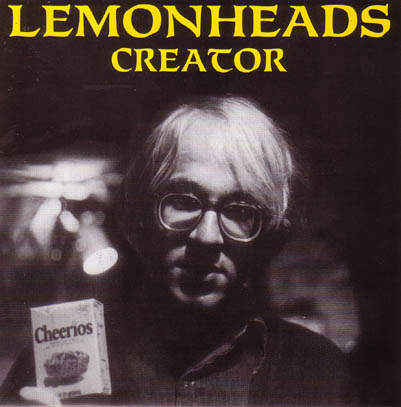
Creator (1988)

Ken: Creator saw the welcome addition of John Strohm (Blake Babies, Antenna) on drums after Doug Trachten, who was behind the kit for half of Hate Your Friends, was let go. Deily contributes eight songs here (compared to three by Dando), including the spooky "Burial Ground" and tempo-shifting "Sunday." Dando's much-improved songwriting chops are on full display in "Die Right Now," with a twin-guitar intro that plunges headlong into a searing riff and solo that would make J Mascis proud. "Clang Bang Clang" introduces Dando's fascination with Charles Manson—the song "borrows" its title and a few lyrics from Charlie—and "Helter Skelter's" #1 fan pops up again via a cover of his song "Your Home Is Where You're Happy." Like the Replacements had done a few years earlier, Kiss gets covered, though the Lemonheads opt for 1977's "Plaster Caster."

Robert: Creator is the group's most disposable album, but Dando's rich baritone commands attention on the Manson cover; he's always been a gifted interpreter of other performers' songs, even those of serial killers. Deily works hard here, but his songwriting doesn't gain any traction. Following the album's release in the summer of '88, the Lemonheads disbanded after a performance in which Dando replaced his guitar solo in each song—even if one wasn't required—with the riff from Guns n' Roses' "Sweet Child o' Mine."

Lick (1989)

Ken: The core of Dando/Deily/ Peretz was still intact after what turned out to be only a temporary break-up, but John Strohm left once Creator was done to focus on Blake Babies, which featured Dando on bass during the Lemonheads' hiatus. With Strohm gone, Dando moved to drums, and Bullet LaVolta's Corey Loog Brennan was added on guitar. These days he's Dr. Brennan, Ph.D., Strohm's a lawyer in Alabama, Deily's in PR and advertising, and Peretz is a film director whose credits include The Chateau (2002) and The Ex (2007).

Lick gets under way with Dando's jangly "Mallo Cup," which at just two minutes and 11 seconds manages to distill everything great about the band: wistful lyrics ("Here I am outside your house at 3 AM / Trying to think you out of bed"), melodic verses, and a buzz-saw chorus. Deily contributes a few more of his great jilted-kid songs with "Anyway" and the terrific "Ever," which makes excellent use of his raspy voice. Things take an odd turn with the mostly-sung-in-Italian "Cazzo di Ferro," about Raymond Burr, of all people. The attention getter here—at least on college radio in '89—is a fairly straight reading of Suzanne Vega's earnest child-abuse hit "Luka" (recorded during the sessions for Creator). Nashville chestnut "Strange" (Patsy Cline, Willie Nelson) also gets a revved-up treatment. With favorable reviews and brisk sales, the tide was shifting, and major labels started beckoning.

Robert: When a summer tour of Europe was offered to them, the Lemonheads re-formed just a few months after breaking up. Taang! wanted them to record a new album before the tour, but Dando had writer's block and Deily was becoming more and more estranged from his bandmates, so Lick was filled out with the Hate Your Friends leftovers "Sad Girl" and "Ever," plus new versions of early songs like "Glad I Don't Know." (The 1992 reissue rescued "Mad," a Laughing All the Way to the Cleaners orphan, and "Strange" from the "Luka" seven-inch.) Despite its cut-and-paste nature, Lick somehow manages to hang together and rawk out in unexpected ways. During their tour, the band—minus Deily, who bowed out as soon as Lick was finished—made a stop in the Netherlands and played a few songs on VPRO, where Brennan posed as Dando for an interview with an unsuspecting Dutch DJ.


Favorite Spanish Dishes EP (1990)

Ken: Ah, the covers/odds-'n'-sods stopgap EP. What fun. Dando and co. kick it off with a sprightly cover of the Mike Nesmith-penned Stone Poneys/Linda Ronstadt cut "Different Drum," followed by a so-so Dando original ("Paint") and the acoustic "Ride With Me" (with a Manson sound clip thrown in for good measure). Homage/scorn is heaped upon fellow Bostonians NKOTB with a funny but accurate cover of the massive hit "Step by Step," and the record closes with the Misfits' "Skulls." There's nothing essential here, but it's still fun.

Robert: Originally released in Europe before Lovey, the Lemonheads' first album for Atlantic Records, the three-song EP was expanded to five tracks for American release in '91. Dando, a music geek from an early age, gives a brief tour of his record collection here, but his own "Paint" is also a winner, and many fans prefer the acoustic version of "Ride With Me" to Lovey's electric one.

Lovey (1990)

Ken: Signed to Atlantic by former A&R scout (and current Thrill Jockey Records owner) Bettina Richards, the band benefited greatly from a major-label budget. After a revolving cast of drummers that included Trachten, Strohm, Dando, Deily, and even a guy who performed under the name of Johnny Bravo, David Ryan was recruited for Lovey and was a quantum leap forward in the percussion department. Peretz stayed put on bass, and Brennan cowrote two songs and made contributions on guitar. With no-nonsense production from Paul Q. Kolderie, Ryan's solid drumming, and much-improved sound quality, Lovey finally presents the Lemonheads how they should sound.

The opener, "Ballarat," obliquely references Manson again (the Manson Family set up camp in Ballarat, California, for a while) but also asserts that this is a different band, one that rocks with a renewed vigor. "Half the Time" revisits the jangle of "Mallo Cup," and "Ride With Me" is the group's best ballad yet. "Li'l Seed" is a NORML rallying cry with some great guitar work from Brennan. "Stove" is the kind of song that became second nature to Dando, a simple story about an everyday happening—the replacement of a stove—but it's infused with small details that bring the song to life. "Left for Dead" is a slightly cleaner retread of "Clang Bang Clang" from Creator, and Dando shows his affection for Gram Parsons with a cover of "Brass Buttons." "(The) Door" hints at some of the metal that Dando and especially Brennan were listening to as youngsters, with some uncharacteristically heavy, but quite adroit, riffing. Only the closing "track," an answering-machine message from Polly Noonan, the "Gummi Bear girl" on the bus at the end of Ferris Bueller's Day Off, could be considered filler. Lovey is a solid major-label debut and an essential Lemonheads record.

Robert: After Peretz and Ryan laid down their parts on songs like "Half the Time" and "Stove" (which are my favorites on Lovey), Dando went back into the studio while they were studying for final exams and rerecorded the bass and drums. This, combined with other frustrations, led them to quit the Lemonheads before Lovey was released. Their tour replacements, Byron Hoagland and Ben Daughtry, can be seen in the video for "Half the Time," but they never recorded as Lemonheads. In a 1991 interview with Melody Maker's Everett True, Dando joked that he didn't jell with the new rhythm section because Hoagland "had a beard, which was unacceptable."

In early '91, before an international tour and a stop in Australia that inspired Dando's most prolific period of writing, Peretz and Ryan rejoined the band. Peretz left for good at the end of the tour to concentrate on film school, but he returned the following year to direct videos for the Lemonheads' next album, It's a Shame About Ray.

Lovey sold 11,000 copies, less than half of what the independently released Lick was able to move. It was time for the Lemonheads to justify their existence on Atlantic's roster.

It's a Shame About Ray (1992)

Robert: The group's mainstream breakthrough built momentum quietly during the summer of '92. Clocking in at under half an hour, Ray wastes no time delivering its 12 tracks of perfect pop. On the surface Dando and the band (Ryan on drums again, Juliana Hatfield on bass and fairy-dust backing vocals) provide warm sunshine throughout: giddy love songs like "Alison's Starting to Happen" ("She's the puzzle piece behind the couch / That made the sky complete") are a welcome addition to any summer mix tape. But the subject matter often veers into darker areas: "Confetti" was inspired by Dando's parents' divorce ("He'd rather be alone than pretend"), the title track hints at suicide, and "Rudderless" makes you wonder if Dando's having second thoughts about some of his unhealthy habits ("Waiting for something to break … / Tired of getting high / Guess I don't wanna die").

There isn't a weak track on Ray, and for the first time the Lemonheads had created an album that's more than the sum of its parts, due in no small measure to the Robb Bros., who coproduced it with Dando, and new Australian friend Tom Morgan, who cowrote "Bit Part" and the title track and helped spark Dando's renewed sense of songcraft. Critics and college-radio listeners knew they'd come across something special, but it took a cover of Simon & Garfunkel's "Mrs. Robinson," recorded to help promote a 25th-anniversary edition of The Graduate on home video, to introduce the Lemonheads—with new bassist Nic Dalton, the songwriter behind Ray's "Kitchen" and leader of the Australian band Godstar—to the general public. After Atlantic released "Mrs. Robinson" as a single (against the band's wishes) and it became a minor hit that fall, the label rereleased Ray with the new song tacked onto the end of the album. Atlantic also changed the title of "My Drug Buddy" to simply "Buddy." Here's hoping Rhino's upcoming 15th-anniversary reissue of Ray will toss "Mrs. Robinson" onto the bonus disc and restore "My Drug Buddy's" full title.

Ken: During this era Dando became friendly with fellow heartthrob (and accomplished actor) Johnny Depp, who appeared in the video for "It's a Shame About Ray" and managed to work the album's title into the film Benny & Joon (1993) with the line "It's a shame about raisins." Released a few months prior to Ray was Juliana Hatfield's Hey Babe, which included contributions from Dando. The summer of '92 found me painting houses with a friend; I had Ray and Hey Babe on opposite sides of a cassette that didn't leave the tape deck for weeks. Ray is the Lemonheads' most tuneful, cohesive, and—not surprisingly—best album.

After six years and five albums, the Lemonheads were finally becoming stars. Unfortunately, that had more to do with "the alternative movement" in rock in the early '90s and Dando's male-model good looks than his heartfelt songwriting or terrific vocals. Next week: the inevitable backlash, Dando's six-year vacation, his return as a solo performer, and the rebirth of the Lemonheads (or, at the very least, the Lemonheads' name).


slow news day

There are slow news days, and then there are slow entertainment news days. Here are a few headlines I've liked in the past year:

Manning gets laughs as host of 'SNL'
Good for Peyton Manning! If he hadn't gotten laughs he would've been wiping away his tears with $100 bills for a long time to come.

Garner balances career with motherhood
Good for Jennifer Garner! She's doing what millions of other women in America do, only she's rich! (If this headline was actually referring to The Rockford Files' James Garner, then I apologize for the sarcasm.)

Beyonce enjoyed working on 'Dreamgirls'
Good for Beyoncé! Isn't it nice when people enjoy their jobs? I think so. Especially when you realize her job doesn't involve her having to send out e-mails every few weeks that say, "Just a quick reminder to everyone to STOP LEAVING YOUR DIRTY DISHES IN THE SINK. Seriously. I thought about trying to spin this as positively and cheerfully as I have before, but I can't anymore. This has really become a problem. When I walk into the kitchen these days I'm attacked by fruit flies. Then I see a half-eaten apple sitting in the sink that's probably been sitting there since the night before. What is wrong with you people?! Most of you make about $24,000 a year, so I know you don't have a maid at home. Do you live with your mother? Does she put up with this shit?

"I'm sorry to use language like that, I really am, but this is FUCKING RIDICULOUS.
ARE YOU WAITING FOR SOMEONE ELSE TO WASH THESE DISHES FOR YOU? (Yes, I know the caps lock is on.) Do you think it's the cleaning lady's job to do this for you? SHE'S NOT YOUR MAID. It's also not her job to THROW OUT THE FUCKING FOOD YOU ABANDON IN THE FUCKING REFRIGERATOR EVERY FUCKING WEEK. I'm sorry for the foul language—I really am—but this has gotten out of hand. WE'RE ADULTS. I can't believe I'm wasting a minute of my life even typing this shit.

"On a more positive note, my daughter, Madison, will be coming by the office tomorrow to take orders for Girl Scout cookies. Feel free to order as many boxes as you want.
"

Tuesday, September 18, 2007

Blythe Danner should've married David Gates.

In his review of Babyface's new album, which comes out today, AllMusic.com's Andy Kellman wrote, "Covers albums tend to be dashed off as a way to fulfill an artist's last remaining contractual obligation to his or her label. However, Playlist is Babyface's first release for Mercury, following 2005's Grown & Sexy, and he put a lot of heart and soul into the material, all of which connected with him as a youngster listening to '70s AM radio. Most of the sources are anything but cool: James Taylor, Jim Croce, Dan Fogelberg, Dave Loggins, and Bread. (Then again, Bread were sort of like the Coldplay of their day.)"

That's an intriguing statement. I wonder if Bread was really that big in the early '70s. Or maybe Kellman means that although Bread was extremely popular in their heyday, no one wanted to admit how much they liked them.

In my opinion you're not a pussy for liking soft rock—you're a pussy for hiding behind the protective glass of "guilty pleasures." There's no such thing. Surrender now and watch an episode of CSI: Miami with me. We'll even turn up the volume.

Sunday, September 16, 2007

change

I'm not a big fan of change, as you can probably tell by my addiction to nostalgia. Even in fourth grade I was already nostalgic for kindergarten. In 2003 I moved from Atlanta to Chicago, which was a huge change for someone like me, but it was one I knew I had to make. Two months after I moved here I got a job at the Chicago Reader, an alt-weekly newspaper. The Reader made a lot of its money through classified ads, allowing it to have more pages per week and more employees than it probably needed, but why not put out the best product you can. In 2004 Craigslist.org started cutting into the Reader's profits from classifieds, because if you can post your ad on Craigslist for free, there's no point paying for it at the Reader or any other newspaper.

Last year people started to leave the Reader for other jobs, but unlike before, they weren't replaced. Instead, those who remained picked up the slack. This wasn't too much of an inconvenience, at least not at first, because we often had a lot of downtime at work, but morale hasn't been very high the past two years, especially since the Christmas bonus, which was the equivalent of two full paychecks in '03 and '04, was cut in half in '05 and eliminated altogether in '06. We were told at the end of last year that layoffs were probably going to happen early in '07; in late February a few people in each department were laid off, but for the next few months everything was quiet. I can be an incredibly naive person sometimes—I started to believe the paper was doing better, partly because no company-wide meetings were announced during this time. But then certain people started quitting in June, and in late July it was announced that the Reader had been sold to Creative Loafing, an alt-weekly paper in Atlanta that also owns papers by the same name in Sarasota, Tampa, and Charlotte.

Yes, maybe it is time for new managerial blood at the Reader, but everyone knew there was going to be a lot of current blood spilled before the new management settled in. We learned on the day of the sale—through a business-news Web site, not the publisher of the Reader—that production of the paper would move to Creative Loafing's headquarters in Atlanta, and therefore the entire production department in Chicago would be laid off. This week we learned about layoffs in the editorial department. I was able to keep my job, but it's not much of a consolation prize since good, smart, dependable coworkers are leaving, including my favorite coworker, the person who makes work more than just "that place I go every day so I can pay my bills." She'll be leaving at the end of October, but others will be gone in two weeks. It's not a great time to be in the newspaper business.

It's not a great time to be in the music business either. Jason Hare linked to a great New York Times article two weeks ago, via his Facebook page, about Rick Rubin, the famous record producer (Beastie Boys, Run-D.M.C., the Dixie Chicks, Johnny Cash) who was hired by Columbia Records earlier this year to help run the company and figure out how to save the industry in his own unique way. As Lynn Hirschberg's article says, "Seemingly overnight, the entire industry is collapsing. Sales figures on top-selling CDs are about 30 percent lower than they were a year ago." And as Rubin says in the article, "Until very recently, there were a handful of channels in the music business that the gatekeepers controlled. They were radio, Tower Records, MTV, certain mainstream press like Rolling Stone. That's how people found out about new things. Every record company in the industry was built to work that model ... And that's how the music business functioned for over 50 years. Well, the world has changed. And the industry has not."

I read that Justin Timberlake (who's had songs produced by Rubin) accepted an award at last week's MTV Video Music Awards by challenging the cable network to actually play videos again. (I also read that multimillion-dollar videos like Timberlake's will soon become a thing of the past because of changing business models and possibly a lack of airtime on channels like MTV and VH1.) For a long long long time people have made the joke of "Remember when MTV used to play videos?" and I've pointed out that they do still play videos, just not during peak viewing hours. But now I'm not so sure—the last time I checked MTV's schedule, videos were banished to 3:30 in the morning. Maybe it's finally time for me to join in on that joke.

It is ironic that MTV mostly played white artists' videos when it debuted in 1981 and defended its choices by saying that it operated like a rock radio station: if black artists weren't making rock videos, too bad. Some black artists responded by asking, "When the hell did Hall & Oates become a rock band?" The irony now is that any time I see a video on MTV these days it's a rap or hip-hop video made by a black artist. Times have changed. And if MTV can't get advertisers interested in three-hour blocks of videos anymore except during graveyard-shift time slots, well then, times have changed in that area too, and MTV can't be blamed for trying to survive by making tons of low-budget reality shows, which seem to get decent ratings ... or maybe not, but since the shows are low-budget to begin with, who cares?

But while I'm acknowledging that times have changed and MTV doesn't show videos that often anymore, I have to ask: shouldn't MTV stop producing an awards show for videos every year? The ratings have fallen the last couple of years, possibly because people tuning in have no idea what videos have been nominated and therefore have nothing to root for. Okay, so the ratings did go up this year, but I'm guessing that's mostly because of MTV and Britney Spears's joint venture in sad exploitation. Everybody loves to rubberneck.

As for Tower Records, all of its stores closed last December, although it lives on as a Web site. I looked forward to my visits to Tower, especially in high school and college, just as I loved visits to its competitor, Virgin Megastore, which was conveniently located close to the Reader's offices. Tower and Virgin were the closest you could get as an adult to a childhood trip to the toy store, especially if you loved music and, in the pre-Internet age, couldn't find everything you were looking for at your local record stores. My only complaint about the Tower store in downtown Chicago, which I only visited once, was that it had an escalator that went up to the second and third floors yet there was no down escalator. Wishful thinking, Tower.

The Virgin Megastore on Michigan Ave. in Chicago closed on July 14 due to some of the same problems that killed Tower, e.g. the new era of digital downloads, legal or otherwise. Tower and Virgin's prices were way too high in most cases, especially once file sharing became possible, but if you bought an album the week it came out, you could usually get it for $10 or $12. I don't mind ordering CDs from Amazon.com, but there's nothing like instant gratification. Now there aren't any record stores close to work, and the one that's a mile away has an inconsistent selection; for example, the only two Todd Rundgren albums they currently carry are Nearly Human and 2nd Wind, which no one is clamoring to buy. (I like Nearly Human, but I stand by my original statement.)

Back in March I went to Virgin to look for a copy of Premiere magazine after hearing that it was ceasing publication after nearly 20 years. I wanted to see what was in the final issue, especially Libby Gelman-Waxner's last column. I first bought an issue of Premiere in 1989, when I was 13. My parents gave me a subscription for Christmas the following year and renewed it every year for the next seven. I was in love with movies in middle school and high school, and Premiere was the best movie magazine around as far as I was concerned. (England's Empire was also good, but its import cost and the fact that I could only find it at book stores in Atlanta while I lived in Macon and Athens prevented me from buying it often.) My mom recently asked me if I was going to throw out the old issues I still have in a drawer in my parents' house in Macon. They're moving to North Carolina next year (more changes ahead) and don't want to be burdened with my tangible nostalgia when they start packing. I told her I'd ship the magazines to Chicago when I come home for Christmas. I can't just throw them out. It's ridiculous to think that I'll look through all of them again, but it's comforting just to know they're still there.

My friend Jeremy continued to subscribe to Premiere until the very end, but readers like him weren't informed that the magazine would be going away; he found out from me after I found out on IMDB's news page. What he wanted to know was whether or not he'd get a refund for the issues he'd already paid for. According to Wikipedia, "In late April subscribers were mailed postcards advising them of the magazine's demise and telling them the balance of their subscriptions would be fulfilled with issues of the tabloid-like Us Weekly. Negative response to the offer immediately was posted to the magazine website's forum pages by unhappy subscribers, and it was announced a cash refund would be available for those who preferred one."

Like I said, I wanted to buy the final issue of Premiere, mostly out of nostalgia and an 18-year commitment to the humor of Libby Gelman-Waxner (a.k.a. Paul Rudnick), so I went to Virgin in March and saw that copies of an issue with Will Ferrell were on the magazine racks. Nothing was mentioned in that issue about it being the last one, so I figured the next issue would be the last one.

Wrong. Just like a long-running TV show with low ratings that gets canceled before the writers have a chance to come up with a series finale, Premiere's final issue was just another issue, with no goodbyes or "It's been a great 20 years" or anything of the sort. I'm guessing the editors didn't see the end coming in time to prepare anything special. I wonder if they were first told that the June issue would be the last, which would've brought Premiere's long run to exactly 20 years; instead it fell a few months short. Like Tower Records, Premiere continues to exist in the U.S. as a Web site, but from what I can tell, Libby Gelman-Waxner's column isn't on it, which is a shame.

Here's one comment I found on a message board back in March when the news broke, written by a casual Premiere reader:

That is too bad. I love this magazine. Everytime I go to Barnes $ Noble this is the one I carry when I meet girls. My last 2 girlfriends started conversations with me about something from the magazine. (I tell you this is a chic-magnet) I dumped them both after a year, but that's another story. I confess I hardly bought it, except for special issues with Star Wars characters; and when it came with 4 different covers.

This guy accomplished the whole "woman-hating, insecure but bragging, sci-fi nerd" hat trick in one fell swoop! I didn't include the end of his comment, where he asked people to guess who was on the cover of the first issue of Premiere and gave three easy clues about Harrison Ford. The only problem with his question is that Ford wasn't on the cover of the first Premiere; Tom Hanks and Dan Aykroyd were, promoting Dragnet. Another commenter corrected the "chic-magnet" reader on this point. I doubt he responded.

A more drastic change that affected my infotainment life came last Thursday, September 6, when Jefitoblog.com was suddenly shut down due to its hosting site, Jatol.com, being shut down. Apparently Jatol's owner hadn't been paying his bills for a while and was legally forced to switch off his servers, which Jefitoblog used to run his site. Or something like that. All I know is that Jefitoblog has been dark for over a week now and may not come back, which is a huge blow to all of his readers and for people like myself who Jeff Giles, the site's workaholic mastermind, encouraged to write about music (because even great workaholic music writers like Jeff need some time off). I thought Jefitoblog would be around for years to come, and if it never returns, then I'll know there is no God ... of pop culture, anyway.

Look, I realize change is necessary, and change can be a wonderful thing—the birth of my two nieces, for instance, and the positive effects of my time in Chicago on my mental health. And it's great when a bad change can lead to something new: earlier this week I woke up to an NPR report about a new record store in Sacramento owned by Russ Solomon, the founder of Tower Records, who I later learned was forced out of a leadership role at Tower during its last few years of operation. I was only half-conscious as the report ended, but I heard enough key words to search for more information later. The store is called R5 Records/Video and is located in the same building that Tower vacated in December—Tower's very first store, in fact, opened in 1960—which must give Solomon, who's 81 years old, some sort of satisfaction. The store's logo even resembles Tower's. The NPR report featured a few sound bites from customers, one of whom said that it was simply nice to be able to shop for CDs in a big record store staffed by music lovers once again.

After I got up that morning and searched for information on Solomon's new record store on Google, one of the first items I came across about this new beacon of hope for those of us who still enjoy purchasing tangible memories (those of us who live in Sacramento, at least) was a blog entry by a former Sacramento resident and jazz musician who'd recently been to R5 Records for the first time. The date of his entry was July 14, the same day Virgin Megastore closed in Chicago.

That reminded me of a saying people often use when comforting friends or loved ones who are experiencing unwelcome setbacks in their lives: when one door closes, another door opens. Sometimes it's the door to an actual record store whose name isn't iTunes or Amazon, and sometimes it's the door to a new chapter in life, one that ends up being better than what you'd grown accustomed to. You never know. I don't like not knowing, but there's already so much I don't know, adding one more thing can't hurt.

Saturday, September 15, 2007

Telly pours it on.

I've gotten too YouTube-happy here lately, but while searching for a two-disc Bread compilation called Retrospective earlier today, I ran across an intriguing customer comment: Telly Savalas's cover of Bread's "If" was a number-one hit in the UK in 1975.

Whaaaaaaaa?! As a soft-rock fan and Me TV nut (more on that later), not to mention an admirer of William Shatner's spoken-word covers of songs like "Lucy in the Sky With Diamonds," I have to hear this version!


Or see it. The video below demonstrates that if you're going to sleaze up lyrics like "And when my love for life is running dry / You come and pour yourself on me," it helps to pause after the word "come." And it doesn't hurt if you're sporting an open shirt and gold chains and smoking a cigarette while staring at a vacant female face.

Sorry, Telly, but you're too macho to ever be a real soft rocker. You're accustomed to taking what you want, whereas soft rockers are generally polite creatures who timidly ask women if they can take what they want; if they're lucky, their request is granted, but usually for one night only.


Still, I hope I'll come across a Kojak rerun on Me TV that shows the title detective relaxing at home while listening to a 45 of Carly Simon's "You're So Vain." Who loves ya, Carly? A David Gates-quoting Telly Savalas, that's who.


Tuesday, September 11, 2007

He's not so bad after all.

From the Associated Press:

Kanye West
blames MTV for Britney Spears' less than stellar performance at the Video Music Awards. "Man, they were just trying to get ratings, and they knew she wasn't ready and they exploited her," the 29-year-old rapper said Tuesday on Sirius Satellite Radio's "The Morning Mash Up."

I think it's great that West is standing up for a fellow performer. He knows what a tough racket the music business can be and how MTV tends to eat its young after milking popular artists for all they're worth. I used to think you were a typical conceited, insecure rapper, Kanye, but now I see there's much more to I'm sorry, did I interrupt you? Please continue ...

The network made a "bad move" by having the troubled pop star open Sunday's event in Las Vegas, said West, who feels he should have kicked off the show with "Stronger," the first single from his new album, "Graduation."

Oh.

Never mind.

Monday, September 10, 2007

pulpy

As revealed by actor Shia LaBeouf on the MTV Video Music Awards last night, the title of the fourth Indiana Jones movie, set for release on May 22 next year, is ...


Uh ... hmm ... alright ... I mean, I guess.

Pretty long title
—nine words, 42 letters. And three K sounds in there. Not that there's anything wrong with that. But Ks are supposed to be funny, not ... adventurous. Ah, what the hellI bet Indiana Jones and the Temple of Doom sounded pretty goofy and bloated when it was announced sometime in 1983. But I was eight at the time, so it sounded just fine to me.

I'm sure I'll quickly get used to the new Indy movie's title the way I got used to Star Wars: Episode I—The Phantom Menace back in 1999. It seems like George Lucas, the creator of both the Star Wars and Indiana Jones franchises, is getting more and more pulpy with his titles as he gets older. Or maybe it's the fact that I'm much older than I was when the first batch of films in these franchises came out in the '70s and '80s. Therefore a title like Attack of the Clones makes me laugh now, whereas if I was still a child I'd be saying "ooh" and "ahh" in anticipation of big-screen action and spin-off merchandise that could cast a spell on me all summer long.

But not letting a title like Indiana Jones and the Kingdom of the Crystal Skull keep me up at night is a good thing. It's a very good thing. I wouldn't want to be like a former coworker of mine who refused to see Star Wars: Episode II
—Attack of the Clones in 2002 because he felt so cheated by The Phantom Menace. I didn't have the courage to tell him that he shouldn't have expected to get the same kind of thrill from a new Star Wars movie in his late twenties that he did when he was six. This guy's childhood had ended a long time ago, and it wasn't going to be George Lucas's fault if his years of prepubescence didn't make a late-inning comeback. Just enjoy the ride, and if that doesn't work, have some kids of your own so you can get a buzz off their reaction to Industrial Light & Magic's bag of tricks.

To be fair to my former coworker, though, The Phantom Menace was a sorry follow-up to the original trilogy, but I wasn't expecting a repeat of the first three films, which admittedly lost some of their luster once I reached college and realized how atrocious the acting and dialogue is in certain spots. That being said, director Irvin Kershner deserves praise for pulling solid performances out of all the leads in The Empire Strikes Back, and Leigh Brackett and Lawrence Kasdan's dialogue for that film is an improvement over the ham-fisted declarations Lucas seems to prefer in his space operas. As Harrison Ford said to Lucas on the set of Star Wars in 1976, "You can type this shit, George, but you sure can't say it." Ford played Han Solo in the original trilogy and added a great deal of humor to the series. The prequels didn't have a Solo-like character, which is one of the main reasons why they weren't nearly as entertaining to me. But if I were 25 years younger, I'm sure I would've eaten them up. (No sale on Jar Jar Binks, though. I wasn't that dumb as a kid.)

Ford also had terrific comic timing as Indiana Jones in the first three films of that series, so I'm looking forward to seeing him in Indiana Jones and the Blah Blah Blah next May. However, I'm not sure what to think about Lucas's next project, Even More American Graffiti: Journey to the 50-Year Reunion of Lost Souls.

shiny

While I take my sweet time finishing longer posts, here's a fake movie trailer that my friend Mary introduced me to sometime in '05 or '06. It's an expertly edited parody-slash-"remix" that still makes me laugh.


Friday, August 31, 2007

The spirit of Lionel Hutz lives on!

My friend Jeremy alerted me to this item on IMDB's gossip page on Tuesday:

A 33-year-old mechanic has been arrested in connection with the robbery of Kirsten Dunst's New York hotel suite. Dunst's penthouse at the Soho Grand was broken into on August 9. The gang stole designer bags, $2,500 in cash, credit and ID cards, two digital cameras, a cell phone and an iPod music player. James Jimenez, 33, was arrested on Sunday and charged with burglary and grand larceny. Police believe Jimenez was the accomplice of Jarrod Beinerman, who was arrested last week. Jimenez's lawyer, John Bostany, tells the New York Post, "I know James has the deepest respect for Spider-Man and would never want anything to happen to Spider-Man's girlfriend."

Bostany added, "Of course, if Spider-Man had shown up in time to thwart Mr. Beinerman and Mr. Jiminez's dastardly scheme, my services wouldn't have been required in the first place. Now, if you'll excuse me, a certain senator from Idaho needs my help." Bostany then leaped out a window and fell to his death, apparently unaware that he didn't possess the superhuman power of flight.

Saturday, August 25, 2007

tribute

Last month a few coworkers and I paid some sort of tribute to Ingmar Bergman in a series of interoffice e-mails the day after he died. We were just being sarcastic and trying to take our mind off potential layoffs the week after our newspaper was sold to a smaller company, but one of the coworkers edited the e-mails, a la Jefitoblog's Chartburn series, for a blog posting of his own. Some film buffs who left comments appreciated the humor, some didn't. All I know is that when I die I hope someone, somewhere, says of me, "I don't get it. Then again I never get your jokes." Because until that person gets your jokes, you live on, albeit in a very frustrated piece of his or her heart.

"Shake that, shake that booty, let me go"

That last post was a result of me getting sidetracked from my original goal, which was to compare the lyrics of Sly & the Family Stone's 1974 song "Loose Booty" as printed in the liner notes of their recently reissued album Small Talk and in the CD booklet of the album's Japanese import, which I bought at Tower Records in Atlanta back in '96.

I first heard "Loose Booty" in May of '95, and sometime in '96 I discovered that the opening line was "Shadrach Meshach Abednego," possibly that summer when I first heard the Beastie Boys' "Shadrach," which samples "Loose Booty." But according to the lyrics in Small Talk's Japanese liner notes, the opening line is:

Shake that, shake that booty, let me go

Put the booty right up front, Japan! I like the way you think. In general I'm not very good at hearing lyrics correctly the first time, and if they're printed in a CD booklet I forget again and again to look at them when I'm confused about a particular line. And if I see the lyrics to a song I've known since I was a child but the real words don't match up with the ones I've been singing since 1981, see ya later, real lyrics. I've given those fake lyrics a loving home in my brain too long to abandon them now. Here's the first verse of "Loose Booty," Japanese style:

Well, when you're tryin' to flee from any fakin' grin
Tell you what to do, how to bring the money in
Find yourself some rich dude, let it all hang out
Get into some dancing, do what it's all about


Ha ha, hee hee! Oh, you crazy English-to-Japanese-to-English interpreter—those can't be the right words. "Any fakin' grin"? Good one.

But you tried, and that's what matters. C'mere so I can give you a condescending pat on the back. Now let's look at the official lyrics:

When you're tryin' to flee from
Any fakin' grin
Tell you what to do fun
Get in the frame of mind I'm in
Find yourself some room to
Let it all hang out
Get into some dancin'
Do what it's all about


See, Japan? You were way off with your ... wait a second ... "any fakin' grin" is correct. And Sly's "tell you what to do fun" lyric is something I would've laughed at you for passing off as real if you'd used it first. I guess I owe you—

No! Never apologize, Robert. Remember Pearl Harbor. Use that anger. After all, the greatest generation won't be around to use it much longer, so it's up to you—I mean, me—to keep the flame of hate burning for them. (Mental note: Once this post is finished, buy a brand-new Honda Accord and drive it into a tree. That'll show 'em.)

Here's the second verse in the Japanese CD's booklet:

I can be confusin', any given day
If you feel like losin', get on, find the way
Stuff will be amazin', here is all you do
How minutes turn in days in doing what I do


"Stuff will be amazin'"? Stuff is amazing, Japan. The Bible says so, but since you're already unfamiliar with Shadrach, Meshach, and Abednego, Jesus's wisecracking uncles, why should I bother to tell you the exact book and chapter where you can find the quote? (Fine, I'll give you a hint—Book of Fallopians, somewhere in the middle.)

Now the original lyrics:

Life can be confusin'
Any given day
And if you feel like losin'
Get on out the way
Results will be amazin'
Here's all you do
Minutes turn to days in
Doin' what I do


I'm losing patience here. Sly, if you don't throw me a bone soon I'm going to write a biopic and pitch it to Cuba Gooding Jr.

Do I have your attention now? His dad was the lead singer of the Main Ingredient around the same time you were at your peak. He could probably fake your stage moves well enough. It's in his blood. So don't think my threat can't become reality. Mr. Daddy Day Camp will play you on the big screen if you cross me.

Here's the final verse from the land of the rising sun:

Now I got to get on, see you in the mind
I want to stay your friend, oh, leave the blue behind
Only till you send me, watch me, all you're free
Feel good to relax it, shake it on like me


Japan, this is Sly Stone you're interpreting. He's a great lyricist. And in his heyday, refrigerator-magnet poetry didn't exist. All you're presenting here is jibber-jabber. Sly, please show these naive islanders how it's done:

Now I got to get on
See you in the mind
Don't want to see you fret on
Leave the blue behind
You owe it to yourself and
Plus and all is free
Feels good to relax and shake it off like me


"Don't want to see you fret on"? "You owe it to yourself and / Plus and all is free"? What the hell does any of that mean?!

I give up. You win, Japan. I mean, you already conquered American culture in the 1980s with your cars and your electronics and your huge corporations like Sony, which bought out CBS Records and subsidiary labels like Epic Records, which of course Sly and the Family Stone used to be on. And now Sony is reissuing Sly's albums with brand-new liner notes and reprinted lyrics and ...

Oh. Muh. Guh.

I've been had.

Will the real Sly Stone lyrics for "Loose Booty" please stand up? Do you even exist? I really am going to have to listen to the song closely for once just to make sure the Small Talk reissue's lyrics are correct. Proofreading isn't high on the list of record labels' priorities these days. Maybe that's because just trying to stay alive in the age of declining CD sales is the top priority.

I have to hand it to you, Japan. It would be an honor to receive a condescending pat on the back from you. Plus I paid full price to see Sony's Spider-Man 3 back in May, and I didn't get my money's worth. Then again, Sony spent something like $400 million just to get that bloated sequel into theaters, and it'll take a long time for them to earn a profit from it.

Let's just call it even, shall we? I need to wrap this up and get down to the nearest Honda dealership.

Sly's back.

"I do regular things a lot," he says. "But it's probably more of a Sly Stone life. It's probably ... it's probably not very normal."


News of Vanity Fair's interview with Sly Stone for its August issue appeared in early July, I think. I meant to write about it at that time and tie it in with what you were originally going to see below, but now that's a separate post. (Confused? I feel for you.) So pretend it's still early July for a second ...

HEY, SLY STONE IS BACK!

Okay, now you say, "Wow, that's big news, Robert!" It sure is! And you heard it here first!

Yes, Sly Stone is back, and not just for an odd Grammy Awards appearance like the one he made last year. The VF article mentions the trainwreckiness of that appearance, which was meant to be a full Sly and the Family Stone reunion in the planning stages but ended up featuring the Family Stone minus one (former bassist Larry Graham called in sick at the last minute) vamping behind current music stars like Maroon 5 and Will.i.am of Black Eyed Peas, plus older rockers like Aerosmith's Steven Tyler and Joe Perry.

It was essentially a commercial for Epic/Legacy's Different Strokes by Different Folks, a remix/covers album featuring Will.i.am, Maroon 5, and Tyler, among others, recording their versions of the Family Stone's hits over huge chunks of the original songs. Originally released in Starbucks stores in July 2005—and given one of the angriest reviews I've ever seen on allmusic.com, whose writers generally adopt an encouraging tone of "You'll get 'em next time, slugger!" when they don't like an album—it was rereleased with two bonus tracks on February 7, 2006, the day before Sly's crowded Family reunion at the Grammys. When the new edition of Different Strokes came out, allmusic.com's original angry review was replaced with one by Stephen Thomas Erlewine, one of the site's more evenhanded critics.

There was no way to tell that the Family Stone was onstage at the Grammys that night. There were a few lingering shots of keyboardist Rose Stone, Sly's sister, and brief glimpses of drummer Greg Errico, but that's it. Trumpeter Cynthia Robinson, saxophonist Jerry Martini, and guitarist Freddie Stone weren't given any camera time as far as I could tell, not even when Sly appeared near the end of the tribute sporting a blond Mohawk and huge sunglasses. He mumbled his way through parts of "I Want to Take You Higher" and played a few notes on his synthesizer, but right when it looked like his old confidence was returning, he walked to the front of the stage, pointed the microphone at the audience, sang "baby baby baby," then waved and made his exit. Sly Stone's comeback lasted all of two minutes.

It was definitely him onstage that night, but it was hard not to feel like you were seeing a ghost (or a robot). At that point it'd been about 23 years since Sly had released an album, the underrated but still somewhat dull Ain't But the One Way, and 13 years since he'd last made a notable public appearance, at the Rock and Roll Hall of Fame induction ceremony honoring Sly and the Family Stone. But Sly didn't perform with the band at the January 12, 1993, ceremony, and according to Martini, he wouldn't even make eye contact with some of them.

Sly was assumed by many to be a recluse the past quarter-century, the Howard Hughes of R&B legends. Others thought he'd finally fried his brain from too many drugs in the '70s and '80s or that he'd died sometime in the '90s. But in Vanity Fair the man otherwise known as Sylvester Stewart gives his first interview in over 20 years and says he's ready to record new songs. (He's already been touring Europe this summer with a new version of the Family Stone. He looks sort of like a turtle these days, but that alternately inspiring and chilling voice of his is still intact, if not quite as powerful as before.) If you're a fan it's easy to say, Why record new songs? Sly's been gone for 25 years, and it's not like the last 6 of his recording career produced a lot of great music.

It's true. I bought 1976's Heard Ya Missed Me, Well I'm Back as an import back in college and sold it a year later. Sly bottomed out on that album, but Back on the Right Track (1979) and Ain't But the One Way (1982 ... or '83—I've seen both years listed in various places) each have their moments, including the best Sly and the Family Stone song not penned by Sly, Ain't But the One Way's "Ha Ha, Hee Hee," written by saxophonist Pat Rizzo. Its lyrics can be interpreted as an acknowledgment of Sly's downhill slide and a prediction of his early retirement. With Sly singing Rizzo's words, it's almost as if he's delivering the eulogy at his own funeral. "Ha Ha, Hee Hee" includes this eye-opening verse:

Ha ha, hee hee
Nothing to do
You beat the genius in you
But who cares if you are through
Or do
You'll never miss it

And he didn't seem to miss it, at least not until recently. There were rumors in 1995, the year I became a fan, that he was recording a new album, but nothing surfaced. Like I said, it's easy for fans like myself to cringe at the thought of new songs being written long after the fire is assumed to have died out, but since those last three albums left a lot to be desired, it's not like this is the equivalent of the Beatles holding a press conference in 1979 to announce that they're reuniting to record a better swan song than Abbey Road. I still haven't heard Sly's one official solo album, 1975's High on You, except for the songs "I Get High on You" and "Crossword Puzzle," both of which are strong enough and funky enough to warrant a High on You reissue from Sony/Legacy, which rereleased every Sly and the Family Stone album up through 1974's Small Talk back in the spring. Sony/Legacy's logic is that the original version of the Family Stone broke up after that album, therefore the "classic" period ended at that point. Maybe so, but it wouldn't have hurt to reissue every album Sly made for Epic Records back in the '60s and '70s, including High on You and Heard Ya Missed Me, Well I'm Back. I'm sure some eager rock journalist out there would've been happy to write the liner notes for either reissue.

Sly's new songs could turn out to be a waste of time, and he probably won't be able to reunite the original Family Stone in its entirety, but this is Sly Stone we're talking about. He's a towering figure in rock and soul history. And he's still here with us on earth, even if he lives on a different planet altogether in his mind. I'm willing to listen to whatever he ends up recording.

Below is a Sly and the Family Stone medley from ABC's Music Scene, probably from the fall of '69. The band performs parts of "Dance to the Music," "Hot Fun in the Summertime," "Don't Call Me Nigger, Whitey," and "I Want to Take You Higher." I especially love the reaction of the girl in the audience at the 3:55 mark during "Hot Fun." Sly and the Family Stone's music tends to have that effect on people, even today.


Tuesday, August 21, 2007

Now we know why she left.

"Steve M" left a comment at JasonHare.com two weeks ago that mentioned Daryl Hall & John Oates's video for 1973's "She's Gone," one of their first big hits and still a great song. I use the term "video" loosely, however, because videos from the '70s don't look anything like videos from the '80s, after the creation of MTV made everyone try a lot harder.

I found it impossible to turn away from the "She's Gone" video, and that's saying something, because most videos or movie trailers that I see on YouTube, even the ones that bring back memories of my childhood, can only hold my attention for about a minute. I just don't like watching videos on my computer. Then again, I sit at an uncomfortable desk at home. And I don't have Wi-Fi, so don't say, "Move to the couch, fool."

"She's Gone" really is something else. We see an eyebrow-free Daryl Hall in his androgynous "Ziggy Stardust impersonator" phase, practically nodding off during his close-ups (because he's also a heroin addict impersonator) and not even bothering to lip-synch some of his lines. We also see John Oates in a sleeveless tuxedo shirt; by the end of the video he's put the penguin in "penguin suit."

I love how the duo seem to be on the set of a public-access "community views"-type talk show. This week's topic
: "Abandoned luncheonettes: Should we earmark them for historical preservation or blow them up real good in lieu of a Fourth of July fireworks display?" (Next week's topic: "Adult education: Oh yeah! Oh yeah!") The appearance of Hall & Oates's very special unholy guest makes you realize they are in on the joke, but I’m not sure if I laughed for the right reasons.